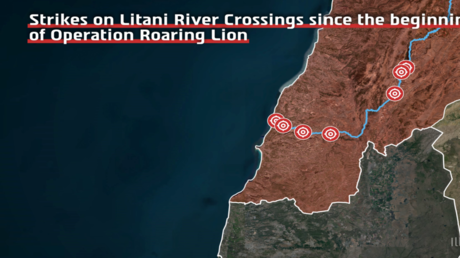
The Israeli army has announced the bombing of a seventh major crossing over the Litani River, a move that comes as part of escalating military operations against targets allegedly linked to Hezbollah. According to the army's statement, this crossing is used to transport fighters and weapons from the north of the river to the south, highlighting the continued tensions in the area.
Concerns are growing over the escalation of violence in Lebanon, particularly with the repeated Israeli bombings of sites believed to be affiliated with Hezbollah. The Israeli army indicated that these operations are part of its efforts to counter what it perceives as increasing security threats from the Iran-backed group.
Details of the Incident
The recent bombing is part of a series of attacks targeting crossings and strategic sites in Lebanon. The Litani River is a vital point, extending through multiple regions and forming a natural boundary between the north and south. Local sources have confirmed that the bombing resulted in significant damage in the area, exacerbating the suffering of civilian populations.
Simultaneously, this military escalation demonstrates how the conflict between Israel and Hezbollah remains ongoing, despite attempts at de-escalation that may be made by the international community. These operations are believed to aim at undermining Hezbollah's capability to carry out military operations against Israel.
Background & Context
Historically, the region has witnessed numerous conflicts between Israel and Hezbollah, especially since the 2006 war. Hezbollah is considered one of the prominent military forces in Lebanon and is used as a tool to confront Israel. Iranian support for the group has bolstered its military capabilities, complicating the security situation in the region.
These events coincide with rising regional tensions, as Israel seeks to enhance its security in light of increasing threats from armed groups. The situation in Lebanon reflects the complex political and social dimensions that affect the country's stability.
Impact & Consequences
These military operations could lead to a greater escalation in the conflict, threatening the stability of Lebanon and the region as a whole. There are fears that these tensions could spark a new war, especially if Hezbollah responds to these attacks militarily.
Moreover, the escalation of military operations may adversely affect the humanitarian situation in Lebanon, where populations are already suffering from economic and social crises. The deterioration of conditions could exacerbate humanitarian crises, necessitating international intervention.
Regional Significance
The events in Lebanon are part of a broader picture of conflicts in the Middle East, where regional and international interests intersect. The escalation of tensions between Israel and Hezbollah could impact relations between Arab states and Israel, particularly amid normalization attempts by some Arab countries.
Ultimately, the situation in Lebanon remains concerning and requires all parties involved to work towards calming the situation and avoiding military escalation. The stability of Lebanon is an integral part of the stability of the Arab region as a whole.