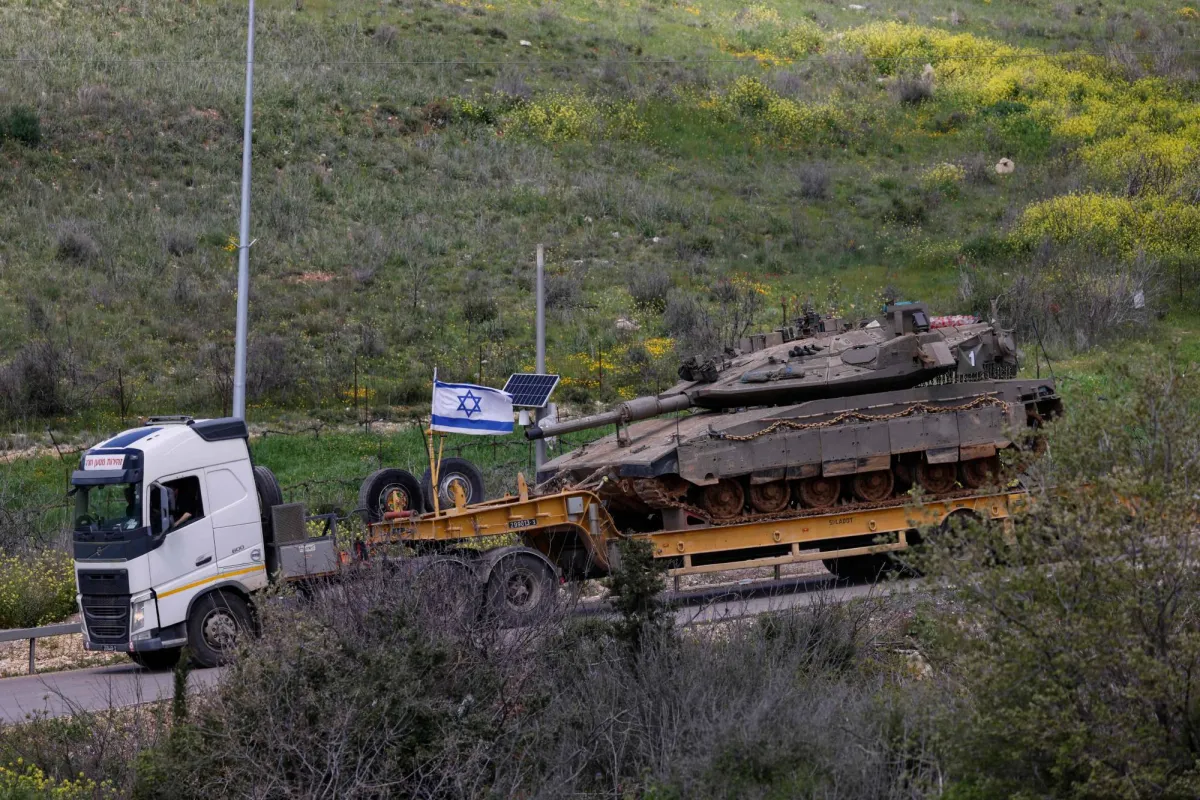
On Tuesday, the Israeli army announced that it has completed the deployment of its ground forces along what is known as the defense line in southern Lebanon, coinciding with intensifying clashes with Hezbollah fighters, who are supported by Iran. This announcement comes amid rising tensions in the region, as the army seeks to bolster its military presence.
The Israeli army did not provide precise details regarding the locations reached by its forces in Lebanese territory, but media reports indicated that the army does not intend to advance more than 20 kilometers north of the border at this stage.
Details of the Event
In an official statement, the Israeli army confirmed that it has completed the deployment of its forces along the missile defense line and continues operations in the area to strengthen this line and eliminate threats to the residents of northern Israel. Israeli Defense Minister Israel Katz had previously announced Israel's intention to establish a security zone extending to the Litani River, which is about 30 kilometers from the Israeli-Lebanese border, aimed at preventing any missile or drone attacks.
Additionally, the newspaper Yedioth Ahronoth reported that the Israeli government will receive an operational plan to control the first line of Lebanese villages as a deep security area. Conversely, the newspaper Haaretz mentioned that the army is preparing to reinforce its forces in the area but currently does not plan to advance deeper into Lebanon.
Background & Context
The current events intertwine with a long history of conflict between Israel and Hezbollah, with the region witnessing an escalation in hostilities since the beginning of the year. Reports have indicated that Hezbollah has launched rockets and drones at Israel, prompting military responses from the Israeli side.
Lebanon has a complex organizational structure managed by Iran through the Revolutionary Guard, complicating the security situation in the region. This structure includes Lebanese and Palestinian arms, reflecting Iran's increasing influence in Lebanese affairs.
Impact & Consequences
The Israeli military deployment in southern Lebanon is considered a strategic step aimed at enhancing security in northern Israel, but it may also lead to heightened tensions in the region. Military movements from both sides could result in greater escalation of hostilities, threatening regional stability.
These developments could also affect relations between Israel and neighboring countries and complicate peace efforts in the region. Israeli actions come at a sensitive time, with growing concerns about escalating violence in Lebanon and its impact on regional security.
Regional Significance
The recent events in southern Lebanon underscore the importance of the security situation in the Arab region, where Lebanon is viewed as a battleground between regional powers. The escalating tensions between Israel and Hezbollah could affect the stability of neighboring countries and intensify existing conflicts.
While some Arab countries strive for peace and stability, the continuation of hostilities in Lebanon may hinder these efforts. It is crucial for Arab nations to remain vigilant regarding developments in Lebanon and work to promote dialogue and cooperation to avoid escalation.
In conclusion, the situation in southern Lebanon requires careful monitoring, as any escalation could lead to serious repercussions for regional security. It is essential that both international and local efforts are combined to achieve stability in the area.