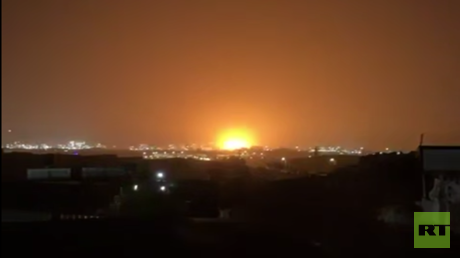
In the early hours of Saturday, the Israeli army announced the detection of missiles launched from Iranian territory towards Israel, raising new concerns about escalating tensions in the region. A video circulated on social media documented the moment one of these missiles fell in the city of Beersheba, showing the direct impact of these attacks.
These events come amid rising tensions between Iran and Israel, with both countries exchanging accusations regarding support for armed groups in the region. The Israeli army confirmed that these missiles were launched from Iranian sites, reflecting the security challenges faced by Israel under these tense circumstances.
Details of the Incident
In the early hours of Saturday, Israeli forces detected missiles being launched from Iranian territory, tracking their path towards Israeli land. The moment one of these missiles fell in Beersheba was documented, raising concerns among local residents and leading to heightened security alerts in the area. There were no immediate reports of injuries or significant damage, but the incident reflects the increasing security threats in the region.
This attack comes at a sensitive time as Israel seeks to bolster its security in the face of growing threats from Iran, which it considers a major adversary in the region. The Israeli army indicated that it is closely monitoring the situation and is prepared to respond to any future threats.
Background & Context
Historically, relations between Iran and Israel have been marked by increasing tensions, with Israel accusing Iran of supporting armed groups such as Hezbollah in Lebanon and Hamas in Gaza. Israel also views the Iranian nuclear program as an existential threat, further intensifying tensions between the two sides.
In recent years, Israel has conducted several military operations against Iranian targets in Syria, reflecting its strategy to prevent Iran from strengthening its military presence near its borders. These operations are seen as part of Israel's defensive policy aimed at protecting its national security.
Impact & Consequences
These attacks could lead to greater escalation in the conflict between Iran and Israel, increasing the likelihood of a large-scale military confrontation in the region. Additionally, these events may affect relations between Iran and Arab countries, especially amid changing alliances in the region.
Moreover, these tensions could increase pressure on the Israeli government, as the Prime Minister faces internal challenges related to security and the economy. These events may impact political stability in Israel, complicating the political landscape in the region.
Regional Significance
These events serve as a wake-up call for Arab countries, as they could lead to heightened tensions in the region. The incidents may affect relations between Arab nations and Iran, particularly given the changing alliances and shared security challenges.
Furthermore, the escalation between Iran and Israel could impact peace efforts in the region, as Arab countries seek to achieve greater stability in their relations. It is crucial for Arab nations to closely monitor these developments, as they could affect their national security and internal stability.
In conclusion, the situation in the region remains tense, and the international community needs to intervene to mitigate the escalation between Iran and Israel and work towards achieving peace and stability in the area.