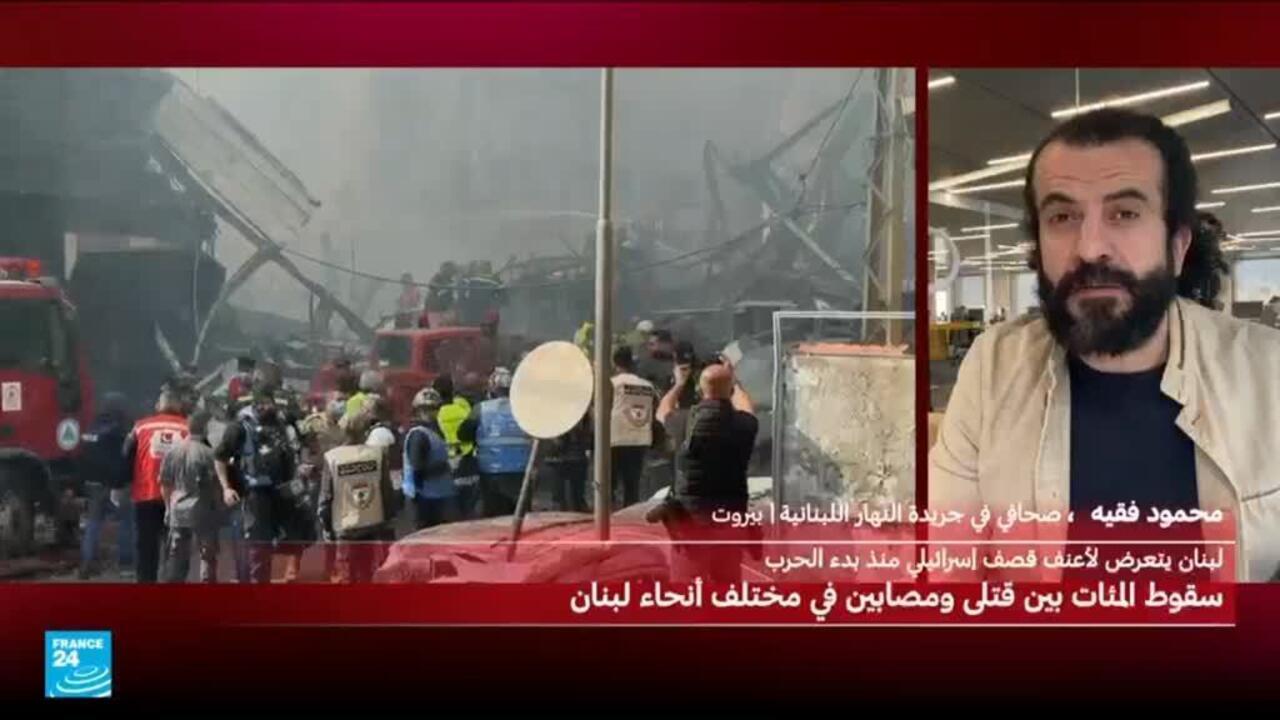
The Israeli army announced on Wednesday the execution of its largest bombing campaign on Lebanon since Hezbollah, an Iranian-aligned group, became involved in the war on March 2. The army confirmed that it targeted around 100 military headquarters and infrastructure belonging to Hezbollah, indicating that the strikes included areas in Beirut, the Beqaa Valley in eastern Lebanon, and the southern regions of the country.
In an official statement, the Israeli army reported that it had carried out the largest coordinated strike aimed at Hezbollah's command centers and military sites. This campaign comes at a time of increasing security tensions between the two sides, raising concerns about a potential escalation in the region.
Details of the Military Campaign
The Israeli military campaign involves precise targeting of sites believed to be used as launch bases for military operations by Hezbollah. The airstrikes were carried out using fighter jets and precision-guided missiles, reflecting a high level of coordination and military intelligence.
The Israeli army also noted that these strikes are part of ongoing efforts to weaken Hezbollah's capability to carry out operations against Israel, especially amid rising tensions in the region. Unusual movements by Hezbollah have been observed in recent days, prompting the army to take these preemptive measures.
Background & Context
The conflict between Israel and Hezbollah dates back decades, with the region witnessing numerous wars and conflicts. Tensions have escalated since the beginning of the war in Syria, where Hezbollah intervened alongside the Syrian regime, complicating the regional landscape.
Additionally, Iranian support for Hezbollah has bolstered its military capabilities, making it difficult for Israel to ignore potential threats. This recent escalation is considered part of a broader Israeli strategy aimed at preventing any future threats from armed groups in the region.
Impact & Consequences
These airstrikes are expected to escalate tensions between Israel and Hezbollah, which could negatively impact stability in Lebanon and the region as a whole. The armed group may respond to these strikes with retaliatory operations, increasing the likelihood of a wider conflict.
This escalation could also affect relations between Arab countries and Israel, as some nations may adopt a more cautious stance regarding developments in the region. This situation underscores the urgent need for dialogue and negotiation to avoid further escalation of the conflict.
Regional Significance
This military escalation poses a significant challenge to regional security, as it may lead to negative repercussions for neighboring countries. Arab nations could be directly affected by any military escalation, complicating the political and economic situations in the region.
Under these circumstances, the importance of regional and international cooperation to mitigate escalation and ensure security and stability becomes evident. The international community must intervene effectively to prevent worsening conditions, especially amid the humanitarian crises plaguing the region.
In conclusion, the recent escalation between the Israeli army and Hezbollah reflects ongoing tensions in the region and emphasizes the necessity of seeking peaceful solutions to avoid further violence. All parties involved must work towards achieving peace and stability in the area.