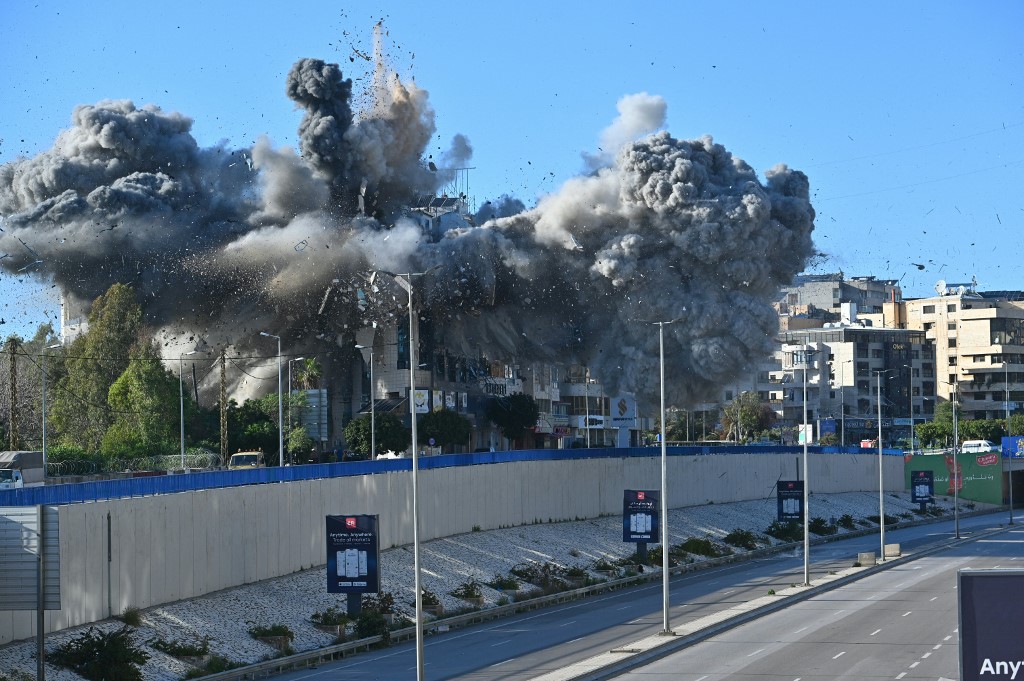
In a grave statement, Lebanon's Prime Minister Nohad Machnouk confirmed that the ongoing war against his country, now entering its second month, has resulted in the displacement of over one million people. Machnouk explained that Lebanon has become a victim of a war whose outcomes and end date are unpredictable, noting that the humanitarian situation in the country is deteriorating rapidly.
During a press conference held on Thursday, Machnouk condemned the Israeli expansion into Lebanese territories, describing the talk of creating a "Greater Israel" extending into Lebanon as "dangerous." He also pointed out that these statements reflect Israeli intentions to establish a security buffer zone, further complicating the situation in the region.
Details of the Ongoing Conflict
In the context of the ongoing attacks, Israeli forces have launched airstrikes on several towns in southern Lebanon, including Saltaniya, Aita al-Jabal, Al-Jumayjmah, and Tebnine. Field reports from Al Jazeera correspondents have documented the dire conditions faced by civilians in these areas, where homes and infrastructure are suffering severe damage due to continuous shelling.
On the other hand, Israeli Defense Minister Eyal Katz stated that over 600,000 people living in the southern territories up to the Litani River will not be able to return to their homes, reflecting the ongoing forced displacement suffered by the Lebanese people.
Background & Context
Historically, Lebanon has witnessed several wars and conflicts with Israel, most notably the Lebanese Civil War and the Israeli war on Lebanon in 2006. These conflicts have not only led to widespread destruction but have also left deep psychological and social scars on the Lebanese people. With rising tensions in the region, Lebanon faces new challenges concerning security and stability.
The current events come at a sensitive time, as Lebanon is grappling with crippling economic crises, exacerbating the suffering of its citizens. The economic crisis, which has worsened since 2019, has led to the collapse of the national currency and rising rates of poverty and unemployment, making the humanitarian situation even worse amid the ongoing conflict.
Impact & Consequences
The repercussions of the current war extend beyond Lebanon's borders, affecting regional stability in general. The ongoing conflict could escalate tensions between neighboring countries and increase the likelihood of new conflicts erupting. Additionally, the mass displacement of civilians places additional pressure on host countries for refugees, necessitating urgent international response.
On the other hand, these conditions may affect relations between Lebanon and Western countries, as the deteriorating humanitarian situation in Lebanon is seen as evidence of the international community's failure to provide adequate support to the country during crises. Furthermore, the continuation of Israeli attacks may lead to increased popular support for resistance efforts, complicating peace efforts in the region.
Regional Significance
The events in Lebanon are part of a larger picture of the Arab-Israeli conflict, where the Palestinian issue remains at the heart of the dispute. The escalation of violence in Lebanon could impact other Arab countries, potentially reigniting tensions in other areas such as Gaza and the West Bank. Additionally, the situation in Lebanon may affect reconciliation efforts among Palestinian factions, further complicating the political landscape in the region.
In conclusion, the situation in Lebanon remains alarming, requiring urgent international response to protect civilians and provide necessary support to those affected. The continuation of the war without a clear end in sight could lead to dire consequences for Lebanon and the entire region.