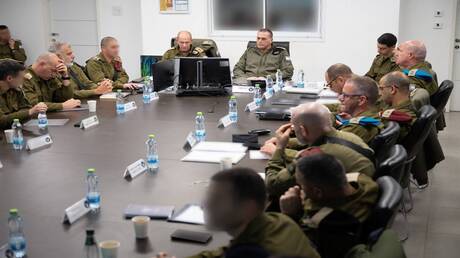
Israeli Chief of Staff Eyal Zamir's remarks about the possibility of the Israeli army collapsing due to a shortage of soldiers have sparked widespread debate within the Likud party, led by Prime Minister Benjamin Netanyahu. This statement comes at a time when the army is suffering from significant challenges related to human resources and capabilities.
In this context, Zamir pointed out that the current situation requires a comprehensive reassessment of military capabilities, highlighting the urgent need to bolster the army's ranks. This statement has elicited mixed reactions within the party, with some viewing it as a necessary warning, while others see it as an acknowledgment of the government's failure to manage security affairs.
Details of the Event
Eyal Zamir spoke at a press conference about the challenges facing the Israeli army, indicating that a shortage of soldiers could lead to serious repercussions for national security. He emphasized that the army needs to enhance its human capabilities to confront the increasing threats in the region. This statement came after a series of security incidents that Israel has witnessed, increasing pressure on both the government and the army.
The controversy sparked by Zamir's statement has not been limited to the Likud party; it has extended to political and media circles in Israel. Some have considered this statement as a reflection of anxiety and instability within the military institution, while others see it as a reality that must be addressed seriously.
Background & Context
Historically, the Israeli army has undergone significant transformations over the decades, being regarded as one of the strongest armies in the region. However, current challenges, including a shortage of soldiers and changes in military strategy, have greatly impacted its capabilities. Additionally, the volatile security situation in the region, including tensions with Palestinians and neighboring countries, complicates matters further.
In recent years, the Israeli army has seen a decline in the number of recruits, exacerbating the issue of soldier shortages. Many military experts have pointed out that this phenomenon could affect the army's ability to carry out its missions effectively, raising concerns among military and political leaders.
Impact & Consequences
The potential repercussions of Zamir's statement could be far-reaching, as it may influence Israeli government policy regarding security and defense. If this problem persists, the government may be forced to take urgent measures to strengthen the army's ranks, which could require an increase in the military budget or changes in recruitment strategies.
Furthermore, this controversy could affect the current government's image in the eyes of voters, especially in light of upcoming elections. Security challenges could be a major vulnerability for the government, potentially leading to a loss of public support.
Regional Significance
The situation within the Israeli army serves as an indicator of security stability in the region. Any decline in the army's capabilities could lead to a shift in the balance of power, which may reflect on neighboring countries. In this context, some Palestinian factions or neighboring states might exploit this situation to strengthen their positions.
Moreover, the decline of the Israeli army could raise concerns among Arab countries, which are closely monitoring military developments in Israel. This could lead to increased tensions in the region, especially if certain parties feel there is an opportunity to achieve political or military gains.
In conclusion, Eyal Zamir's statement regarding the collapse of the Israeli army serves as a wake-up call for both the government and the army. The current situation requires a swift and effective response to ensure the army's stability and its ability to face future challenges.