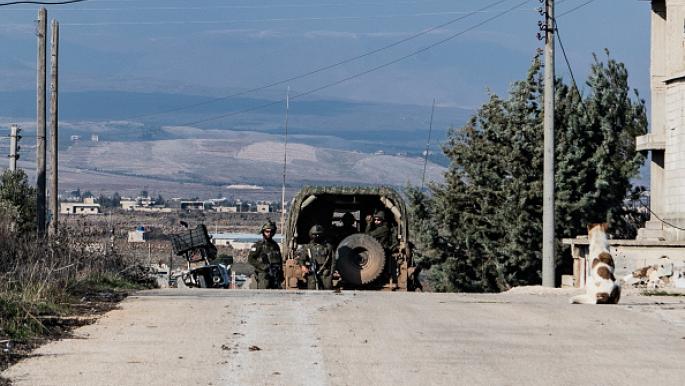
Israeli military forces have advanced into northern Quneitra, Syria, today, establishing a temporary checkpoint on the road connecting Jabatha al-Khashab and Ofania. This action comes at a sensitive time, as southern Syria is experiencing increasing tensions due to volatile security and political conditions.
These incursions are part of Israel's ongoing policy in the region, aimed at reinforcing control over the borders and preventing any movements that could be perceived as threats to its security. Local sources have reported that the newly established checkpoint has impacted civilian movement in the area, heightening anxiety and fear among the residents.
Details of the Incident
Reports indicate that Israeli incursions into southern Syria are not new, as such operations have recurred in recent years, especially following the outbreak of the Syrian conflict in 2011. With mounting pressure on the Syrian regime, Israel has exploited the chaos to increase its military activities in the region.
The checkpoint set up today is part of Israel's strategy to bolster its military presence in areas close to the border, raising questions about Israel's true intentions in southern Syria. These actions come at a time when the region is witnessing complex political and military movements, complicating the security situation further.
Background & Context
Since the onset of the Syrian conflict, Israel has taken multiple steps to enhance its presence in the southern regions, capitalizing on the chaos engulfing Syria. Israeli forces have repeatedly targeted sites associated with Hezbollah and Iranian militias, reflecting their concerns over the growing Iranian influence in the area.
Historically, Quneitra has been a conflict zone between Syria and Israel, with the latter occupying parts of it during the 1967 war. Since then, Israel has sought to maintain a strong military presence in the region to ensure that no security threats emerge.
Impact & Consequences
Israeli incursions into southern Syria represent an escalation in regional tensions, potentially provoking reactions from Syrian forces or their allies. These operations could negatively impact peace and stability efforts in the region, increasing the likelihood of military escalation.
The repercussions of these incursions may also include heightened civilian suffering, as military checkpoints hinder people's movement and affect their daily lives. Furthermore, these operations could lead to an increase in popular protests against Israeli occupation, further destabilizing the region.
Regional Significance
Israeli incursions in southern Syria are part of a broader occupation policy that affects relations between Arab states and Israel. As tensions rise, Arab countries may find themselves facing new challenges in dealing with Israeli occupation, particularly under the current political circumstances.
In light of these conditions, Arab nations must adopt effective strategies to address the security challenges posed by Israeli incursions and work towards enhancing regional cooperation to confront these threats.
In conclusion, the recurring Israeli incursions into southern Syria pose a significant challenge to security and stability in the region, necessitating effective international measures to curb these violations and ensure the rights of civilians in the affected areas.