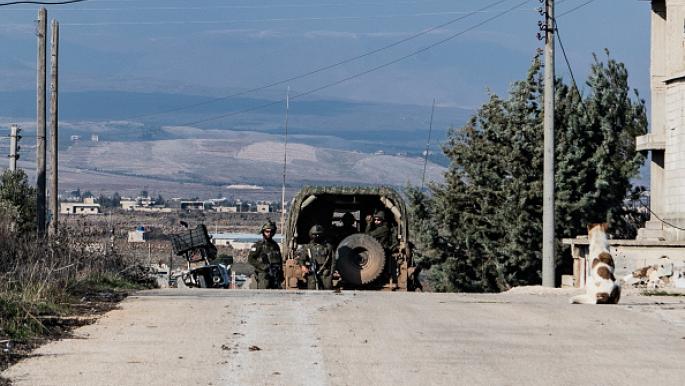
Israeli occupation forces advanced today into the vicinity of Peace City in northern Quneitra for the second time in 24 hours. These military maneuvers occur at a sensitive time, as Israeli military activities in the region have intensified, raising concerns about escalating tensions between the Israeli occupation and armed groups in southern Syria.
The Israeli movements are part of the occupation's strategy to bolster its military presence in border areas, aiming to secure its borders and prevent any potential threats from armed groups. Local sources have reported the entry of several Israeli military vehicles into the area, reflecting the ongoing policy of incursion and occupation that Israel pursues in Syrian territory.
Details of the Incident
This operation marks the second time Israeli forces have operated in the vicinity of Peace City within a single day, following an initial incursion just 24 hours prior. These operations coincide with reports of increased military activity in the area, including repeated shelling of sites belonging to armed groups. Images circulated on social media show Israeli military vehicles moving through the region, further escalating tensions among local residents.
It is noteworthy that Peace City, located in the Quneitra countryside, is a strategic area due to its proximity to the Israeli border. The city has witnessed numerous military operations in recent years, negatively impacting the lives of local residents and leading to the displacement of many.
Background & Context
Historically, the Quneitra area has experienced ongoing tensions due to the Israeli-Syrian conflict. Since the 1967 war, Israel has occupied the Golan Heights, resulting in radical changes to the demographic and political landscape of the region. Although the situation in Syria has undergone significant changes in recent years, tensions between the Israeli occupation and armed groups remain persistent.
In recent years, Israel has increased its military operations in Syria, specifically targeting sites associated with Hezbollah and Iranian groups. These operations are part of an Israeli policy aimed at preventing the strengthening of Iranian influence in the region, which it views as a threat to its national security.
Impact & Consequences
These incursions contribute to rising tensions between the Israeli occupation and armed groups, potentially leading to military responses from the Syrian side or from Damascus's allies. Additionally, these operations may exacerbate the conflict in the region, adversely affecting the humanitarian situation for local populations already suffering from the ongoing conflict.
Moreover, the continuation of these military operations could further entrench internal divisions in Syria, as some armed factions may exploit these events to recruit more members and strengthen their power against the occupation.
Regional Significance
The events in Quneitra are part of a larger picture of the Arab-Israeli conflict, with the Palestinian issue and the Syrian conflict remaining central concerns affecting regional stability. The ongoing tensions in Quneitra could impact relations between Arab countries and Israel, especially amid attempts by some Arab nations to normalize relations with the occupation.
In conclusion, the events in Quneitra remain a significant point of interest, reflecting the ongoing challenges facing the region. The Israeli military escalation in this area may have far-reaching implications for security and stability in the Middle East.