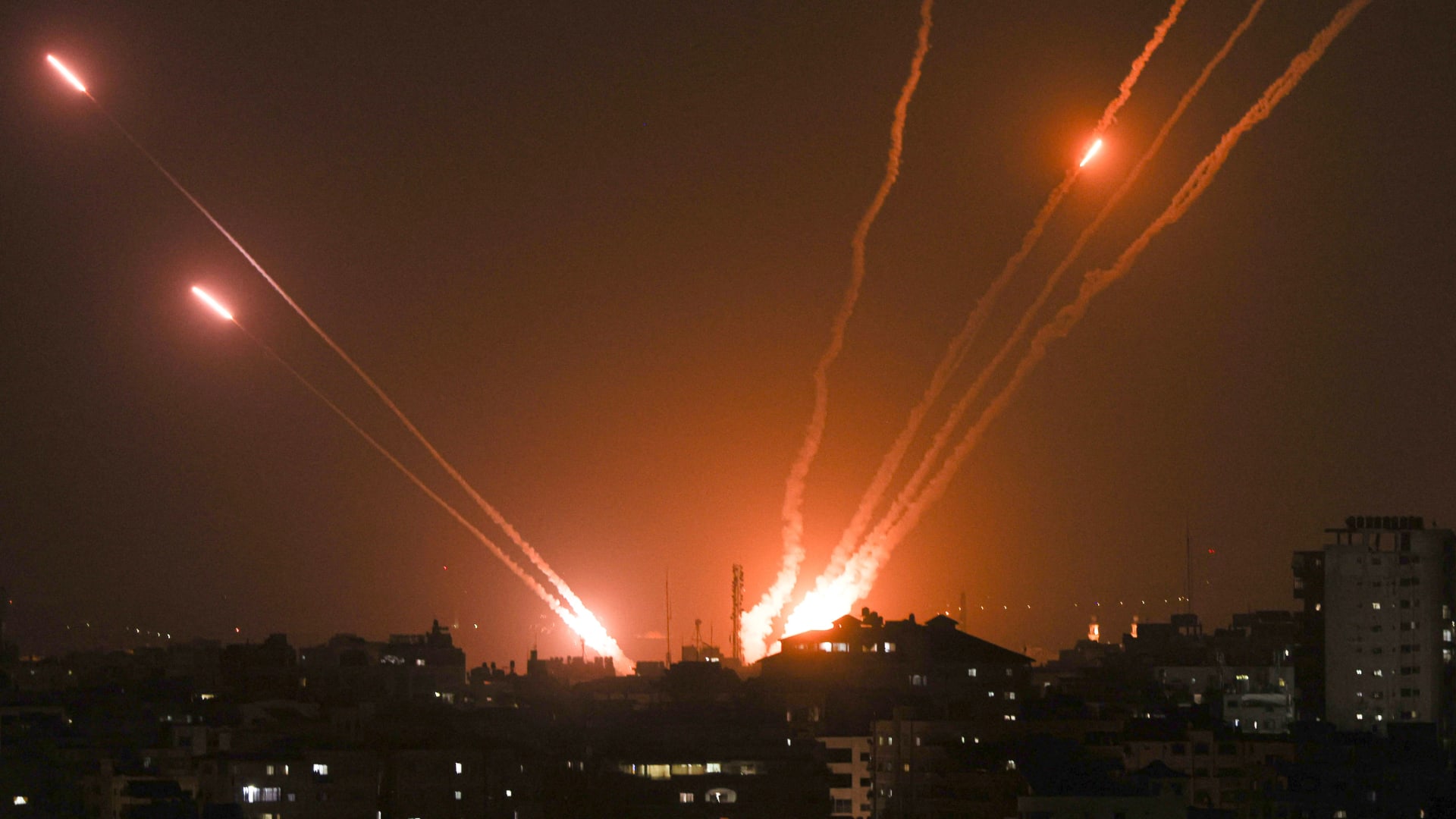
On Tuesday, the Israeli military announced that it had completed a significant wave of airstrikes in various regions of Iran, including the city of Isfahan. The Israeli Defense Forces, known as IDF, stated in an official announcement that these strikes are part of a large-scale campaign targeting multiple Iranian sites.
These airstrikes come at a sensitive time marked by increasing tensions in the region, as Israel seeks to thwart any potential threats from Iran, which it views as a major adversary. The statement indicated that the military operations targeted military and industrial sites in Iran, reflecting an increasingly aggressive Israeli strategy towards Tehran.
Details of the Event
Reports indicate that the airstrikes targeted several sites in Isfahan, a city known for its military and industrial facilities. Videos circulated on social media show columns of smoke rising from the city following the strikes, raising concerns about potential damage and loss of life.
These strikes follow a series of mutual threats exchanged between Iran and Israel, with Tehran accusing Tel Aviv of interfering in its internal affairs and supporting hostile groups. In turn, Israel aims to assert its capability to carry out precise military operations against targets it considers a threat to its national security.
Background & Context
Historically, relations between Iran and Israel have been tense since the Islamic Revolution in Iran in 1979. Since then, Israel has viewed Iran as an existential threat, especially with the development of its nuclear program. These tensions have significantly escalated in recent years, with increased Iranian military activities in the region and its support for armed groups like Hezbollah in Lebanon.
Moreover, international pressure on Iran over its nuclear program has contributed to the escalation, as Western nations seek to impose sanctions on Tehran. In this context, Israel considers any advancement in the Iranian nuclear program a direct threat to its security, which explains its recent military escalation.
Impact & Consequences
These strikes could lead to further escalation of tensions between Iran and Israel, potentially dragging the region into a broader conflict. Iranian reactions to these strikes may be crucial, as Tehran might seek to respond militarily or by increasing its support for armed groups in the region.
Furthermore, these military operations could affect regional security, leading to heightened tensions between Arab states and Iran, especially with new alliances forming in the region. International reactions may also play a role in shaping upcoming events, as some countries may seek to intervene to mitigate escalation.
Regional Significance
These events are particularly significant for Arab countries, as they could impact the stability of the entire region. Many Arab nations are concerned about the rising Iranian influence in the area, prompting them to seek to strengthen their alliances with Israel as a means to counter this threat.
Additionally, military escalation could affect regional security, potentially leading to an influx of refugees and increased internal tensions in neighboring countries. In this context, Arab nations must be prepared to deal with the potential repercussions of this escalation, both on a security and political level.