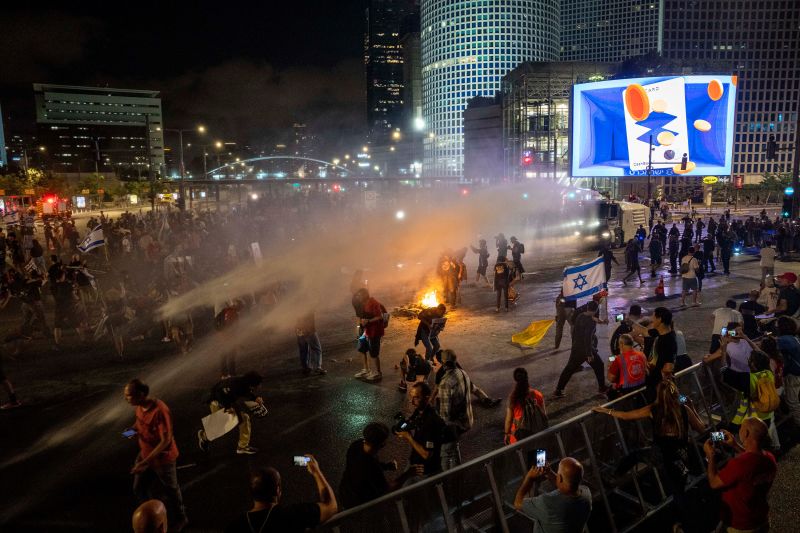
Israeli security forces dispersed hundreds of anti-war protesters in Tel Aviv during a gathering that police deemed 'illegal.' The event took place at Habima Square, a well-known public space in the city, where participants expressed their rejection of Israeli military policies, prompting the intervention of security forces.
The demonstration, organized late last night, saw several arrests, with eyewitnesses reporting that some protesters were thrown to the ground. The organizers, representing a coalition of activists, condemned what they described as 'violent dispersal,' reaffirming their commitment to continue protests until their goals are achieved.
Details of the Event
Protesters gathered at Habima Square, chanting slogans calling for an end to the war and advocating for peace. As the number of demonstrators increased, security forces intervened to disperse them, leading to limited clashes between the two sides. Some protesters sustained minor injuries due to the security intervention, while others were arrested on charges related to inciting riots.
These protests come at a sensitive time, as tensions in the region escalate due to ongoing conflicts. Organizers indicated that this demonstration is part of a series of protests aimed at raising awareness about the war's impact on civilians.
Background & Context
Israel has witnessed anti-war protests for years, particularly amid recurring military escalations in Gaza and the West Bank. These protests reflect a growing discontent among citizens regarding government policies that lead to increased violence. Additionally, many international human rights organizations have criticized these policies, pointing to their negative impact on civilians in conflict-affected areas.
In recent years, Israel has seen similar demonstrations, with thousands gathering in major cities to express their opposition to the war. However, government and security forces' responses are often strict, heightening tensions between protesters and authorities.
Impact & Consequences
These protests highlight the increasing divide within Israeli society regarding issues of war and peace. While some call for stringent actions against what they perceive as security threats, others demand the necessity of seeking peaceful solutions to the conflict. This division may influence domestic politics in Israel, especially with elections approaching.
Moreover, these demonstrations may provoke reactions from the international community, as many countries and human rights organizations closely monitor the situation in Israel. These protests could increase pressure on the Israeli government to change its policies, particularly in light of growing international criticism.
Regional Significance
These protests are part of a larger picture concerning the Israeli-Palestinian conflict, which affects stability across the entire region. Many Arab countries are closely watching the situation, as any escalation in violence could have negative repercussions for regional security.
Furthermore, these events may impact relations between Israel and Arab countries, especially amid normalization attempts seen in the region in recent years. Any escalation in the conflict could reverse progress and affect ongoing peace efforts.
In conclusion, the anti-war protests in Tel Aviv serve as an indicator of the growing discontent among citizens regarding military policies, opening the door for broader discussions about the future of peace in the region.