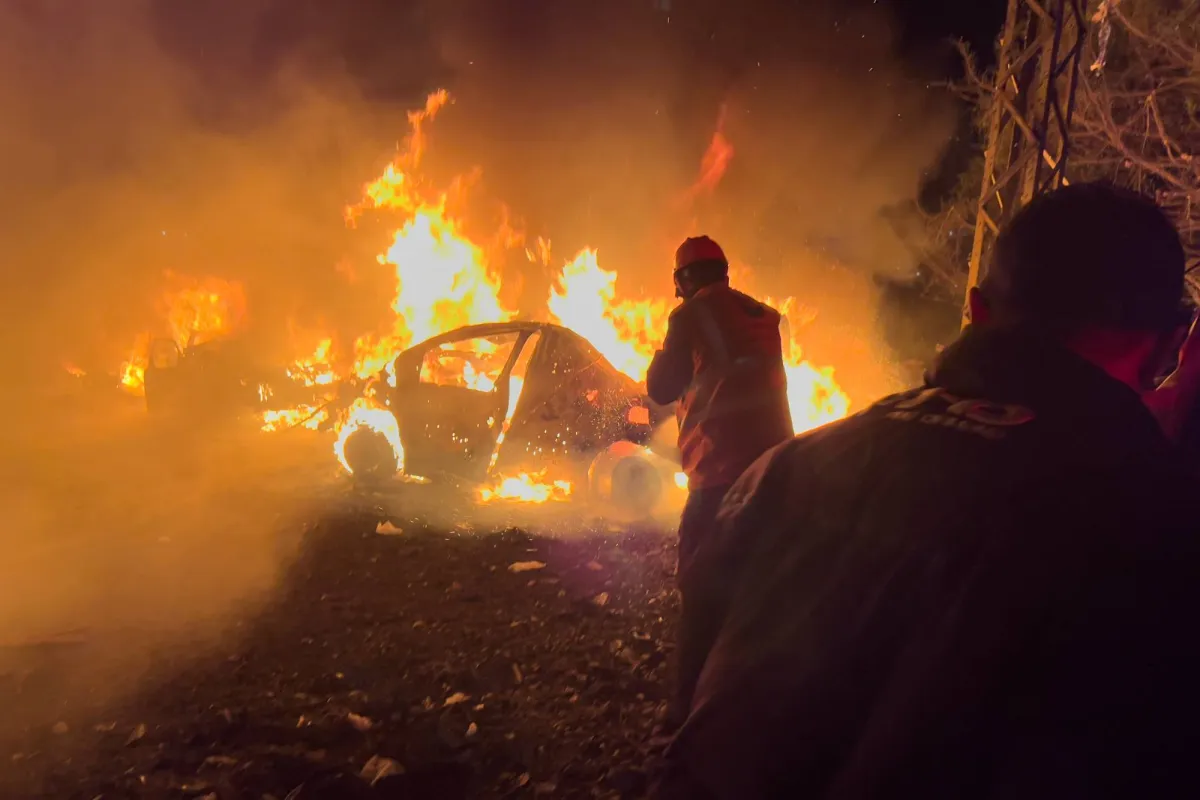
The Israeli military announced on Wednesday the death of Hajj Yusuf Ismail Hashim, the leader of the Southern Front of the Lebanese Hezbollah, as a result of a strike that targeted the Lebanese capital, Beirut. Israeli army spokesperson Avichai Adraee indicated that the attack was carried out by naval forces and stated that Hashim was responsible for executing terrorist plans against Israel.
According to the statement, the Southern Front is the unit within Hezbollah responsible for military operations against Israel, where Hashim led efforts to launch rocket shells and drones towards Israeli territories, in addition to his role in the party's reconstruction after previous conflicts.
Details of the Incident
The Israeli army reported that Hajj Yusuf Hashim had over 40 years of experience and took command of the Southern Front after the death of Ali Korki. Adraee confirmed that eliminating Hashim represents a significant blow to Hezbollah's capabilities to carry out attacks against Israel.
On the other hand, a security source and a source from Hezbollah confirmed to the French Press Agency the death of Hashim, noting that he was responsible for the military and security file concerning Iraq within the party. The Israeli airstrikes resulted in the death of at least seven people, according to the Lebanese Ministry of Health, as the strikes targeted the Jnah area in Beirut.
Context and Background
These developments come at a time when the conflict between Israel and Hezbollah is intensifying, with tensions escalating after the Iranian-backed party launched rockets at Israel on March 2 in response to the assassination of Iranian leader Ali Khamenei. Israel retaliated by conducting extensive airstrikes on Lebanon, leading to the displacement of over one million people from their homes.
Israeli Defense Minister Israel Katz also indicated plans to establish a buffer zone within Lebanon, reflecting a growing military escalation in the region. These operations have resulted in the deaths of many civilians, further complicating the humanitarian situation in Lebanon.
Impact and Consequences
The killing of Hashim is seen as a turning point in the conflict, potentially leading to greater escalation in military operations between the two sides. Additionally, Israeli statements regarding the establishment of a buffer zone may provoke strong reactions from Hezbollah, increasing the likelihood of new confrontations.
At the same time, this escalation reflects the deteriorating security situation in Lebanon, where civilians are suffering from the ongoing conflict's effects. The United Nations has warned that the humanitarian situation in Lebanon could worsen if military operations continue.
Impact on the Arab Region
These events directly affect stability in the region, raising concerns about a larger escalation in the conflict between Israel and Hezbollah, which could have repercussions on neighboring countries. The ongoing conflict also reflects regional tensions among major powers in the Middle East.
In conclusion, the situation in Lebanon remains complex, requiring international efforts to reach a peaceful solution that ensures regional stability and alleviates civilian suffering.