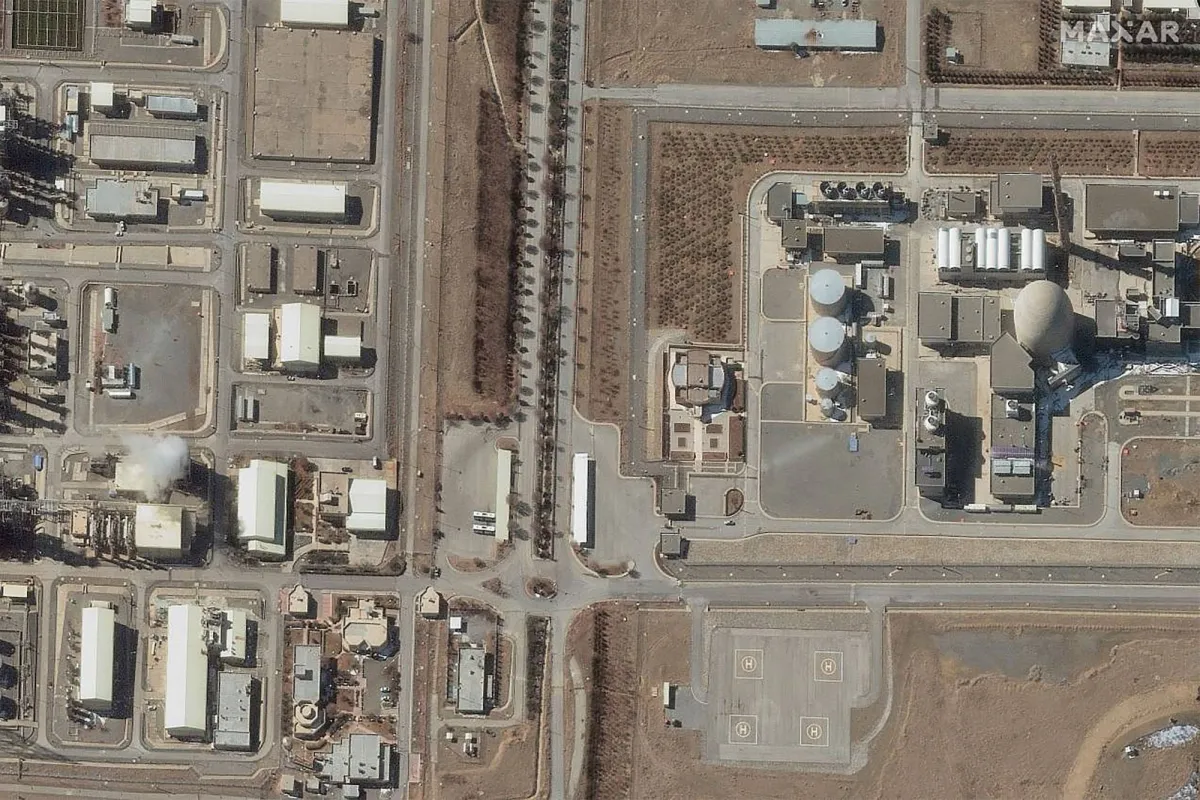
The International Atomic Energy Agency (IAEA) reported that Iran's Khondab heavy water complex has stopped functioning following several Israeli airstrikes last week. This announcement came after an independent analysis of satellite images revealed extensive damage to the facility, which is considered part of Iran's nuclear program.
The agency confirmed in its statement that the Khondab site, also known as the Arak reactor, is no longer operational, noting that it does not contain any declared nuclear materials. This development comes at a sensitive time as tensions between Iran and Israel escalate, especially with the ongoing war in the Middle East.
Details of the Incident
Last Friday, the Israeli army announced its targeting of the Arak reactor, stating that it is a key site for producing plutonium used in nuclear weapons. This attack was part of Israel's efforts to prevent Iran from developing its nuclear capabilities, which it views as a threat to regional security.
The following day, the Israeli army confirmed that it was conducting strikes on Iranian military infrastructure in the capital, Tehran, indicating that it was responding to a missile attack launched from Iran. It added via the Telegram app that it had detected missiles fired from Iranian territory towards Israel, and that its defense systems were working to intercept these threats.
Background & Context
The roots of tensions between Iran and Israel date back decades, with Israel accusing Iran of seeking to develop a nuclear program that could lead to the production of nuclear weapons. In contrast, Iran asserts that its nuclear program is peaceful and aims to meet its energy needs. These tensions have intensified following the United States' withdrawal from the Iranian nuclear deal in 2018, leading to increased economic sanctions on Tehran.
Historically, Israel has launched several attacks on Iranian nuclear sites, considering the existence of an Iranian nuclear program an existential threat. These attacks have coincided with rising tensions in the region, reflecting the instability that the Middle East is experiencing.
Impact & Consequences
The cessation of operations at the Khondab complex could significantly impact Iran's nuclear program, potentially limiting its ability to produce plutonium. This development may alleviate some international pressures on Iran, but at the same time, it could escalate tensions with Israel, which may feel that this attack was insufficient.
On the other hand, this escalation could provoke reactions from Iran's allies in the region, such as Hezbollah in Lebanon, which may complicate the security situation in the Middle East. Additionally, this attack could influence international negotiations regarding Iran's nuclear program, as Western countries may adopt a more hardline stance.
Regional Significance
The recent events in Iran are part of the broader conflict in the region, where regional powers compete for influence. Arab countries, especially those sharing borders with Iran, are closely monitoring these developments, as they are concerned about any escalation that could affect their security.
Moreover, the military escalation between Iran and Israel could impact peace efforts in the region, as it may lead to increased tensions among various factions. At the same time, some Arab countries may exploit these events to strengthen their alliances with Western powers to counter the Iranian threat.
In conclusion, developments in Iran remain of significant interest, reflecting the complex geopolitical conflicts in the region. The continuation of military and economic pressures may lead to substantial changes in the regional landscape, necessitating careful monitoring by all concerned parties.