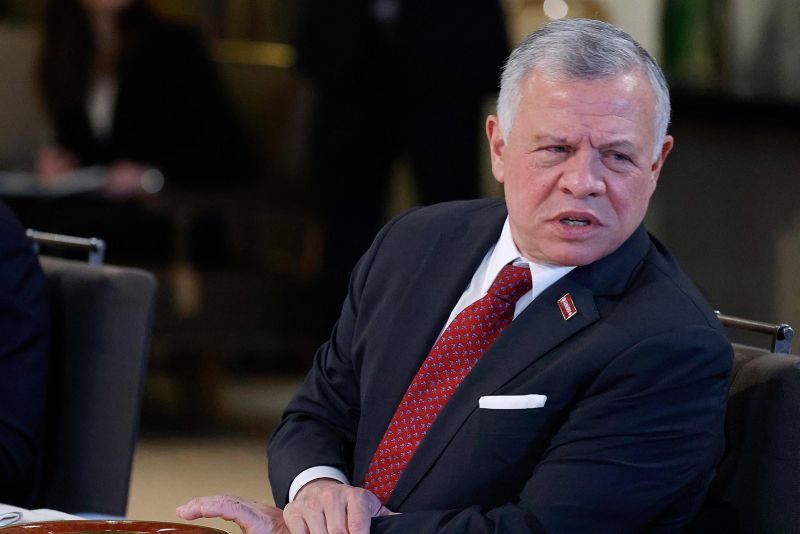
Reports from Hebrew media indicate that Jordan's King Abdullah II has rejected an offer to meet with Israeli Prime Minister Benjamin Netanyahu. This refusal reflects the rising tensions in relations between Jordan and Israel, particularly in light of the current regional circumstances.
This development comes at a time when the region is experiencing numerous political and economic crises, complicating relations between countries. King Abdullah II, regarded as one of the prominent Arab leaders, expresses his opposition to Israeli policies towards the Palestinians, which are a central focus of Jordanian politics.
Details of the Event
According to reports, the meeting between the King and Netanyahu was planned as part of efforts aimed at improving bilateral relations. However, the Jordanian King decided not to respond to the invitation, reflecting his steadfast position on Palestinian issues and the rights of the Palestinian people.
This refusal follows a series of events in the region, including escalating violence in Palestinian territories and forced evictions in Jerusalem, which heighten tensions between the two sides.
Background & Context
Historically, Jordanian-Israeli relations have been complex. Jordan and Israel signed a peace treaty in 1994, but their relations have experienced numerous fluctuations due to the situation in Palestine. King Abdullah II has consistently emphasized the importance of the Palestinian cause as a priority for Jordan, which hosts a large number of Palestinian refugees.
In recent years, relations between the two countries have seen increasing tensions, particularly following the rise in Israeli settlement activities in the West Bank, which Amman views as a violation of Palestinian rights.
Impact & Consequences
The Jordanian King's refusal to meet with Netanyahu could have significant implications for bilateral relations and may also affect regional stability. Jordan is considered a key player in the Middle East peace process, and any strain in its relations with Israel could impact peace efforts.
This refusal may also reflect increasing internal pressures on King Abdullah II, as he faces criticism from certain popular segments due to Israeli policies. This could lead to heightened public discontent in Jordan, potentially affecting the stability of the regime.
Regional Significance
This development highlights the challenges faced by Arab countries in dealing with the Palestinian issue. While some countries seek to improve their relations with Israel, Jordan remains committed to its firm stance on Palestinian rights.
At the same time, this refusal could strengthen King Abdullah II's position in the Arab world, where he is seen as a defender of Palestinian rights. This may contribute to enhancing Arab support for the Palestinian cause in international forums.
In conclusion, the Jordanian King's refusal to meet with Netanyahu reflects the escalating tensions in Jordanian-Israeli relations and underscores the importance of the Palestinian cause as a priority for Jordan. This development could have far-reaching effects on regional stability and relations between Arab countries and Israel.