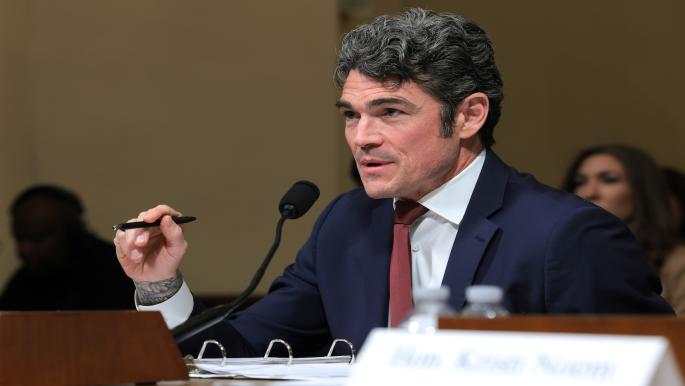
The resignation of Joe Kent, a notable U.S. Congressman, serves as a wake-up call regarding the deep divisions within the American political arena concerning the ongoing conflict in Iran. This resignation not only reflects a political disagreement but also reveals a stark divergence of opinions within the Trumpian alliance, which has become increasingly split between those advocating for war and those opposing it.
This decision comes at a time when U.S.-Iran relations are experiencing unprecedented tensions, as there is mounting pressure on the U.S. administration to take a clear stance on the Iranian file, whether through military escalation or by seeking to avoid confrontation altogether.
Details of the Resignation
The resignation announced by Kent opens the door to questions about the nature of alliances within the Republican Party, especially given the presence of leaders who hold significantly varied positions. While some view the necessity of escalating actions against Iran, others prefer to explore avenues for dialogue and to avoid engaging in new conflicts.
Kent's resignation comes at a sensitive time when Americans face multiple challenges related to foreign policy, from crises in Ukraine to interventions in East Asia. These crises impose pressures on U.S. decision-makers to strike a balance between military and security commitments.
Background & Context
The relationship between the United States and Iran has experienced successive crises over the decades, beginning with the Islamic Revolution in Iran in 1979 and extending to the current economic sanctions and war of attrition. These circumstances have led to an internal rift in the U.S. camp between visions that seek to contain Iranian threats and a desire to enhance dialogue.
Joe Kent, who certainly supported tough policies against Iran, was part of a more progressive wing within the Republican Party. With his resignation, the impact of this division may manifest in the upcoming elections and could alter the balance of power within the party.
Impact & Consequences
Kent's resignation occurs within a complex political context where these internal dynamics affect U.S. policies towards the Middle East. Kent's political future and that of his team may be significantly influenced by the pressures from various political factions, which could reflect broader dissatisfaction with the current policies or even open the door to new policies regarding Iran.
Moreover, the political tug-of-war between supporters and opponents of the war could place additional constraints on President Biden's ability to manage crises effectively. The lack of consensus within the party might lead to even greater national division, which could impact future military decisions.
Regional Significance
Attention is turning towards the Arab region to assess how Kent’s resignation and the political shifts in the United States will affect regional security and stability. Kent's resignation may provide an opportunity for political groups interested in Iran to impose their agendas, especially if U.S. pressure on Tehran diminishes.
Clearly, the region is in a state of anticipation regarding expectations of either political hardening or openness, with experts confirming that U.S. changes will directly affect the dialogue of some nations with Iran, complicating matters further.
In conclusion, Joe Kent's resignation is not merely a fleeting event; it signifies new trends that may influence U.S. policy toward the Middle East, increasing uncertainty in the region.