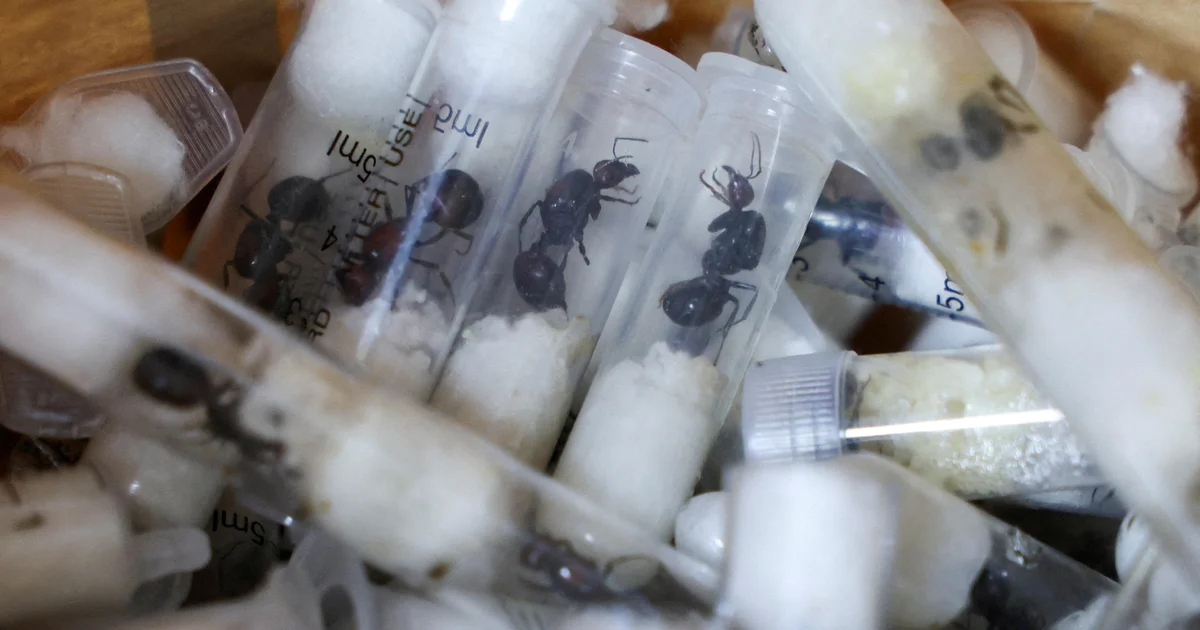
The phenomenon of ant collecting is on the rise in Kenya, with the royal ant trade yielding substantial profits. Ants are sold for over $200 on the black market, raising alarms among scientists regarding its environmental impact.
This boom coincides with the rainy season, as swarms of ants emerge from their mounds in the town of Gilgil, a quiet agricultural town in the Rift Valley, making it a rapidly growing hub for illegal trade.
Details of the Event
Large queens of the species Messor cephalotes, known as the giant African harvesting ant, are the most sought after among international ant collectors. A single queen can fetch up to £170 (approximately $220) on the black market, which is often operated online.
A fertilized queen can establish a whole colony and live for decades, making her an attractive target for traders. One former broker reported that he was unaware that what he was doing was illegal until he saw the arrests on the news.
Background & Context
Historically, Kenya has been known for major wildlife crimes such as the ivory trade and rhino horn trafficking, but this ant trade may signal the beginning of a new phenomenon. Last year, 5,000 giant harvesting ant queens were found in a guesthouse in Naivasha, revealing the scale of the illegal trade.
These ant species are part of Kenya's ecosystem, playing a crucial role in seed dispersal and improving pasture health. However, unsustainable trade could lead to colony collapse and harm biodiversity.
Impact & Consequences
The giant harvesting ant is a keystone species in the ecosystem, known as an environmental engineer. However, the removal of queens could lead to colony collapse, negatively impacting the local environment.
Scientists warn that this trade could have dire consequences for ecosystems, as imported species can cause ecological imbalances. Researchers have cautioned that the continuation of such trade may lead to the spread of invasive species into new areas.
Regional Significance
This phenomenon is concerning for Arab countries, as new ant species could be imported, affecting agriculture and the environment. Additionally, illegal trade could pave the way for other illicit activities in the region.
In conclusion, authorities in Kenya and other countries must take stringent measures to monitor this trade and protect local ant species. There should also be an emphasis on raising awareness about the importance of biodiversity conservation and environmental protection.