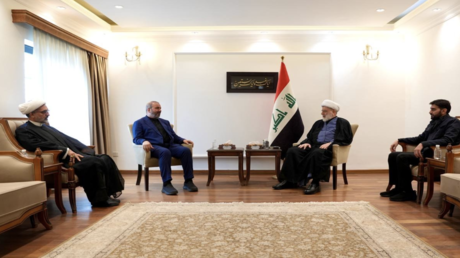
Iran's Supreme Leader, Mohammad Khamenei, expressed his gratitude and appreciation to the religious authority in Najaf and the Iraqi people, in light of their solidarity with the Islamic Republic. These statements come at a time when tensions are rising in the region, reflecting the importance of relations between Iran and Iraq under the current circumstances.
The religious authority in Najaf is one of the most prominent religious institutions in the Islamic world, wielding significant influence over political and social life in Iraq. It has played a pivotal role in guiding the Iraqi people's positions on regional and international issues, making its support for Iran highly significant.
Details of the Event
During a speech, Khamenei emphasized the importance of unity among Islamic peoples, noting that the positions of the religious authority and the Iraqi people reflect the spirit of solidarity that should prevail in the face of challenges. He also pointed out that these positions strengthen the Islamic Republic's power in confronting external pressures.
This expression of gratitude comes at a time when Iranian-Iraqi relations are showing notable closeness, especially amid the security and political challenges facing Iraq. The religious authority in Najaf has shown clear support for Iran on several issues, reflecting the alignment of positions between the two countries.
Background & Context
Historically, relations between Iran and Iraq have been tense at times, especially during the Iran-Iraq War in the 1980s. However, in recent years, there has been a rapprochement between the two countries, with Iraq becoming one of Iran's main allies in the region. Political conditions in Iraq, including the rise of ISIS, have contributed to enhancing this cooperation.
The religious authority in Najaf, led by Ayatollah Ali Sistani, plays an important role in guiding Iraqi policies and has supported the Iraqi government in facing security challenges. This support reflects the authority's commitment to protecting Iraq's unity and stability, increasing the significance of its positions towards Iran.
Impact & Consequences
The implications of Khamenei's statements extend beyond Iranian borders, reflecting current regional tensions. The solidarity between Iran and Iraq may lead to an enhancement of Iranian influence in the region, raising concerns among some other Arab countries. Additionally, this cooperation could contribute to the formation of new alliances in the region, especially amid tensions with the United States.
On the other hand, these relations may impact the internal situation in Iraq, where the Iraqi people face economic and political challenges. The religious authority's support for Iran may increase pressure on the Iraqi government, particularly from political forces opposing this rapprochement.
Regional Significance
The Iranian-Iraqi relations are seen as a model of regional cooperation that could affect the balance of power in the Middle East. Amid rising tensions between Iran and the United States, Iraq may seek to strengthen its ties with Iran as a means of enhancing its security and stability.
This cooperation may raise concerns among some Arab countries, which view Iranian influence as a threat to their interests. Therefore, it is essential to monitor how these relations develop and their impact on the regional situation as a whole.
In conclusion, Khamenei's statements reflect the importance of relations between Iran and Iraq under the current circumstances. As challenges continue, the question remains about how these relations will affect the future of the region.