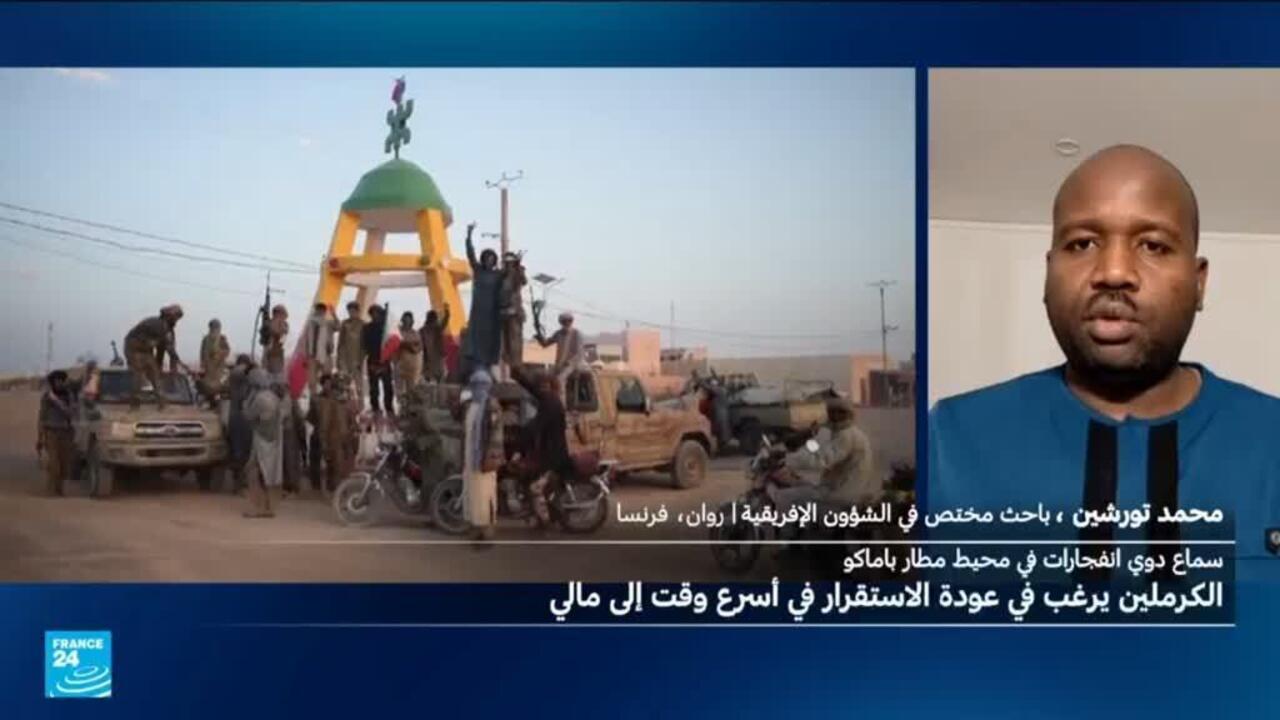
Mali is experiencing a state of anxiety and anticipation following the killing of Defense Minister General Sadio Kamara, who was killed in unprecedented jihadist attacks. Meanwhile, the leader of the military council, General Assimi Goita, has been absent from the public eye and has not made any statements since the fighting began. These events come at a time when the country has been grappling with a severe security crisis for over a decade.
The attacks that occurred last Saturday, carried out by jihadists allied with the al-Qaeda-affiliated Group for the Support of Islam and Muslims, as well as Tuareg rebels from the Azawad Liberation Front, are considered the deadliest since the military council took power in 2020. These attacks raise questions about the military government's ability to control the deteriorating security situation.
Details of the Incident
The death of General Kamara comes at a highly sensitive time, as jihadist attacks are escalating in northern and central Mali. Reports indicate that these attacks have resulted in the deaths of a significant number of soldiers and civilians, exacerbating the chaos and anxiety in the country. Additionally, Goita's absence from the political scene adds to the uncertainty surrounding military leadership in Mali.
In related news, Russian state news agencies reported that Russian forces operating in Mali managed to thwart an attempted coup targeting the military government. This reflects the internal tensions the country is experiencing and suggests that the security situation may be more complicated than it appears.
Background & Context
Since 2012, Mali has been suffering from a severe security crisis, with the intensity of jihadist attacks in the northern part of the country escalating, leading to both international and local military interventions. The military council assumed power in 2020 following a coup, further complicating the security and political landscape. With the rise in attacks, it has become evident that the military government faces significant challenges in regaining control over affected areas.
Historically, Mali was a cultural and commercial hub in West Africa, but armed conflicts and political divisions have led to a deterioration of conditions. External interventions, including French military operations, have complicated the security landscape as international powers seek to restore stability in the region.
Impact & Consequences
The killing of the Defense Minister may have negative implications for political stability in Mali, potentially leading to heightened tensions among various factions. Moreover, Goita's absence from the scene may raise questions about the effective leadership of the military council, which could lead to internal divisions affecting counter-terrorism efforts.
Furthermore, the continued jihadist attacks may prompt the international community to reassess its strategies towards Mali. This could lead to increased pressure on the military government to provide a more effective response to the security crisis, which may impact the country’s international relations.
Regional Significance
The situation in Mali is particularly significant for the Arab region, as it reflects the security challenges faced by many countries in North Africa. The escalation of violence in Mali could have repercussions for neighboring countries, necessitating regional cooperation to address shared security threats.
Additionally, the situation in Mali may affect the stability of the African Sahel region, where concerns about the spread of extremist groups are growing. This requires Arab nations and international stakeholders to work together to ensure regional stability and prevent the spread of violence.
In conclusion, the situation in Mali remains complex and requires a swift and effective response from both the military government and the international community. The assassination of the Defense Minister is a stark reminder of the significant security challenges facing the country, and continuous efforts are needed to achieve stability and peace in the region.