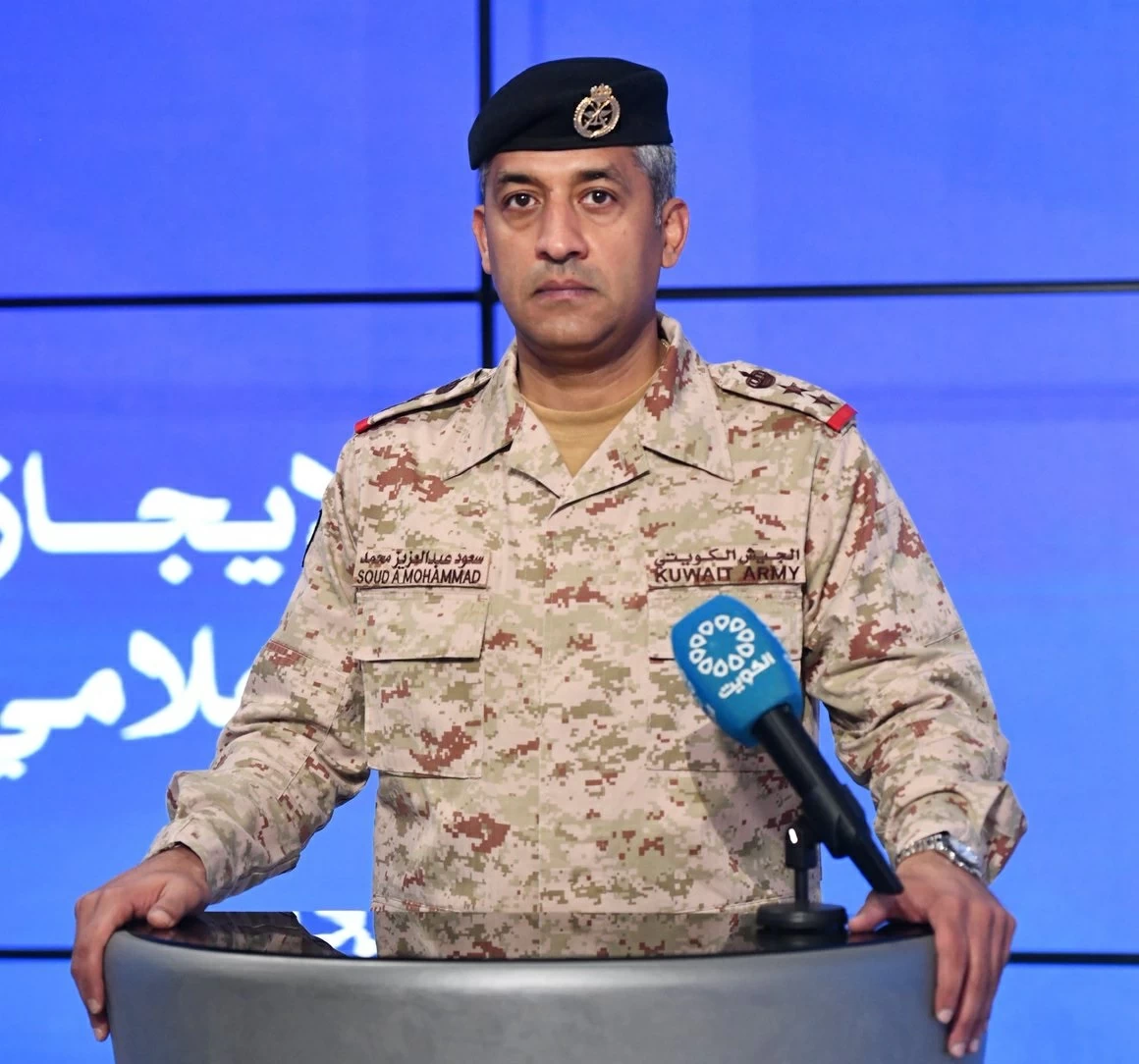
The Kuwaiti Army announced today (Sunday) that it has detected a total of 14 hostile ballistic missiles and 12 drones in the country's airspace over the past few hours. The military clarified that some of these attacks targeted one of the armed forces' camps, leading to injuries among 10 personnel who are currently receiving necessary medical treatment.
The Kuwaiti Army also reported that the hostile attacks resulted in material damage at the targeted site, where the attacks hit warehouses belonging to a private logistics company. Despite the material damage, no additional human casualties were recorded.
Details of the Incident
In a related context, the Kuwaiti Army confirmed that air defenses have so far detected a total of 307 ballistic missiles, 2 cruise missiles, and 616 drones. It noted that armed forces personnel are committed to fulfilling their duties in protecting the homeland and maintaining its security and stability.
On another note, the Kuwaiti Ministry of Electricity confirmed the stability of the electricity and water systems, indicating that approximately 22 overhead power transmission lines were damaged due to shrapnel from the attacks, with around 20 of them already repaired, while work is ongoing to fix the remaining two lines.
Background & Context
These events come at a time when the region is witnessing increasing tensions, as Gulf countries face repeated threats from hostile entities, heightening security concerns. The Gulf Cooperation Council (GCC) countries have expressed their alarm over these attacks, as the current situation necessitates enhanced security cooperation among member states.
The escalation in attacks reflects the ongoing tensions in relations between Iran and Gulf countries, which accuse Tehran of supporting armed groups that threaten their security and stability. Kuwait, like other Gulf nations, has shown its readiness to confront these threats with determination.
Impact & Consequences
The rise in hostile attacks on Kuwait could lead to serious repercussions for regional security, as these attacks may affect the economic and social stability of the country. Additionally, the injuries sustained by soldiers could impact the morale of the armed forces and increase pressure on the government.
On the other hand, these events may lead to strengthened military cooperation among Gulf countries, as all parties seek to enhance their defensive capabilities to counter the increasing threats. Furthermore, the stability of the electricity and water systems is vital for maintaining the daily lives of citizens.
Regional Significance
These events serve as a wake-up call for countries in the region, reflecting the increasing threats they face. The targeting of Kuwait highlights the rising tensions in the Gulf, which could lead to greater escalation in regional conflicts.
In this context, European Council President Antonio Costa announced the European Union's solidarity with the Gulf Cooperation Council countries, emphasizing the need to halt these attacks immediately. This underscores the importance of international cooperation in addressing the security challenges facing the region.
In conclusion, Kuwait remains on high alert to confront any future threats, as it seeks to maintain its security and stability under the current circumstances.