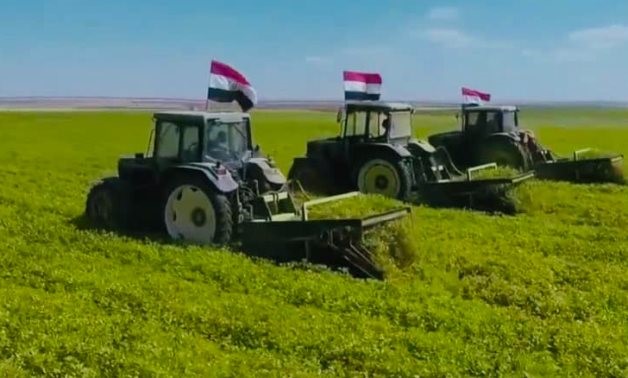
The Governor of Matrouh, Major General Khaled Shaib, has announced an ambitious plan aimed at enhancing food security in Egypt through agricultural expansion in desert areas. This initiative comes at a critical time as the country faces increasing challenges in securing its food needs, necessitating effective steps to boost agricultural production.
The new plan includes the reclamation of vast areas of desert land, providing technical and financial support to farmers, in addition to improving agricultural infrastructure. This project is part of a broader strategy aimed at achieving self-sufficiency in essential agricultural crops.
Details of the Initiative
The Governor of Matrouh clarified that the plan targets the reclamation of approximately 100,000 acres of desert land, which will contribute to increasing local agricultural production. He also emphasized the importance of providing the necessary water for irrigation, as modern techniques will be used in water resource management to ensure sustainable agriculture in these areas.
The plan will also include the establishment of training centers for farmers to equip them with the knowledge and skills needed to enhance their productivity. This is part of the Egyptian government's efforts to strengthen food security and reduce reliance on imports.
Background & Context
Egypt is one of the countries facing significant challenges in food security, as a large portion of its food needs relies on imports. These challenges have intensified in recent years due to climate changes and the increasing population growth.
In this context, the Egyptian government seeks to achieve self-sufficiency in agricultural crops by utilizing desert lands and increasing cultivated areas. Several similar projects have been implemented in other regions of the country, reflecting the government's direction towards achieving food security.
Impact & Consequences
This plan is expected to improve the living standards of farmers in Matrouh, as it will provide them with new job opportunities and increased income. It will also help reduce the food gap that the country suffers from, thereby enhancing price stability and reducing dependence on imports.
Moreover, increasing agricultural production will contribute to strengthening national food security, reflecting the government's commitment to achieving sustainable development in the agricultural sector.
Regional Significance
The Matrouh experience serves as a model that can be emulated in other Arab countries facing similar food security challenges. Agricultural expansion in desert areas can contribute to achieving self-sufficiency and enhance the ability of countries to confront food crises.
These initiatives also reflect the importance of cooperation among Arab countries in exchanging agricultural expertise and technologies, contributing to achieving regional food security.
In conclusion, the Governor of Matrouh's plan represents an important step towards enhancing food security in Egypt and underscores the importance of investing in agriculture as a means to achieve sustainable development.