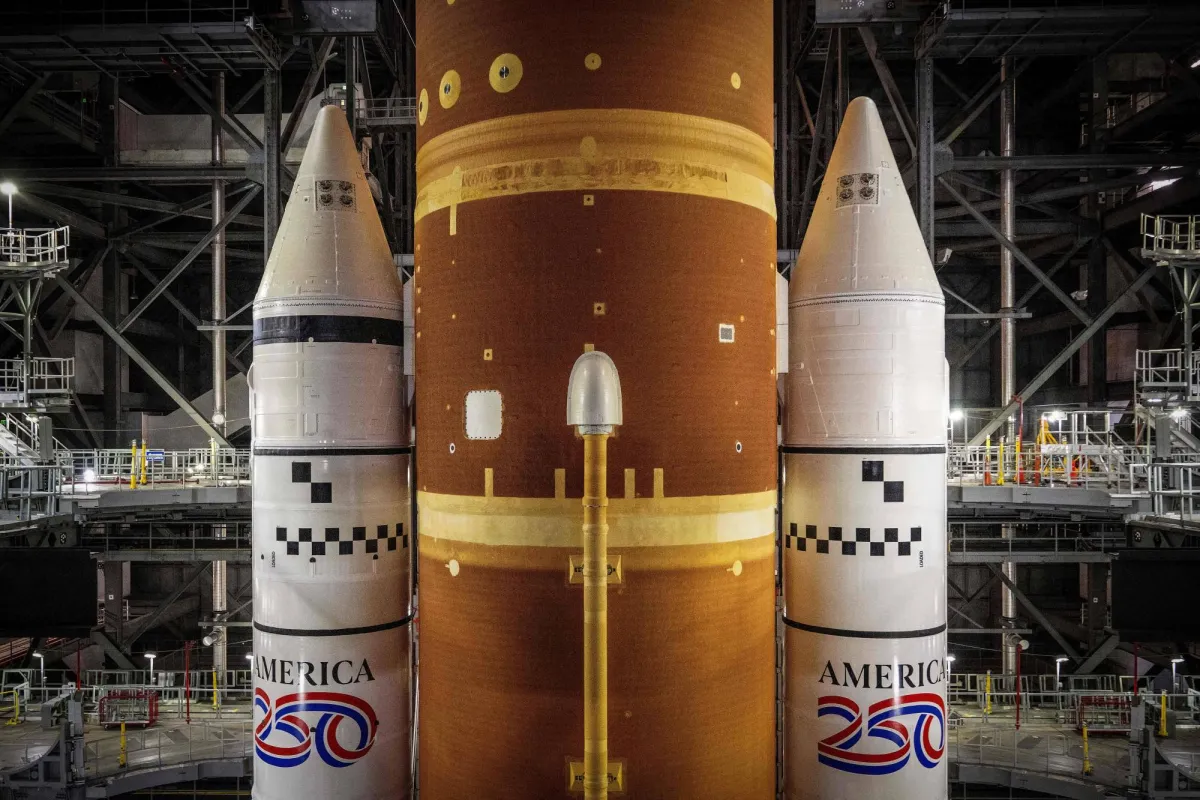
NASA has launched the Artemis 2 mission, representing the first crewed flight in the lunar return program in decades. While attention typically focuses on the massive rocket carrying the spacecraft into space, the essence of the mission lies in a complex system of technologies operating behind the scenes, designed to enable humans to live and work beyond Earth.
Artemis 2 does not aim to land on the Moon; rather, it serves as a comprehensive test flight for the systems that future missions will rely on. These systems include navigation, communication, life support, and energy management, as well as human-machine interaction in the deep space environment. This shift reflects a change in the philosophy of space exploration, where the focus has moved from mere 'arrival' to 'sustainability,' marking a crucial step toward further journeys, such as to Mars.
Event Details
At the heart of the mission is the Orion spacecraft, which can be seen as an integrated platform combining several systems that work in harmony. It is not just a capsule for transporting astronauts but a closed environment that simulates Earth-like living conditions. This system includes life support systems that control oxygen, pressure, humidity, water purification, and waste management, along with health monitoring systems that continuously track the crew's condition. All these elements make the spacecraft akin to an 'operating system' that manages everything related to human life in space.
Orion also relies on the European Service Module developed by the European Space Agency to provide power, propulsion, and essential resources. This international integration reflects the transformation of space programs from national projects to shared global infrastructures.
Background & Context
In deep space, one cannot fully rely on ground systems, as signals take time to reach, posing challenges for immediate decision-making. Therefore, Artemis 2 depends on a mix of autonomous navigation and ground communication, granting the spacecraft a degree of autonomy. This capability is not merely a technical detail but a necessity, especially when considering further missions where time delays become more significant.
The spacecraft operates on solar power, but the challenge lies not only in generating energy but also in managing it efficiently. Devices, life systems, and communications all depend on precise energy distribution. Additionally, heat represents a fundamental challenge, as the spacecraft can be exposed to extreme temperatures, necessitating precise thermal control systems to maintain internal environmental stability.
Impact & Consequences
While the launch represents a critical moment, the return to Earth is considered one of the most complex phases of the mission. The spacecraft re-enters the atmosphere at tremendous speeds, generating intense heat that requires advanced thermal protection. This shield not only protects the spacecraft but also determines the success of the mission in safely returning the crew, a crucial element in any long-term space program.
Artemis 2 is not just a test of machines but also of human capabilities. Astronauts will be equipped with sensors to monitor vital signs, aiming to understand the effects of space travel on the human body. This reflects a shift in perspective regarding the crew, from 'users' of the spacecraft to data points within an integrated system, where the ability to analyze this data will be critical in designing future missions.
Regional Significance
The Artemis 2 mission is a significant step towards broader space exploration, potentially opening new horizons for Arab countries in the field of space. With increasing Arab interest in space, this mission could inspire new generations of scientists and engineers in the region and enhance international cooperation in this domain.
In conclusion, Artemis 2 should not be viewed as a standalone mission but as part of a long journey towards developing technologies that enable humans to travel to Mars and stay there. What is happening today is not just a new launch but an attempt to redefine the relationship between humans and space through technologies that may make existence beyond Earth sustainable.