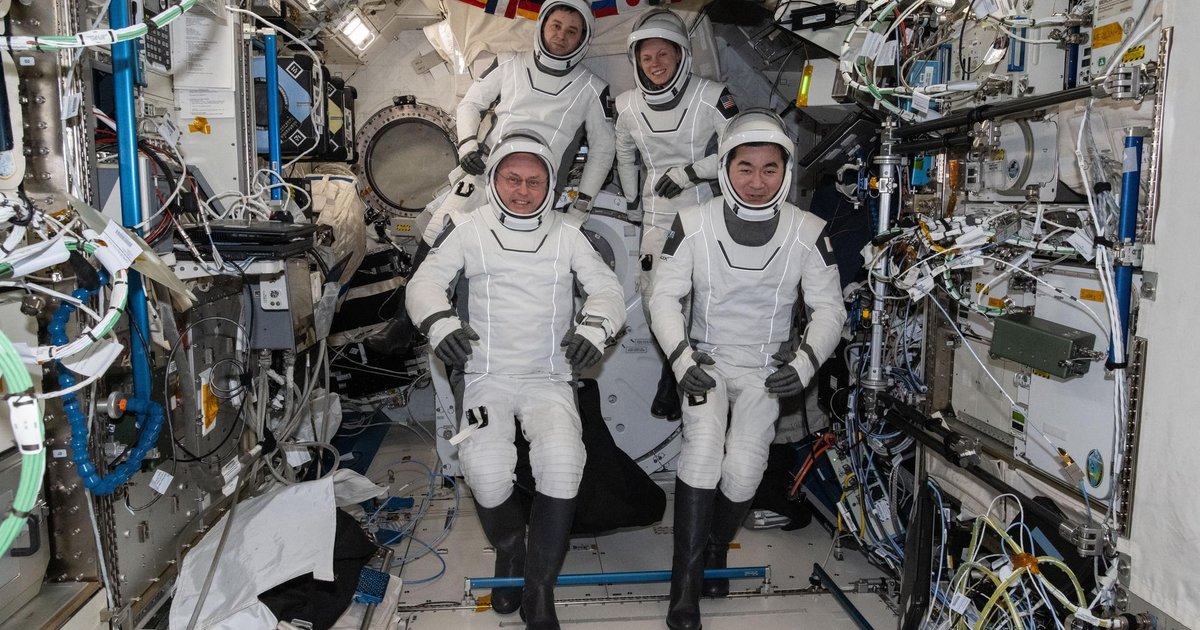
NASA has announced its readiness to launch the Artemis-2 mission, which represents the return of humans to the Moon after more than fifty years since the first human landing on its surface. The launch is scheduled for April 1, 2024, during which the spacecraft will carry four astronauts on a journey around the Moon.
This mission is part of the Artemis program, which aims to return humans to the Moon and explore deep space. Artemis-2 is a significant step towards achieving this goal, as it will test the spacecraft and ensure its readiness for future missions.
Event Details
Artemis-2 will be the first crewed mission since Apollo-17 in 1972, with astronauts embarking on a journey lasting approximately 10 days. The spacecraft will orbit the Moon, providing the crew with the opportunity to test new systems and technologies that will be used in future missions.
The mission includes four astronauts, among them astronaut Christina Koch, who will become the first woman to travel to the Moon. The mission also features astronaut Jeremy Hansen from Canada, reflecting international cooperation in space exploration.
Background & Context
Historically, human landing on the Moon was a landmark event in space history, first achieved in 1969 during the Apollo-11 mission. Since then, no space agency has sent astronauts to the Moon, making the Artemis-2 mission a milestone in the history of space exploration.
Through the Artemis program, NASA aims to establish a permanent base on the Moon by 2028, which will assist in developing new technologies for Mars exploration. This program also represents a step towards achieving larger goals in deep space exploration.
Impact & Consequences
The Artemis-2 mission is considered a strategic step for the United States in the space race, as it seeks to enhance its position as a leading power in space. This project not only reflects American ambitions but also international cooperation in space exploration, with space agencies from several countries participating in this program.
Moreover, this mission could open new avenues for innovation and technology, contributing to the development of new technologies that can be used in various fields, including communications and renewable energy.
Regional Significance
Although the Artemis-2 mission focuses on the Moon, it has potential implications for the Arab region. This mission could encourage Arab countries to invest in their own space programs, enhancing their technological and scientific capabilities.
Furthermore, this mission could foster cooperation between Arab countries and leading space nations, opening the door for new partnerships in research and development.
In conclusion, the launch of the Artemis-2 mission marks a significant milestone in space history and reflects global ambitions for space exploration. This mission is not just a step towards the Moon, but also a step towards a bright future in space exploration.