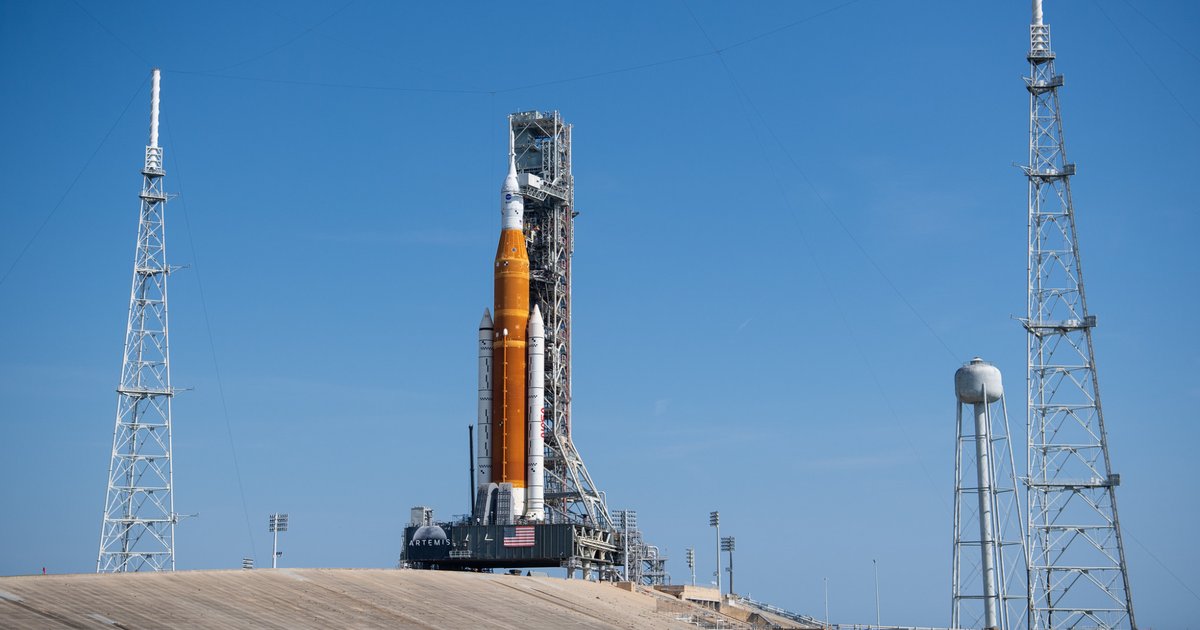
The American National Aeronautics and Space Administration (NASA) is preparing to launch the spacecraft "Artemis-2" on a historic journey to the Moon. This mission represents the first crewed flight under the Artemis program after a 54-year hiatus since the last human mission to the Moon aboard the "Apollo 17" spacecraft in 1972.
The launch window will open for two hours starting at 1:24 AM on Thursday, April 2, 2026, Mecca time (10:24 PM on Wednesday, Greenwich Mean Time). If the launch does not occur during this period, it will be postponed to the next day's window, with the possibility of extending it for four consecutive days.
Event Details
Onboard "Artemis-2" will be four astronauts: Americans Reid Wiseman, Victor Glover, Christina Koch, and Canadian Jeremy Hansen. The journey will last approximately ten days and aims to test life support systems in the Orion spacecraft for the first time with humans onboard, paving the way for future human landings on the Moon's surface.
NASA will provide live coverage of all mission stages, including daily briefings and updates from the Johnson Space Center in Houston. The public can follow the event live through NASA's official website, and they can register for the "NASA Virtual Guest" program to receive alerts and real-time updates before the launch, along with educational materials and exclusive images.
Background & Context
The Artemis-2 mission is part of NASA's vision for returning to the Moon, aiming to enhance space exploration and develop the technologies necessary for future missions to Mars. Since the end of the Apollo program, humanity has not witnessed any crewed missions to the Moon, making this mission a milestone in the history of space exploration.
Through the Artemis program, NASA aims to establish a permanent lunar base, enabling scientists to conduct advanced scientific research and enhancing humanity's capacity for broader space exploration.
Impact & Consequences
The Artemis-2 mission is a significant step towards achieving larger goals in space exploration, as it will contribute to the development of new technologies and enhance international cooperation in the field of space. The success of this mission could open doors for further investments in space and encourage other countries to engage in similar exploration programs.
NASA anticipates that this mission will mark the beginning of a new era of space exploration, potentially leading to new scientific discoveries about the Moon and other planets, thereby enhancing our understanding of the universe.
Regional Significance
The Artemis-2 mission presents an opportunity for Arab countries to strengthen their partnerships in the field of space, as this mission could inspire a new generation of scientists and engineers in the region. Additionally, cooperation in space could contribute to technological development and innovation in Arab countries, enhancing their standing on the global stage.
In light of global trends towards space exploration, Arab countries can benefit from these opportunities to bolster their scientific and technological capabilities, contributing to sustainable development.
In conclusion, NASA invites the global public to follow this unique journey, as humanity returns to the lunar realm after more than half a century.