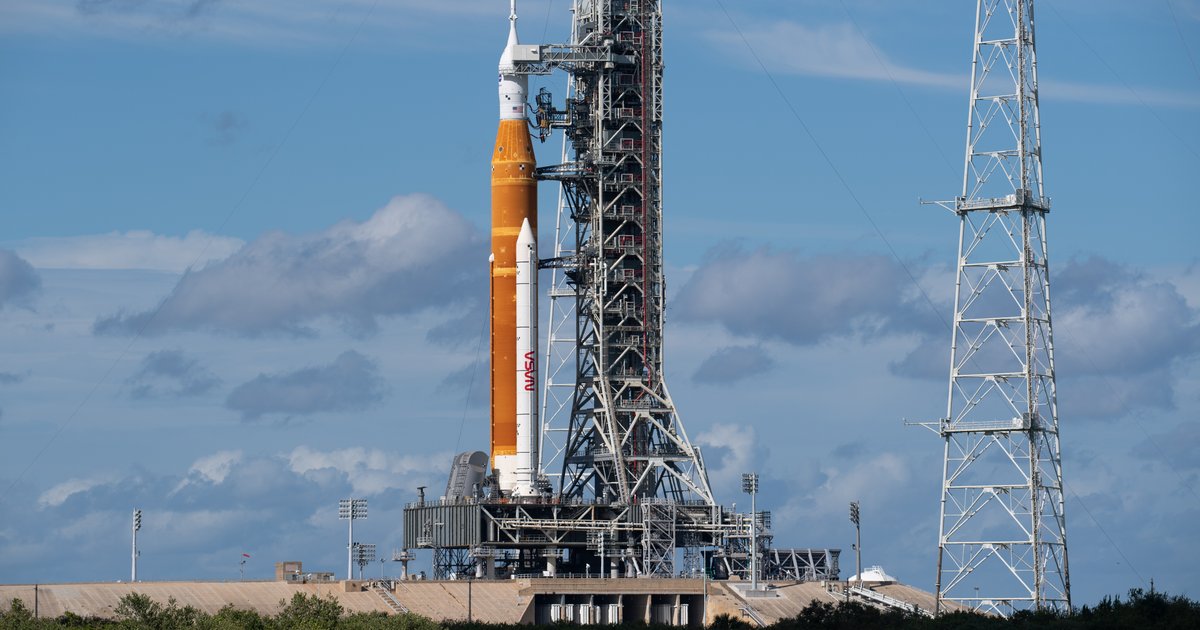
NASA has announced the successful launch of the Artemis-2 mission, which took off from the Kennedy Space Center in Florida, carrying the Orion spacecraft and its crew of four astronauts. The crew consists of three Americans and one Canadian, and the spacecraft is expected to orbit the Moon five days after launch.
This mission comes after a two-month delay, as NASA had hoped to launch earlier. However, the launch marks a new beginning for space exploration, as this mission is the first of its kind in over half a century, reflecting technological advancements and a growing interest in space exploration.
Launch Details
The launch occurred at 12:00 PM Eastern Time, with the SLS rocket lifting off from launch pad 39B. The Orion spacecraft is equipped with the latest technologies, including advanced navigation and communication systems, ensuring the crew's safety during the journey.
The crew will conduct a series of scientific experiments during the mission, which include studying the effects of space on the human body, as well as testing new technologies that may be used in future missions, including a return to the Moon and exploration of Mars.
Background & Context
The beginnings of lunar exploration date back to the 1960s, with the Apollo 11 mission being the first to land on the Moon in 1969. Since then, there has been a growing interest in space exploration, but lunar activities declined after the Apollo program ended. Now, NASA is returning with the Artemis-2 mission, which aims to bring humans back to the Moon by 2025.
This mission is part of a larger plan that includes establishing a permanent lunar base, which will help develop new technologies for exploring other planets, including Mars. There is also increasing international collaboration in this field, with other countries like Canada participating in this mission.
Impact & Consequences
The success of the Artemis-2 mission represents an important step in space exploration, as it could lead to the development of new technologies that benefit humanity. Additionally, this mission enhances the United States' position as a leading power in space, which could influence international policies regarding space exploration.
Furthermore, the success of this mission may encourage more investments in the space sector, both from governments and private companies, potentially accelerating innovations in this field.
Regional Significance
While the Artemis-2 mission focuses on the Moon, there could be potential impacts on the Arab region. As interest in space grows, Arab countries may seek to enhance their space programs, such as the UAE's Mars exploration program, which launched the Hope Probe in 2020.
International cooperation in space could open new horizons for Arab countries, enhancing their scientific and technological capabilities. There are also opportunities for collaboration between Arab nations and global space agencies, which could contribute to the development of joint projects in the future.