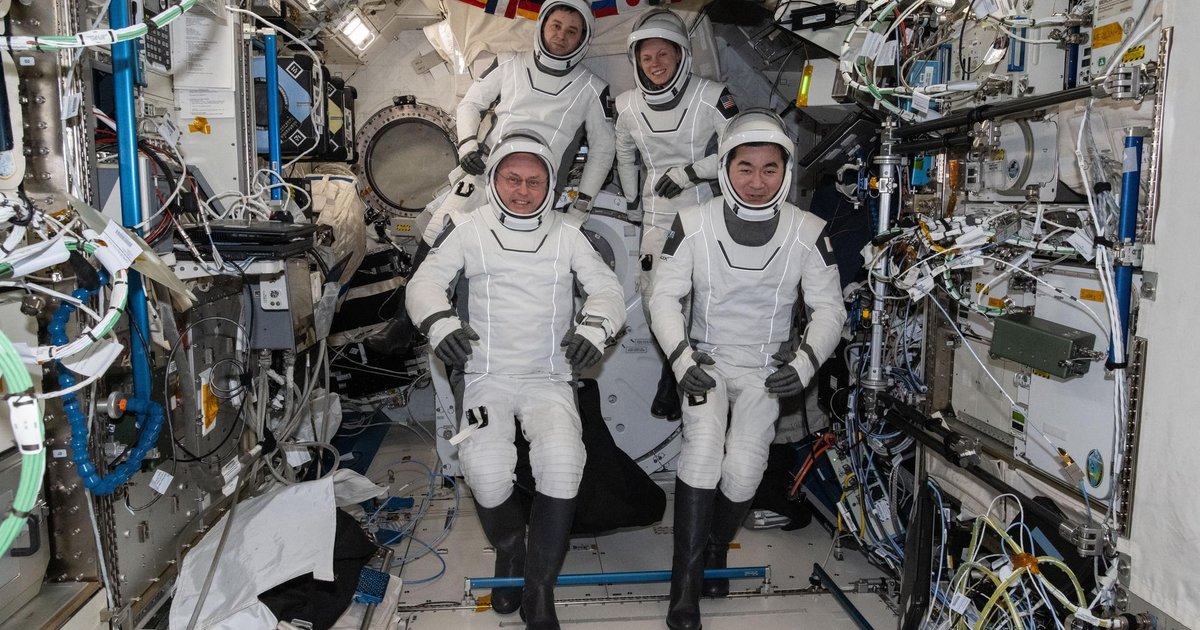
NASA is gearing up to launch the Artemis II mission in the coming days, which will send four astronauts on a journey around the Moon. This mission aims to pave the way for future landings on the lunar surface and establish a permanent base there, reflecting the United States' commitment to space exploration.
The Artemis II mission is part of the Artemis program, which has taken years of work and involves thousands of specialists, costing approximately $93 billion so far. However, some feel that returning to the Moon is not new, as the United States witnessed the first human landing on the lunar surface over 50 years ago during the Apollo mission.
Event Details
Through the Artemis program, NASA seeks to achieve multiple objectives, including exploring natural resources on the Moon, such as rare elements and water. According to space scientists, the Moon contains chemical elements similar to those found on Earth, making it an intriguing destination for exploration.
Water is considered one of the most important resources, as it can be used for drinking, generating oxygen, and even as rocket fuel. Research indicates that the Moon has substantial amounts of ice water, particularly in polar regions, enhancing the possibility of sustaining life there.
Background & Context
Historically, American space missions in the 1960s and 1970s were driven by competition with the Soviet Union. Today, the United States is competing with China, which has made significant progress in its space program, successfully landing robots and vehicles on the Moon and planning to send astronauts there by 2030.
Although the Outer Space Treaty of 1967 prevents any country from claiming ownership of the Moon, nations can exploit its resources. This means that a presence on the Moon could provide countries with a strategic advantage in utilizing its resources.
Impact & Consequences
The Artemis II mission is a vital step towards achieving larger ambitions, such as sending humans to Mars by the 2030s. Experts believe that the Moon will serve as a testing ground for developing new technologies, such as energy generation and habitat construction, making journeys to Mars safer.
NASA aims to use the Moon as a base for developing critical technologies, which could lead to improvements in various fields, including energy and the environment, benefiting life on Earth.
Regional Significance
Developments in space exploration are particularly significant for the Arab region, as they can inspire new generations of scientists and engineers. Additionally, cooperation in space can open new horizons for Arab countries, enhancing their standing on the international stage.
In light of the global trend towards space exploration, Arab countries should consider how to capitalize on these opportunities, whether through collaboration with global space agencies or by developing their own space programs.