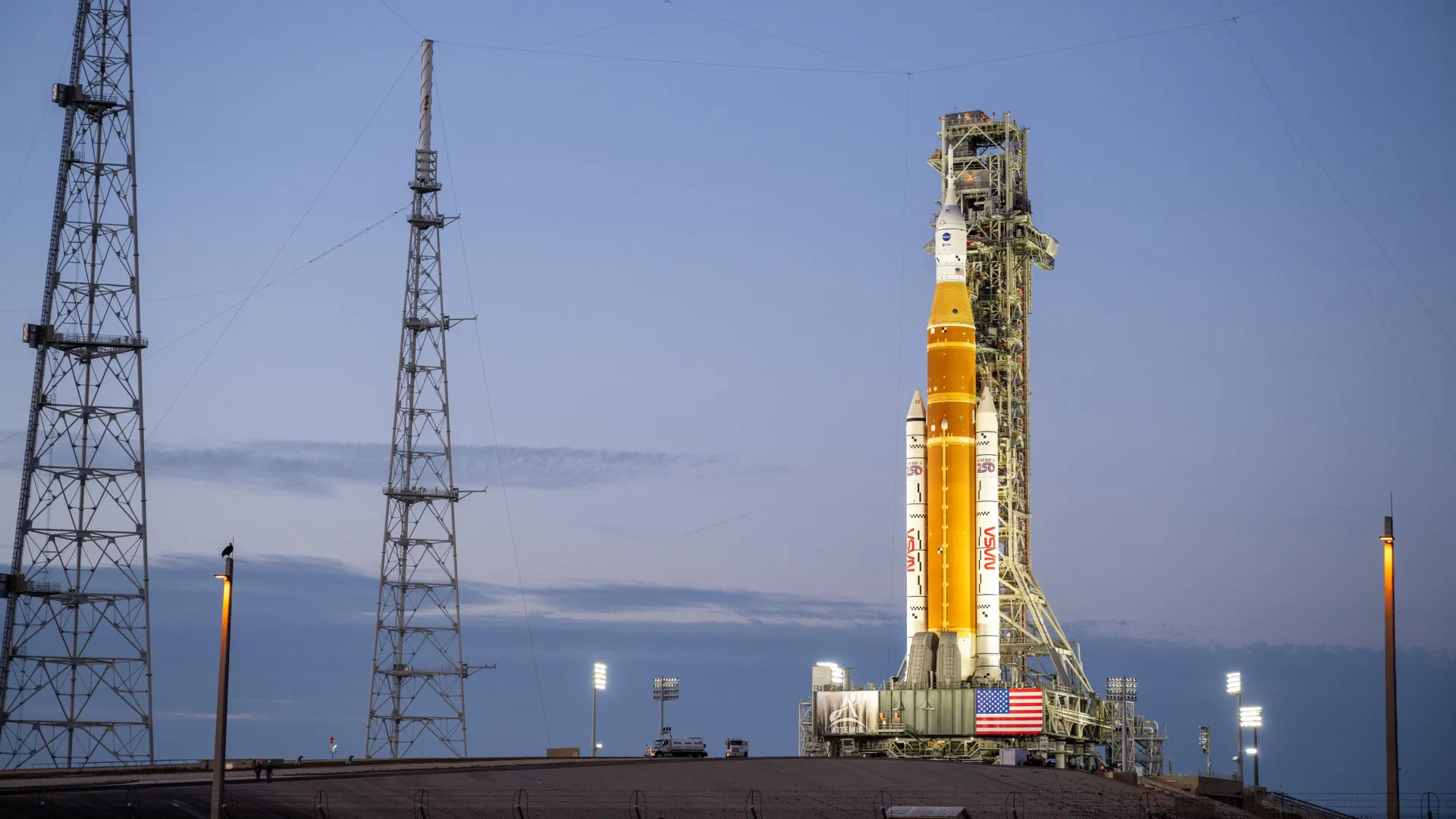
NASA has announced the launch of the Artemis II mission, which is set to be the first crewed mission to the Moon in over half a century. This mission represents a significant step in the Artemis program, which aims to return humans to the Moon and explore deeper space. The mission is scheduled to launch in 2024, sending astronauts into lunar orbit and paving the way for more ambitious future missions.
Artemis II will be the second mission under the Artemis program, following the successful Artemis I, which was an uncrewed mission that tested the space launch system and successfully sent the Orion spacecraft into lunar orbit. This new mission will see four astronauts sent into space, who will need to conduct multiple tests during the flight, helping to improve space travel technologies.
Mission Details
The Artemis II mission includes a journey around the Moon, where the astronauts will conduct scientific experiments and technical tests. The flight is expected to last approximately 10 days, during which the astronauts will orbit the Moon before returning to Earth. This mission is not just an exploratory flight; it is part of a larger plan to establish a permanent base on the Moon's surface, enabling further exploration of other planets in the future.
This mission is part of NASA's vision for space exploration, which also includes sending astronauts to Mars in the coming years. The success of Artemis II will enhance the United States' ability to lead space exploration efforts and reflects its commitment to innovation and scientific advancement.
Background & Context
The history of lunar exploration dates back to 1969, when the Apollo 11 spacecraft landed on the Moon, making Neil Armstrong the first human to set foot on its surface. Since then, no astronauts have been sent to the Moon, making the Artemis II mission a historic event in the space world. After decades of hiatus, humanity is now returning to explore the Moon, focusing on using it as a launchpad for further explorations.
This mission is part of a global trend toward space exploration, with many countries like China and Russia developing their own space programs. The competition in this field reflects the strategic importance of space, increasing the significance of the success of Artemis II.
Impact & Consequences
The success of Artemis II could have wide-ranging effects across multiple fields, including science and technology. The data collected during this mission will contribute to the development of new technologies that may be used in other areas, such as communications and energy. Additionally, this mission will enhance international cooperation in space, as other countries are expected to participate in future projects.
Moreover, the success of this mission may encourage further investments in the space sector, potentially leading to the emergence of new companies and the development of innovative technologies. Exploring the Moon could open new horizons for science, reinforcing the United States' position as a leading power in space.
Regional Significance
Although the Artemis II mission focuses on the Moon, it may have potential impacts on the Arab region. This mission could inspire Arab countries to invest in their own space programs, as the importance of space as a tool for development and scientific progress increases. It may also open doors for cooperation between Arab countries and global space agencies.
Developing space programs in Arab countries could contribute to enhancing education and scientific research, reflecting the importance of space as a tool for sustainable development. Space exploration could have positive effects on the Arab economy by creating new job opportunities and fostering innovation.
In conclusion, the Artemis II mission represents a significant step toward space exploration, bringing humanity back to the Moon and opening new avenues for scientific and technological advancement. The success of this mission will enhance countries' capabilities in space exploration and reflect the importance of international cooperation in this field.