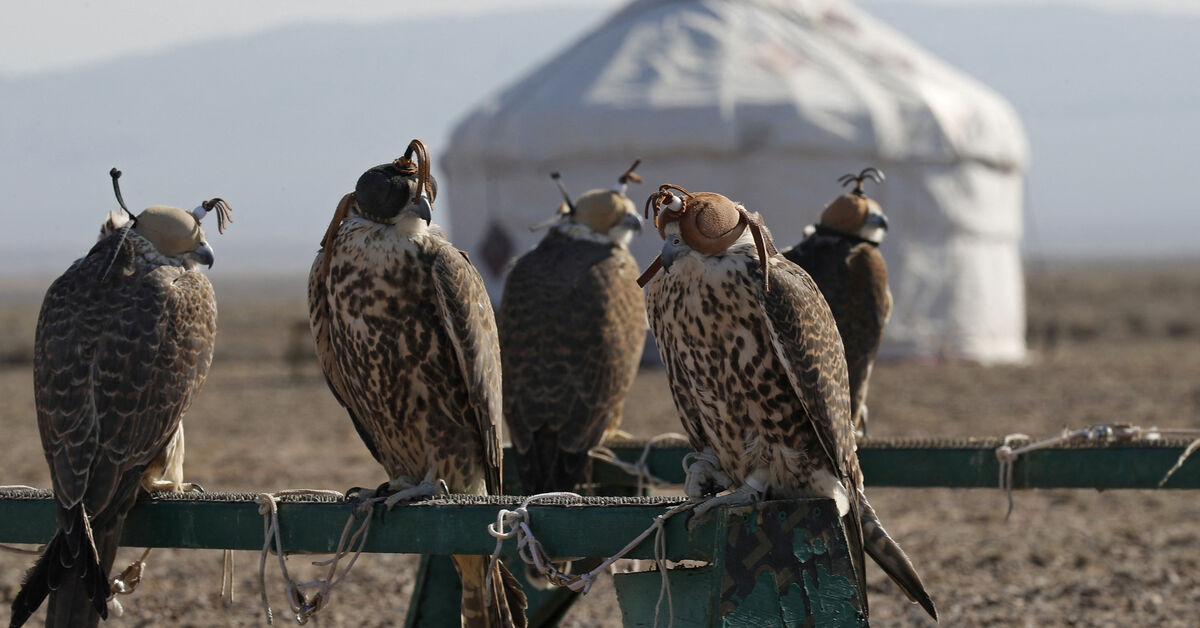
In an important environmental initiative, Kazakhstan has released 34 Saker Falcons in the Altyn Emel National Park, as part of its efforts to restore the populations of these endangered birds. The falcons soared above the rugged desert landscapes of southeastern Kazakhstan, representing an integral part of the country's cultural and historical heritage.
The Saker Falcons are considered a symbol of nobility and freedom, historically associated with the nomadic peoples living in the Kazakh steppes, where they were used as reliable companions in hunting. With their numbers declining due to various factors including habitat loss and poaching, this initiative comes as a necessary step to preserve this unique species.
Event Details
The release took place on April 3, where the Altyn Emel National Park witnessed a large gathering of enthusiasts and environmentalists to witness this historic moment. The falcons were carefully prepared before their release, equipped with the necessary technologies to monitor and record their movements in their new environment.
Kazakhstan is collaborating with several international and local organizations on this project, which aims to enhance biodiversity in the country. This initiative is part of broader efforts to conserve wildlife in Kazakhstan, known for its rich environmental diversity.
Background & Context
Historically, Saker Falcons were used for hunting by nomadic tribes in Kazakhstan, representing a part of their culture and identity. Over time, the numbers of these birds began to decline due to several factors, including climate change and the destruction of natural habitats.
Currently, Kazakhstan is striving to enhance its environmental protection efforts, having launched several similar initiatives in recent years. Studies have shown that restoring endangered species can have a positive impact on the overall ecosystem.
Impact & Consequences
This step highlights the importance of international cooperation in environmental protection, with Kazakhstan playing a pivotal role in biodiversity conservation efforts in the region. The success of this project may encourage other countries to take similar steps to protect endangered species.
Additionally, this initiative has positive implications for eco-tourism in Kazakhstan, potentially attracting more visitors interested in nature and wildlife. Therefore, this project not only enhances biodiversity but also contributes to boosting the local economy.
Regional Significance
This initiative serves as a model for the Arab world, where many countries face similar challenges in conserving biodiversity. Arab nations can benefit from successful experiences in Kazakhstan to develop similar programs to protect endangered species in their regions.
Furthermore, these efforts could foster cooperation between Arab countries and Kazakhstan in environmental and wildlife conservation, strengthening bilateral relations and contributing to achieving sustainable development goals.
In conclusion, the release of Saker Falcons in Kazakhstan represents an important step toward preserving biodiversity and reflects the country's commitment to protecting its environment. Through such initiatives, other countries can draw inspiration from successful experiences and work to enhance their efforts in wildlife conservation.