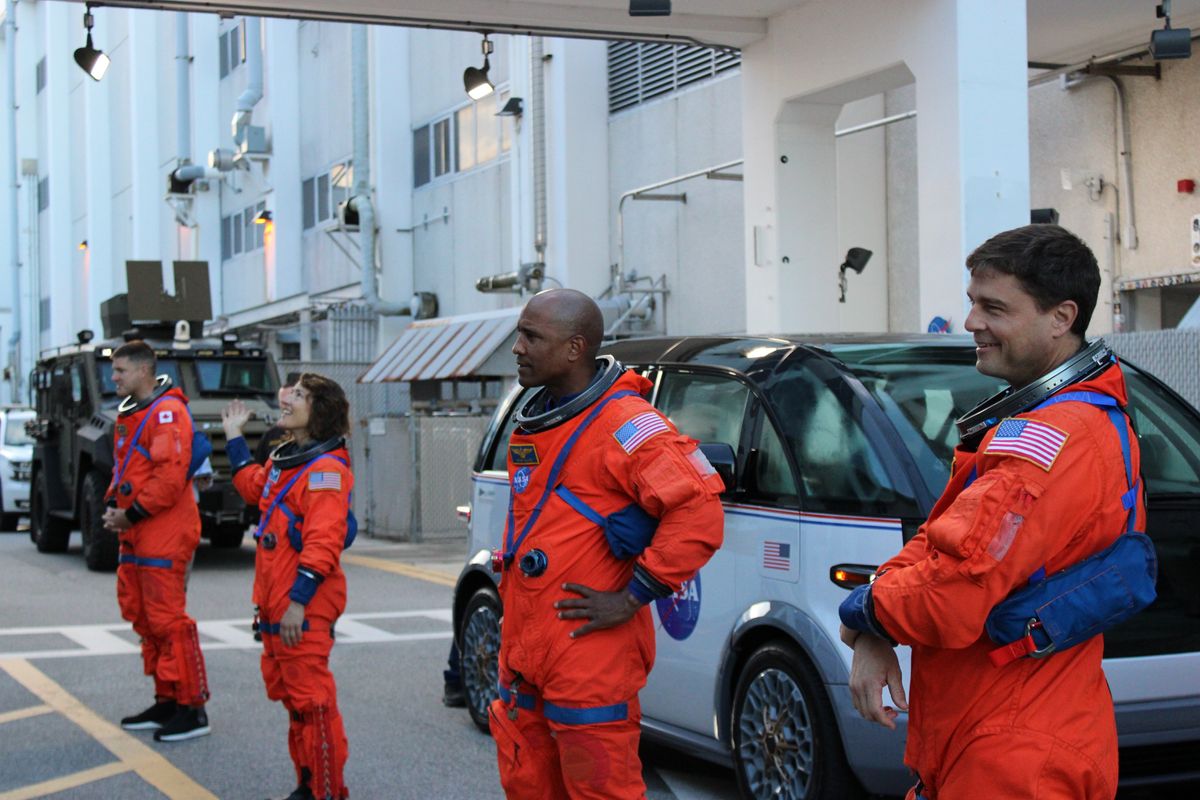
The 'Artemis 2' mission has launched from Kennedy Space Center in Florida, marking the first crewed journey to the moon in half a century. This historic mission represents a significant step towards space exploration, carrying four astronauts, including the first woman and the first person of color to travel to the moon.
This mission comes more than 50 years after the last crewed moon mission, 'Apollo 17,' which was launched in 1972. The 'Artemis 2' mission aims to test the systems of the 'Orion' spacecraft and develop new technologies in preparation for future missions.
Event Details
'Artemis 2' launched at 7:00 AM Eastern Time, with the 'Space Launch System' (SLS) rocket carrying the spacecraft. Minutes after liftoff, the spacecraft separated from the rocket and began its journey to the moon, where it is expected to orbit before returning to Earth.
The four astronauts participating in this mission are: Christina Koch, John Cassidy, Jeremy Hansen, and Ashley Harris. They were carefully selected from a large pool of applicants, representing a diverse range of backgrounds and experiences.
Background & Context
The 'Artemis 2' mission is part of the 'Artemis' program launched by the National Aeronautics and Space Administration (NASA) in 2017. The program aims to return to the moon by 2024, with plans to explore the lunar surface and establish a permanent base there.
This mission comes at a time when competition among nations in space is increasing, with both China and Russia also seeking to enhance their presence in outer space. There is also growing interest from the private sector in space exploration, further increasing the importance of these missions.
Impact & Consequences
The 'Artemis 2' mission is a strategic step towards enhancing American capabilities in space, as it will contribute to the development of new technologies that can be used in future missions to Mars and other planets. It also strengthens international cooperation in space, with many countries participating in the development of these technologies.
Moreover, the success of this mission could stimulate further investments in the space sector, potentially leading to the development of new industries and job creation in this growing field.
Regional Significance
The 'Artemis 2' mission is significant not only for the United States but for the entire world, including Arab countries. This mission could inspire Arab youth and encourage them to engage in the fields of Science, Technology, Engineering, and Mathematics (STEM).
There are also opportunities for collaboration between Arab countries and global space agencies, which could contribute to the development of local space programs that enhance scientific and technological capabilities in the region.
In conclusion, the 'Artemis 2' mission represents a turning point in the history of space exploration, rekindling hope for a return to the moon and opening new horizons for exploring outer space.