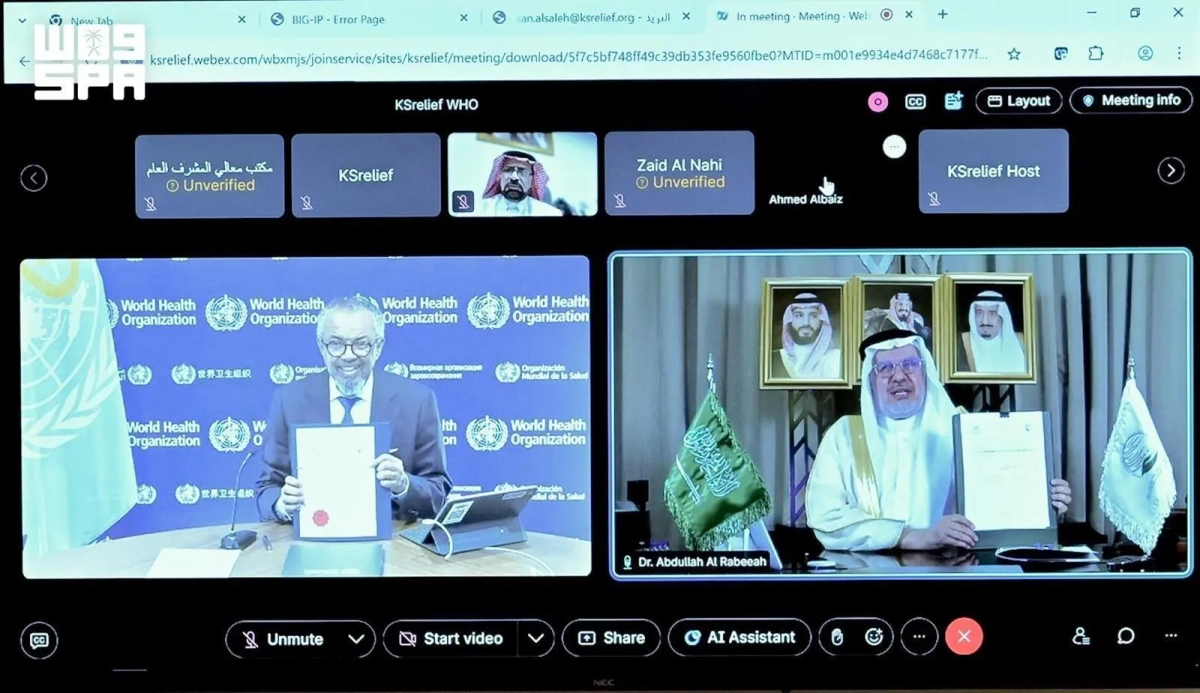
In a significant step to enhance health services in the Gaza Strip, a joint program has been signed between the King Salman Humanitarian Aid and Relief Center and the World Health Organization, announced during a video conference held on Thursday. The program aims to improve health and nutritional conditions by addressing cases of acute malnutrition through the distribution of comprehensive medical kits and essential food supplies.
The program includes the distribution of special medical kits for acute malnutrition cases, as well as the provision of nutritional supplements, vitamins, minerals, and specialized food formulas. It is expected that 258,223 individuals will directly benefit from this program, while approximately 1,172,467 others will benefit indirectly.
Event Details
The program was signed by Dr. Abdullah Al-Rabeeah, advisor at the Royal Court and General Supervisor of the King Salman Center, and Dr. Tedros Adhanom Ghebreyesus, Director-General of the World Health Organization. This collaboration is part of the humanitarian efforts made by the Kingdom of Saudi Arabia to support the Palestinian people and improve medical services in the health sector.
This program is part of the humanitarian and relief projects implemented by the Kingdom, which seeks to enhance the capabilities of the health system in Palestine and provide necessary medical services to citizens.
Background & Context
The Gaza Strip suffers from significant health challenges due to the ongoing blockade and repeated conflicts, leading to a worsening of malnutrition cases among children and women. According to previous reports, the rate of acute malnutrition in Gaza has risen significantly, necessitating urgent intervention to improve health conditions.
Historically, Saudi Arabia has been one of the first countries to provide humanitarian support to Palestine, having implemented numerous health and educational projects in various Palestinian areas. This collaboration with the World Health Organization reflects the Kingdom's commitment to assisting Palestinians in facing health challenges.
Impact & Consequences
This program is expected to contribute to improving the health status of many families in Gaza, which could lead to a reduction in disease rates associated with malnutrition. Additionally, providing medical and nutritional supplies will help enhance the capacity of health facilities to offer better services.
This program serves as a model for international cooperation in the field of humanitarian relief and highlights the importance of joint efforts among countries and international organizations to address humanitarian crises. It also underscores the effective role that Arab countries can play in supporting humanitarian causes.
Regional Significance
This initiative is significant not only for Gaza but for the entire Arab region, as it reflects Arab cooperation in addressing humanitarian crises. Enhancing health services in Gaza can serve as a model for other areas suffering from conflicts and humanitarian emergencies.
In conclusion, this program represents a positive step towards improving health conditions in Gaza and reflects the commitment of Saudi Arabia and the World Health Organization to provide necessary support to the Palestinian people during times of crisis.