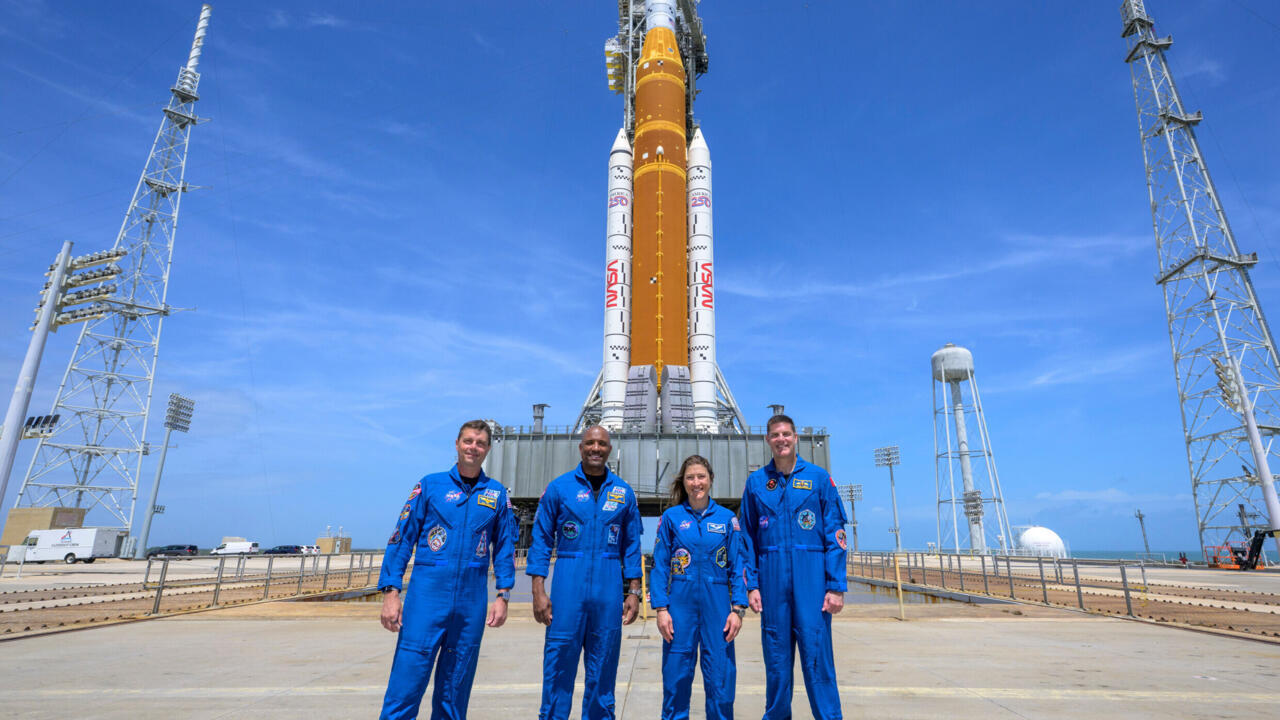
NASA is gearing up to launch the Artemis 2 mission from the Kennedy Space Center in Florida, marking the first time humans will return to lunar orbit in 53 years. The mission is set to launch on Wednesday evening, with four astronauts—three from the United States and one from Canada—participating in a critical test aimed at enhancing space exploration efforts.
The journey will last 10 days, during which the astronauts will conduct tests on the life support systems and technologies used in the spacecraft. This mission follows nearly half a century after the Apollo 11 mission, which witnessed the first human landing on the Moon in 1969, during a historic space race between the United States and the Soviet Union.
Event Details
The Artemis 2 mission is the second phase of the Artemis program, utilizing the Orion spacecraft to transport the astronauts to the Moon's vicinity. The launch will be executed using the Space Launch System rocket, the most powerful rocket in NASA's history, allowing it to break through the atmosphere swiftly before the spacecraft separates to continue its journey to the Moon.
The primary goal is to send the astronauts to the Moon's orbit without landing, to test the life support systems and technologies required for future missions aimed at landing on and exploring the lunar surface. The mission will also gather data on the effects of long-duration space travel on astronaut health, which will aid in developing new protocols for protecting astronauts in future missions.
Background & Context
The idea of lunar exploration dates back to the Cold War era when the Soviet Union launched the satellite Sputnik in 1957, igniting the space race between the two superpowers. In 1969, the United States achieved a historic milestone with the landing of Apollo 11 on the Moon, marking a turning point in space history.
After decades of halting human missions to the Moon, NASA launched the Artemis program in recent years, aiming to return humans to the Moon by the end of this decade. The first mission, Artemis 1, was launched in November 2022, sending the Orion spacecraft uncrewed, paving the way for the current mission.
Impact & Consequences
The Artemis 2 mission represents a significant step towards achieving NASA's goals in deep space exploration. The success of this mission will enhance the agency's capability to execute future missions, including landing on the Moon in the next mission, Artemis 4. Additionally, the data collected will improve understanding of the effects of space on astronaut health, which is vital for future missions to Mars.
NASA anticipates that this mission will foster international collaboration in space, as a Canadian astronaut is participating, reflecting the importance of international partnerships in space exploration.
Regional Significance
The Artemis 2 mission serves as an inspiration for many Arab countries seeking to enhance their capabilities in space. With increasing interest in space exploration in the region, this mission could encourage Arab nations to invest in space programs and develop the necessary technologies.
Furthermore, the success of this mission may open new avenues for collaboration between Arab countries and global space agencies, contributing to the enhancement of scientific and technological capabilities in the region.
In conclusion, the Artemis 2 mission represents a historic step towards space exploration, opening doors to a new future of scientific discoveries and international cooperation.