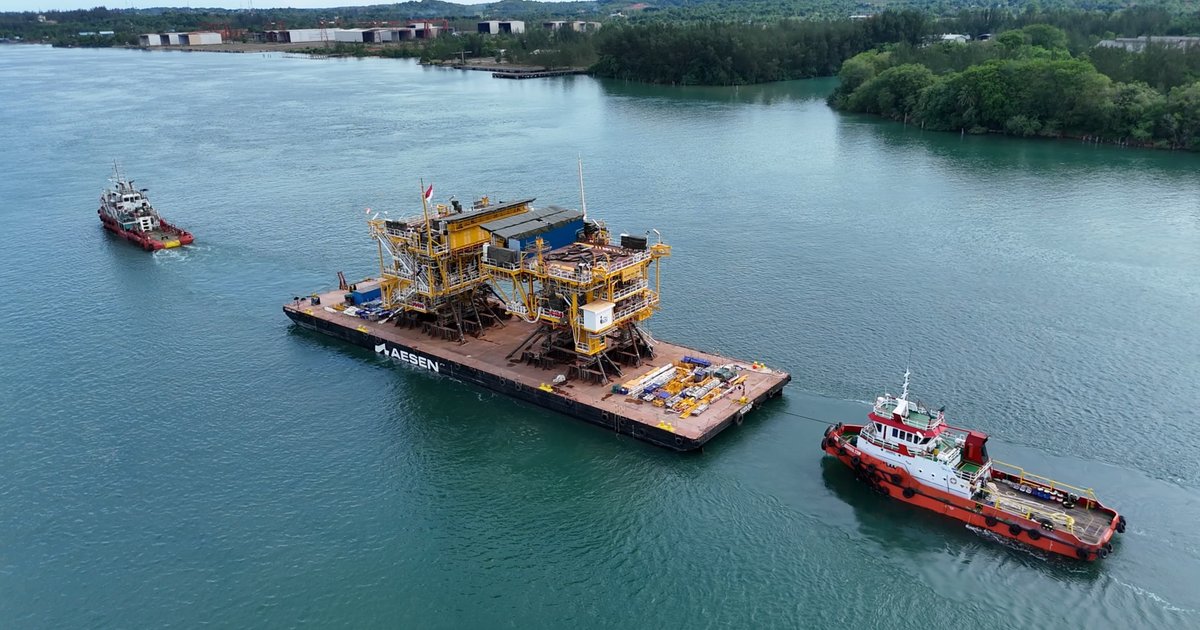
PT Pertamina Hulu Mahakam (PHM) has announced the commencement of the development of the Manbatu oil and gas field, situated in deep waters off the coast of Balikpapan, Indonesia. This project is part of the company's efforts to enhance energy production, aiming to achieve a daily output of 80 million cubic feet of gas.
In a statement, the company's director general, Setio Sapto Edi, confirmed that the project is progressing according to the established timeline, with the transfer of the offshore structure from the manufacturing facilities at PT Meindo Elang Indah in Tanjung Pinang, scheduled for March 26, 2026.
Event Details
The Manbatu field is located approximately 35 kilometers from the shores of Balikpapan, in water depths ranging from 50 to 60 meters. The project includes the construction of facilities capable of efficiently processing gas. The installation of the platform's topside is expected to be completed by mid-April 2026, with all work anticipated to be finalized by the beginning of the third quarter of the same year.
The project also involves the installation of 2.5 kilometers of subsea pipelines and the drilling of 11 new wells. Notably, significant progress has been made in utilizing local components, with locally manufactured production pipes being used entirely, reflecting the company's commitment to boosting the local economy.
Background & Context
Indonesia is one of the largest producers of oil and gas in Southeast Asia, with Pertamina playing a key role in this sector. Projects like the Manbatu field are part of the Indonesian government's strategy to enhance energy production and achieve energy self-sufficiency. In recent years, the country has seen an increase in investments in the energy sector, reflecting growing interest from global companies.
Historically, Indonesia has relied heavily on foreign investments in the energy sector, but there is a growing trend towards strengthening local capabilities and developing local technology. This shift reflects the government's desire to reduce dependence on foreign companies and promote economic sustainability.
Impact & Consequences
The Manbatu project is considered a significant step towards achieving Indonesia's energy goals. The project is expected to contribute to an increase in natural gas production, enhancing the country's ability to meet its domestic needs and boosting its exports. Additionally, the use of local components reflects the government's commitment to strengthening the local economy and creating new job opportunities.
Furthermore, the success of this project could encourage more investments in the energy sector, enhancing Indonesia's position as a regional energy hub. This project may also contribute to improving trade relations with other countries, especially given the increasing demand for natural gas in global markets.
Regional Significance
The Middle East is one of the largest producers of oil and gas in the world and faces similar challenges in enhancing local production and achieving sustainability. Indonesia's experience in developing local energy projects could serve as an inspiration for Arab countries, as they seek to diversify their income sources and reduce reliance on oil.
Moreover, strengthening cooperation between Arab countries and Indonesia in the energy sector could open new avenues for investment and technology exchange, contributing to sustainable development in the region.