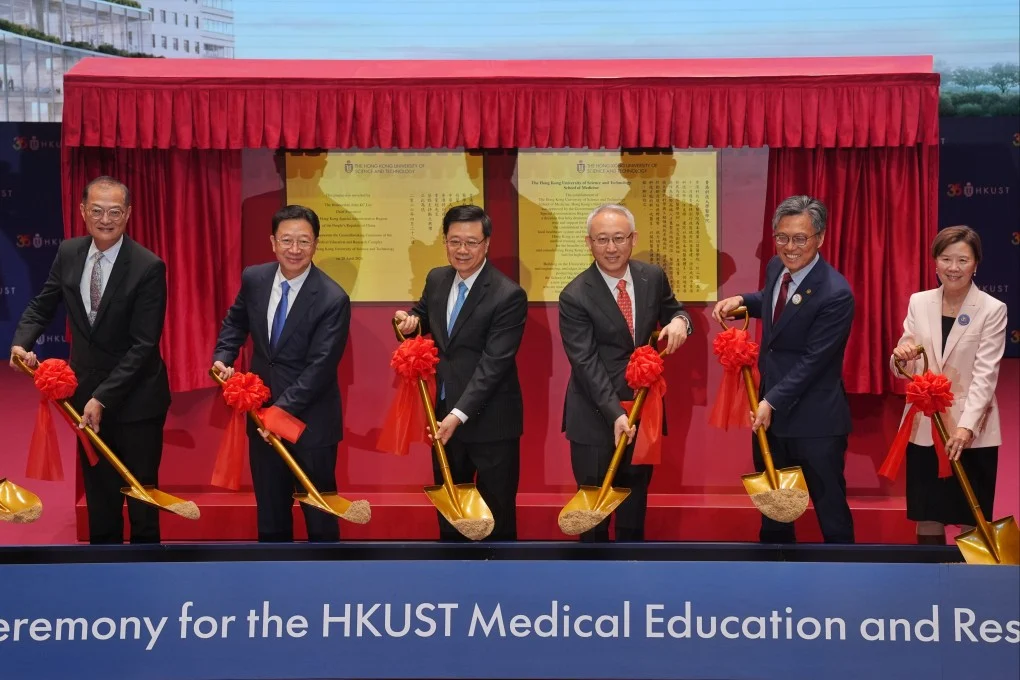
The Hong Kong University of Science and Technology (HKUST) has initiated steps to establish its third medical school in the city, having laid the foundation for a temporary educational and research complex. This complex is expected to be completed by mid-2028, ready to welcome its first cohort of students.
During a press conference, the university's president, Nancy Ip Yuk-yu, announced the appointment of seven clinical professors for the new school. Many international academics have expressed their desire to join the faculty, reflecting the growing interest in medical programs in Hong Kong.
Details of the New Medical School
This initiative is part of Hong Kong's efforts to enhance its educational system and strengthen its capabilities in medical education. The new school is set to accommodate approximately 50 students in its first intake, which will help bridge the gap in the number of qualified doctors in the city.
The university aims to offer advanced educational programs that incorporate the latest methods and technologies in medicine, reflecting the global trend towards improving the quality of medical education. Additionally, the presence of professors from diverse backgrounds will enrich the educational experience for students.
Background & Context
Historically, Hong Kong has relied on a limited number of educational institutions to train doctors. With the increasing demand for healthcare services, it has become essential to expand the base of medical education. The first medical school in Hong Kong was established in 1887, and since then, the city has witnessed significant developments in this field.
This new school is part of a broader vision to develop higher education in Hong Kong, as the government seeks to enhance the city's status as a leading educational hub in Asia. The expansion of medical education aligns with global efforts to address public health challenges.
Impact & Consequences
The establishment of a new medical school in Hong Kong could have positive effects on the city's healthcare system. It is expected to contribute to an increase in the number of qualified doctors, which will help improve the quality of healthcare services provided to citizens.
Moreover, attracting international academics can enhance Hong Kong's reputation as an educational center, potentially leading to increased investments in this sector. Collaborating with global educational institutions may open new avenues for scientific research and development in medicine.
Regional Significance
The development of this medical school is a strategic step towards enhancing medical education in Hong Kong, which contributes to improving healthcare quality. It also signifies the city's commitment to addressing the growing healthcare needs of its population.
In conclusion, the new medical school represents a significant advancement in Hong Kong's educational landscape, aiming to produce highly skilled medical professionals equipped to meet the challenges of modern healthcare.