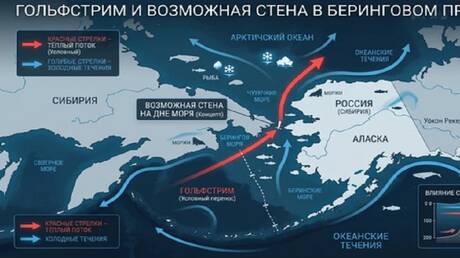
Climate scientists have proposed building a massive wall at the bottom of the Bering Strait, reaching a height of approximately 59 meters and a length of nearly 80 kilometers, as a means to enhance the stability of the Atlantic current system. This proposal comes at a time when concerns about climate change's effects on marine ecosystems are increasing.
The Atlantic current system, known as the Gulf Stream, is a critical component that influences global climate. Any alteration in this system could lead to catastrophic consequences for the climate, including rising temperatures and changing weather patterns.
Details of the Proposal
This proposal has been studied by a group of scientists who indicated that the suggested wall could help mitigate the impacts of climate change on marine currents. The wall would act as a barrier, contributing to the maintenance of water temperature and balance.
The idea involves using strong concrete materials to withstand the harsh conditions at the ocean floor. This project requires massive investments and advanced technology, but it could represent a bold step toward protecting the marine ecosystem.
Background & Context
Historically, the Atlantic Ocean has experienced significant changes in current patterns due to climate change. Previous studies have shown that rising ocean temperatures affect water movement, leading to changes in both regional and global climates.
In recent years, this issue has become more urgent, as research has demonstrated that marine currents play a vital role in regulating climate. Therefore, any project aimed at stabilizing these currents could have positive environmental impacts.
Impact & Consequences
If this project is successfully implemented, it could lead to improved climate stability in vast areas of the world. It may also help reduce risks associated with flooding and marine storms.
However, there are concerns that constructing such a wall could impact marine life. Therefore, comprehensive studies must be conducted to assess potential environmental effects before moving forward with implementation.
Regional Significance
Although this project focuses on the Atlantic Ocean, its effects could extend to Arab regions. Climate change impacts are felt worldwide, including in the Middle East.
Improvements in climate stability could reduce risks associated with desertification and drought, issues that significantly affect Arab nations. Thus, monitoring this project could be particularly important for the region.
In conclusion, the proposal to build a wall at the bottom of the Atlantic Ocean represents a bold step toward addressing climate challenges. If executed correctly, it could have positive effects on the environment and global climate.