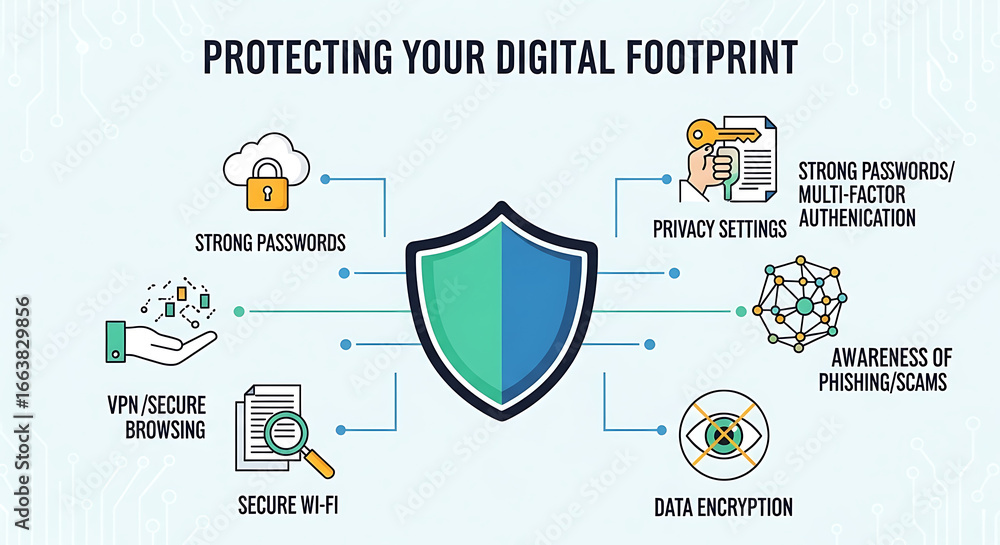
Concerns are rising about the digital footprint that follows individuals online, as our actions on the web can leave traces that may be used against us. In this article, we explore how to safeguard your privacy from digital threats.
The digital footprint is a collection of data gathered about you while browsing the internet, such as the websites you visit, the searches you conduct, and your interactions on social media. This information is utilized by companies for marketing purposes, but it can also be exploited by other entities for illicit reasons.
Understanding Digital Footprints
Digital footprints consist of two main types: the active footprint, which comprises information you voluntarily provide, such as signing up for websites or filling out surveys, and the passive footprint, which is collected without your knowledge, like tracking the sites you visit. This data is used to create a comprehensive picture of your behavior and interests, raising concerns about privacy.
With the increasing use of the internet, the need to protect privacy has become more urgent. There are numerous tools and techniques available to help you reduce your digital footprint, such as using private browsers, enabling privacy settings, and utilizing virtual private networks (VPNs).
Background & Context
In recent years, there has been a significant increase in internet usage, leading to more personal data collection. Major companies benefit from this data to enhance their services and boost profits, but this comes at the expense of individual privacy. In many countries, governments have started to implement data protection laws, but there are still gaps in enforcement.
Historically, personal data was collected less frequently, but with the advent of modern technology, it has become easier to gather and analyze vast amounts of information. This shift raises questions about how individuals can protect their privacy in the information age.
Impact & Consequences
The consequences of failing to protect privacy are manifold, as it can lead to identity theft, fraud, and individuals being subjected to harassment. Additionally, companies that fail to protect their customers' data may face legal repercussions and significant financial losses.
Moreover, privacy breaches can lead to a loss of trust between individuals and companies, negatively impacting business relationships. Under these circumstances, it becomes essential for individuals to take effective steps to protect their data.
Regional Significance
In the Arab region, issues of privacy and data protection are still in their early stages. While some countries are adopting data protection laws, there remains a lack of public awareness regarding the importance of digital privacy. This situation requires concerted efforts from governments and civil society to raise awareness and provide the necessary tools for privacy protection.
The shift towards digitization in many Arab countries increases the need for effective data protection strategies. Individuals must be aware of the risks and take steps to safeguard their personal information.
In conclusion, the digital footprint is an integral part of our daily lives; however, we must be cautious about how we manage it. By taking effective steps to protect our privacy, we can mitigate the risks associated with personal data.