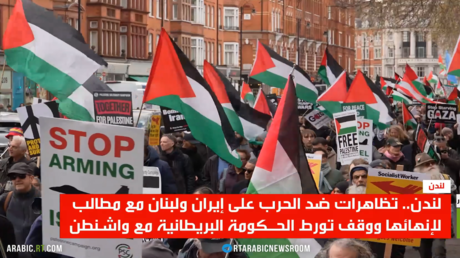
The British capital, London, saw a large-scale march organized by labor unions and civil society organizations, alongside the Coalition for Palestine, in protest against the ongoing war in the Middle East. Thousands of demonstrators gathered in the heart of the city, demanding an end to military actions and the necessity of finding peaceful solutions to the conflicts ravaging the region.
The march, which began at Trafalgar Square, witnessed widespread participation from various social groups, as protesters held banners calling for peace and denouncing violence. Several speakers delivered poignant speeches about the devastating impact of wars on civilians, emphasizing the importance of international solidarity in confronting these crises.
Event Details
This demonstration comes at a sensitive time, as tensions in the Middle East escalate, particularly amid ongoing conflicts in Palestine, Syria, and Yemen. Organizers noted that the aim of the march is to highlight the suffering of civilians in these areas and to urge governments to take a firm stance against war.
Speakers at the march also stressed the need to support human rights, calling on the international community to take responsibility for the humanitarian crises afflicting the region. Flyers containing information about the current situation in the Middle East were distributed, contributing to raising awareness among participants.
Background & Context
Historically, the Middle East has witnessed numerous armed conflicts that have exacerbated humanitarian conditions. Since the beginning of the new millennium, the intensity of conflicts has escalated, leading to the displacement of millions of civilians and the destruction of infrastructure in many countries. The war in Syria, for instance, has resulted in one of the largest humanitarian crises in modern history.
In this context, the protests in London are part of a broader global movement advocating for peace and human rights. Many European capitals have witnessed similar marches in recent years, expressing solidarity with peoples affected by wars.
Impact & Consequences
These protests serve as an indicator of the growing public awareness regarding humanitarian issues in the Middle East, and they may influence government policies in Western countries. Protesters are calling on governments to take concrete steps towards ending conflicts, which could lead to changes in military and diplomatic strategies.
Additionally, these marches may inspire more grassroots activities in other countries, reflecting the people's desire for peace and stability. With increasing public pressure, governments may find themselves compelled to respond to citizens' demands and alter their policies towards the region.
Regional Significance
These demonstrations underscore the importance of international solidarity with Arab issues, reflecting feelings of concern and condemnation regarding what is happening in Palestine, Syria, and Yemen. Supporting grassroots movements in Western countries can contribute to enhancing efforts aimed at achieving peace in the region.
Moreover, these events reflect the people's desire to change the grim reality faced by many Arab countries, which could stimulate further grassroots movements in the region. International solidarity can have a significant impact on conflict trajectories and may encourage involved parties to seek peaceful solutions.