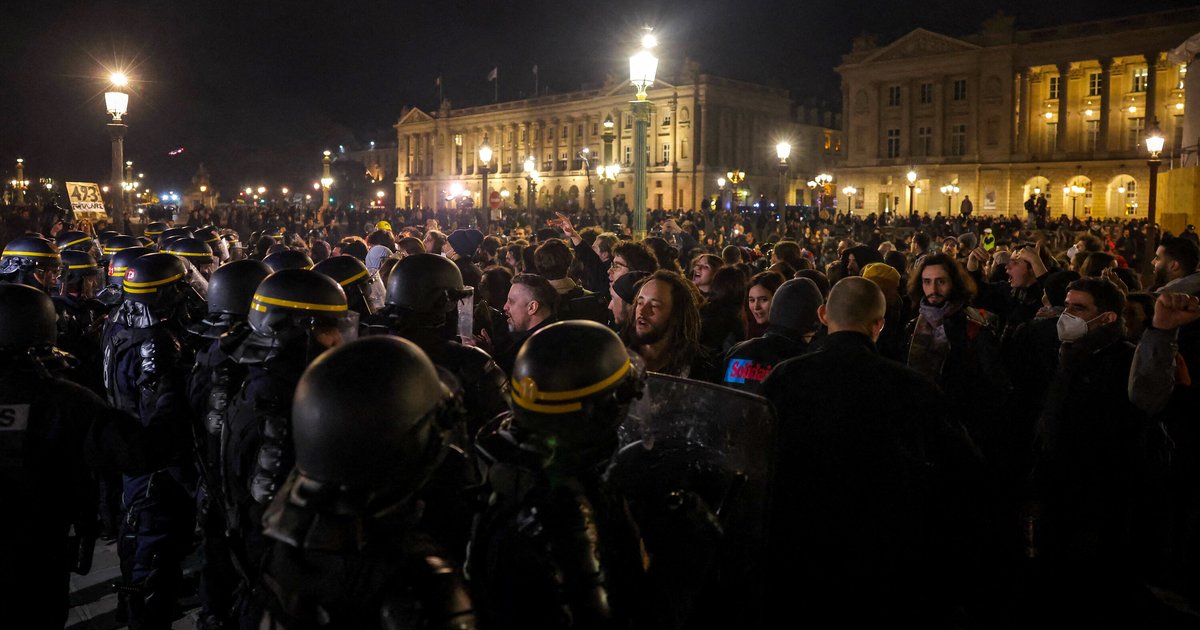
On Saturday, the French capital, Paris, witnessed massive protests as thousands of demonstrators gathered in the Place de la République to oppose the government's economic policies. These protests occur during a sensitive period when the country is suffering from rising living costs and a decline in purchasing power, leading to widespread discontent among citizens.
The demonstrations coincided with calls from labor unions and civil associations, emphasizing the need for the government to listen to the people's demands. The protests were organized peacefully, despite some limited skirmishes with security forces, which were heavily deployed in the area.
Event Details
The protests began in the early morning hours, with demonstrators gathering in the Place de la République, holding placards expressing their dissatisfaction with current economic policies. Protesters pointed out that the government has not taken sufficient steps to address the crisis of rising prices, particularly in the areas of food and energy.
The protests also saw significant participation from youth and students, who expressed their concerns about their future under the current economic conditions. Cultural and artistic events were organized during the protests, adding a festive atmosphere to the event.
Background & Context
These protests come at a time when France is facing a growing economic crisis, with inflation rates rising significantly over the past few months. Reports have shown that food prices have increased by more than 10% compared to last year, significantly impacting citizens' purchasing power.
The French government is also facing increasing pressure from labor unions demanding better working conditions and higher wages. In recent years, the country has witnessed numerous popular protests, including the Yellow Vests movement that began in 2018, which expressed dissatisfaction with the government's economic and social policies.
Impact & Consequences
These protests are seen as an indicator of growing public discontent with the government and may lead to changes in economic policy. It is expected that these demonstrations will pressure the government to adopt policies that are more responsive to citizens' demands, especially in light of the upcoming local elections.
Furthermore, the continuation of protests could affect the political stability in the country, as opposition parties may seize this opportunity to expand their popular base. If the government continues to ignore the protesters' demands, we may witness an escalation in protests in the coming weeks.
Regional Significance
The events in France hold particular significance for the Arab region, reflecting the economic and social challenges faced by many Arab countries. Rising prices and declining purchasing power are common issues in several Arab nations, making it essential to study the French experiences in this context.
Moreover, the protests in France could inspire similar movements in Arab countries, where citizens seek to express their dissatisfaction with government policies. It is crucial for Arab governments to monitor these developments and take proactive measures to prevent worsening situations.
In conclusion, the protests in Paris reflect a growing sense of public discontent, highlighting the economic challenges faced by many nations. It is essential for governments to respond to citizens' demands and adopt policies that enhance economic and social stability.