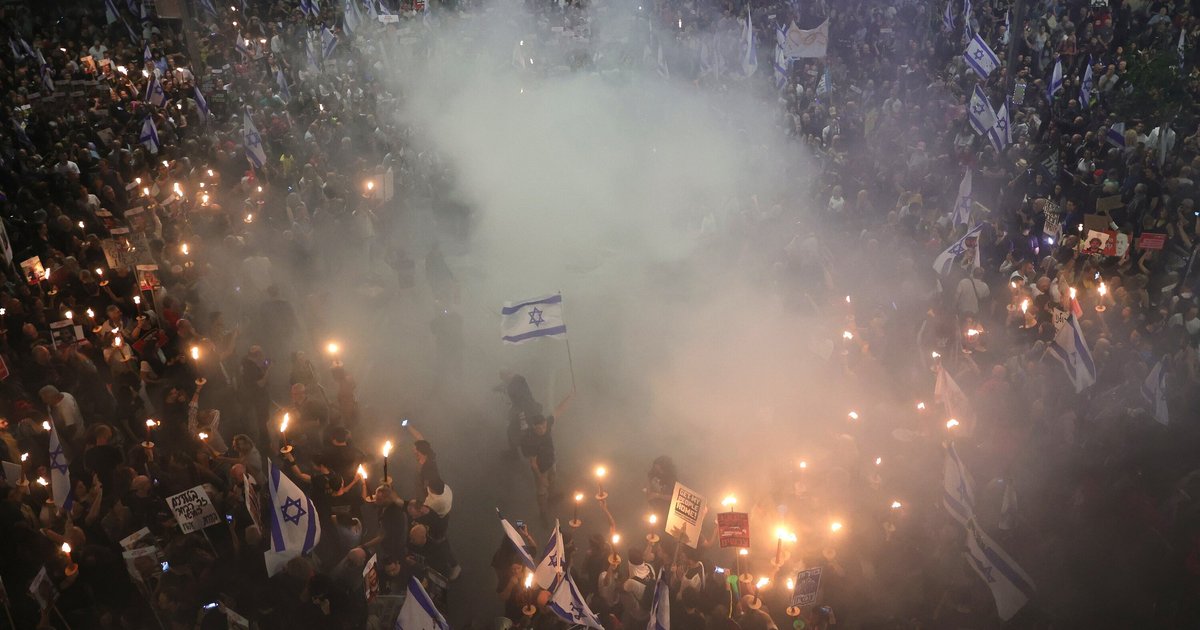
Approximately 1,000 demonstrators gathered on Saturday in Habima Square in Tel Aviv, in massive protests against the Israeli government and the ongoing war. This demonstration came after weeks of public silence, during which the country witnessed small and unorganized protests. The protesters expressed their rejection of the current government policies, demanding an end to the war that has negatively impacted citizens' lives.
The police quickly intervened to disperse the demonstrators, using excessive force, which led to injuries among several protesters, including women, men, and journalists. Videos documented moments of violence, showing protesters being pushed and thrown to the ground, sparking widespread outrage.
Details of the Event
This protest comes at a sensitive time for Israel, as pressure on the government increases due to the escalating war. The country has seen a decline in the number of protests in recent weeks, but this large demonstration indicates a growing sense of anger among citizens. The protesters raised slogans calling for peace and an end to the conflict, expressing their concerns for the country's future.
The police intervention occurred after the demonstrators began to gather, with reinforcements from security forces being called in. Although the police reported that their aim was to protect the demonstrators, their actions sparked widespread debate about the use of force in suppressing peaceful protests.
Background & Context
Historically, Israel has witnessed numerous popular protests against the government, especially during times of crisis. However, the current protests occur under exceptional circumstances, as fears of escalating violence in the region grow. The ongoing war has affected many lives, prompting citizens to take to the streets to express their dissatisfaction.
The Israeli government also faces internal and external criticism for its handling of the crisis, increasing tensions between citizens and authorities. Recent opinion polls have shown that a significant percentage of citizens are dissatisfied with the government's performance, reflecting a lack of trust in the current leadership.
Impact & Consequences
These protests are seen as a sign of rising public anger and may lead to further demonstrations in the future. The police's use of violence could provoke negative reactions from the international community, potentially affecting Israel's image on the global stage. These events may increase pressure on the government to change its policies.
Furthermore, the continuation of protests could lead to greater division within Israeli society, as polarization increases between supporters and opponents of government policies. This could negatively impact internal stability in the country.
Regional Significance
The events in Israel have significant implications for the Arab region, as Arab countries closely monitor developments there. The protests could heighten tensions between Israel and the Palestinians, which may reflect on the situation in the occupied territories. Additionally, the ongoing war could affect relations between Israel and Arab countries, especially amid ongoing peace efforts.
In conclusion, the situation in Israel remains tense, with ongoing public anger directed at the government. It is crucial to closely follow developments, as any escalation could impact security and stability across the entire region.