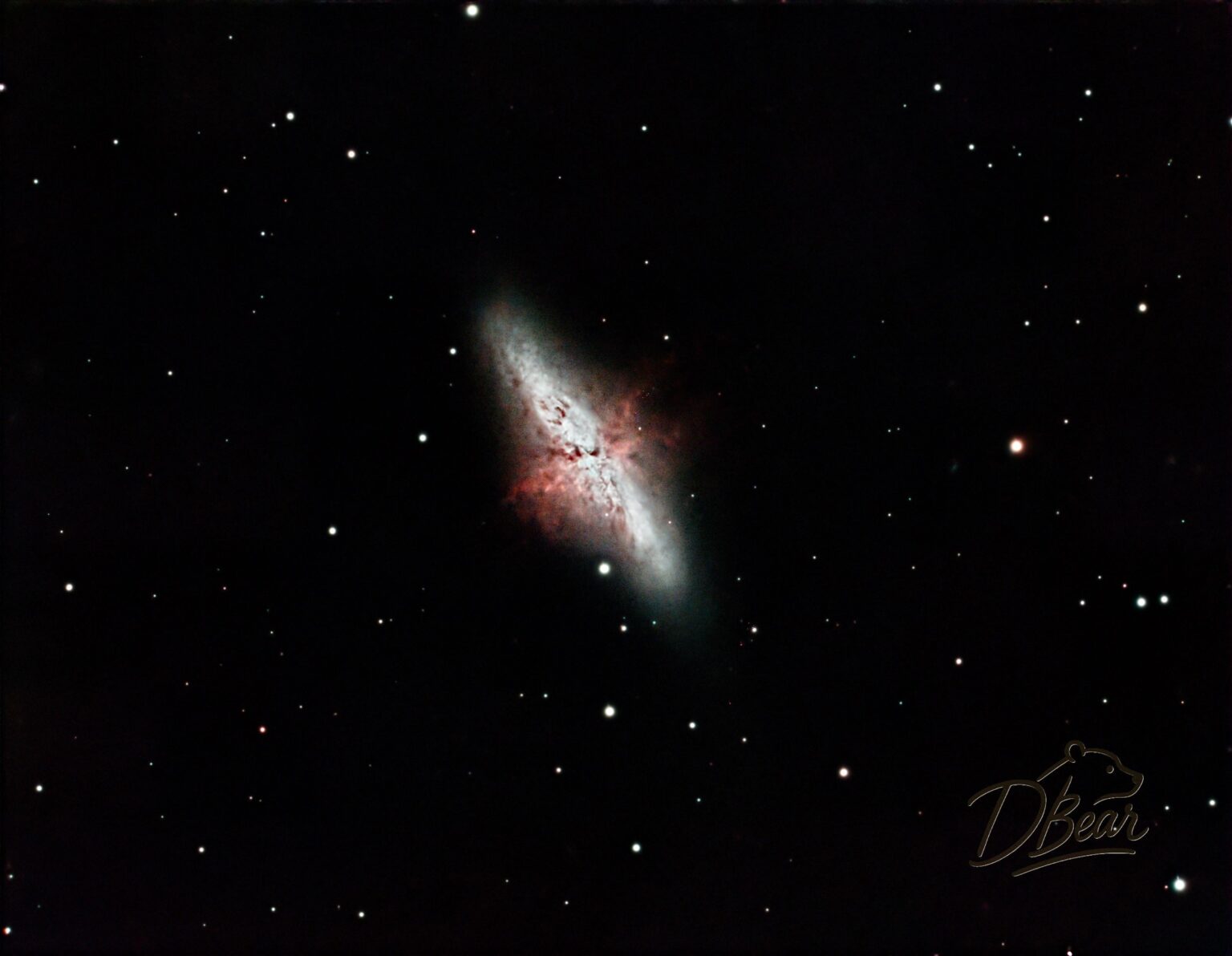
In a remarkable scientific achievement, astronomers have measured the speed of colossal cosmic winds originating from the heart of the Cigar Galaxy (M82). The results revealed astonishing figures that raise new questions rather than closing them off.
The measurements showed that superheated gas is rushing from the center of the galaxy at a speed exceeding 3 million kilometers per hour, a velocity sufficient to propel a massive flow of material extending up to 40,000 light-years into space, which is about one-third the diameter of our Milky Way galaxy.
Details of the Discovery
The Cigar Galaxy is classified as a type of starburst galaxy, producing stars at a rate approximately ten times greater than that of our Milky Way, making it an ideal environment for studying violent phenomena in the universe. This discovery was made possible thanks to the XRISM satellite, a joint mission led by the Japanese space agency in collaboration with NASA.
Scientists utilized a highly sensitive instrument known as Resolve to observe the X-rays emitted from the superheated iron at the galaxy's center. The researchers relied on the Doppler effect, where the color of light changes depending on the motion of the source moving closer or further away. By analyzing the broadening of spectral lines, the team was able to determine the wind speeds with unprecedented accuracy.
Background & Context
The data revealed that the gas temperature reaches around 25 million degrees Celsius, generating immense pressure that pushes material away from the galaxy's center toward less dense regions. This process, on a cosmic scale, resembles wind movement in Earth's atmosphere, but with energy millions of times greater.
Scientists have long believed that these winds result from supernova explosions that form stars densely in the centers of galaxies. The new measurements largely confirm this view, showing that the hot winds alone can push massive amounts of gas out of the galaxy at a rate of up to four solar masses per year.
Impact & Consequences
Despite this advancement, the results revealed a puzzling paradox. The galaxy ejects enough material to form seven solar-sized stars each year, while the winds can only account for four solar masses.
The fate of the remaining three solar masses remains unknown. Do they leave the galaxy permanently? Or do they return to fuel the formation of new stars? This question has now become one of the most prominent open mysteries in galaxy science.
Regional Significance
This discovery marks a significant leap in understanding how galaxies evolve, as these winds play a crucial role in regulating star formation and redistributing material in space. While the study answered questions that have persisted for decades, it simultaneously opened the door to broader inquiries that may reshape our understanding of the universe.
Understanding these cosmic phenomena could enhance scientific knowledge in the Arab region, potentially inspiring future research in astronomy and physics.