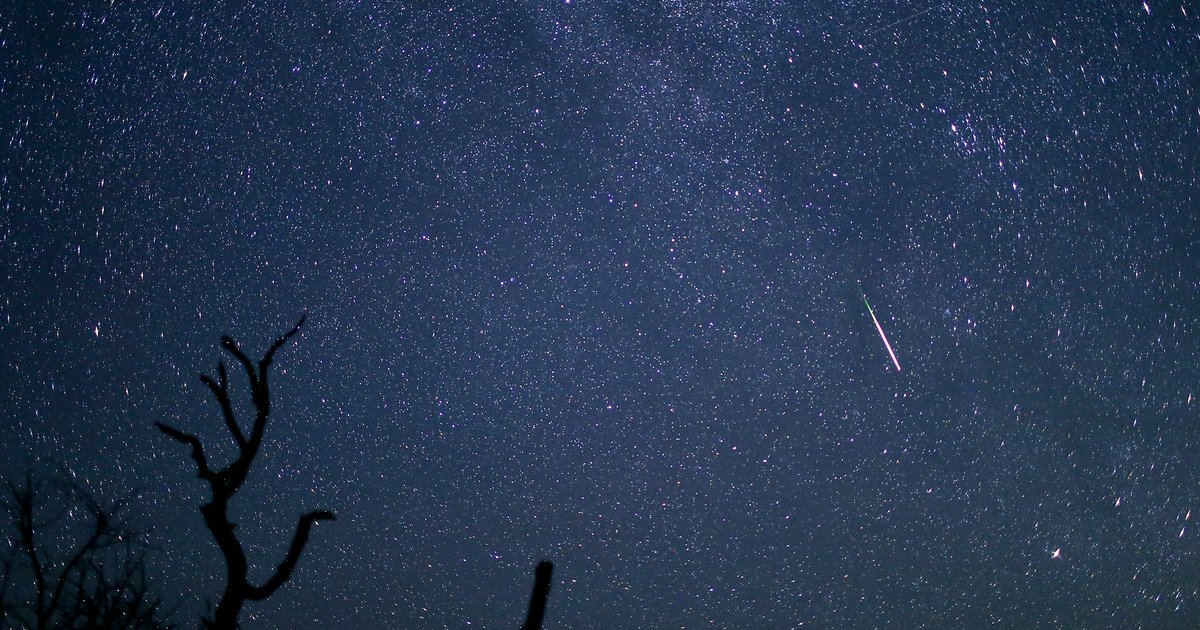
In a rare and exciting incident, a meteor exploded in the atmosphere at speeds approaching 50,000 kilometers per hour above northern Houston, Texas, on March 21, 2026. A piece of the meteor penetrated the roof of a woman named Sherry James, drawing the attention of both scientists and the media.
This incident is part of a series of notable phenomena observed in the skies over the United States and Europe during the early months of 2026, where an increased activity of what is known as "fireballs" has been noted. These are exceptionally bright meteors that penetrate the Earth's atmosphere.
Details of the Event
According to data from the American Meteor Society, the number of reports of meteor sightings has significantly increased, jumping from 1,587 to over 2,369 reports between January and March, indicating either an increase in activity or at least an increase in observation.
This rise has coincided with other incidents in the United States, where multiple sightings have been recorded in states such as Ohio, California, and Michigan, some accompanied by loud explosive sounds resulting from relatively large meteors entering the atmosphere at high speeds.
In Europe, fireballs have been observed in the skies over Germany, France, and Spain at closely timed intervals, reinforcing the impression of unusual activity of this phenomenon on a broad scale.
Background & Context
Experts believe that what is happening may be linked to a seasonal period known as "fireball season," which typically extends from February to April, during which the appearance of bright meteors increases as Earth passes through regions containing larger cosmic debris. However, this explanation remains scientifically unconfirmed.
Estimates from the NASA Meteoroid Environment Office suggest that this period may witness an increase in bright meteors by between 10% and 30%.
Impact & Consequences
Despite this, there is no complete scientific consensus; some scientists argue that the current increase does not exceed normal statistical boundaries, while others believe there is an additional factor not yet understood, especially with the recording of larger and more energetic meteors than usual.
A recent analysis published by the American Meteor Society described the early months of 2026 as a "statistical anomaly," particularly with the increase of fireballs coming from a region known as the "anti-solar radiant," which is a fictitious point in the sky from which meteors appear due to Earth's movement.
Regional Significance
Concerns and interest in meteors are growing in the Arab world, especially with the technological advancements that facilitate the observation of these phenomena. Increased media coverage also enhances public awareness of the risks posed by near-Earth objects.
This growing interest coincides with the observance of the International Asteroid Day, which falls on June 30 each year, commemorating the Tunguska event of 1908 in Siberia when a massive celestial body exploded in the atmosphere, causing widespread destruction.
Ultimately, fireballs remain a natural phenomenon associated with Earth's movement in space, but their apparent increase this year opens the door to new scientific inquiries regarding meteor activity.