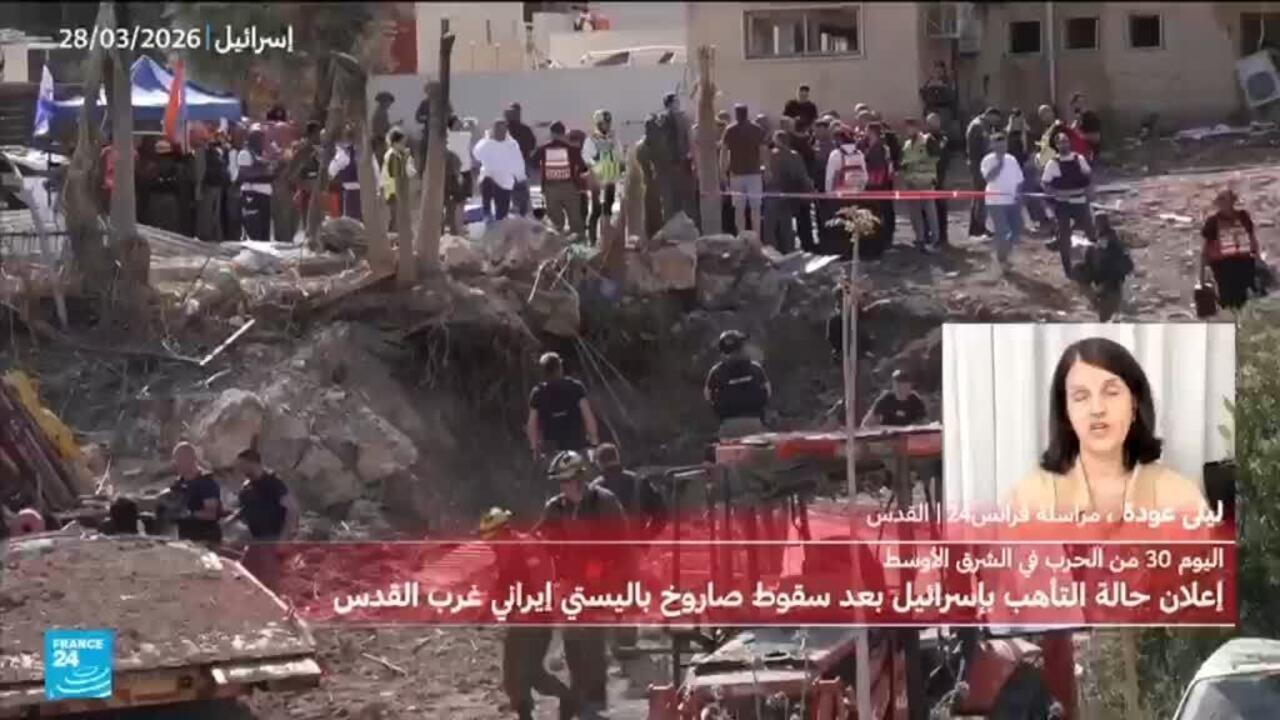
On Sunday, Israel experienced an unprecedented military escalation as missiles were simultaneously launched from Lebanon and Iran, targeting multiple areas. This escalation comes at a sensitive time, with rising tensions in the region, raising fears of a larger conflict.
At the same time, Israeli police prevented Cardinal Pierbattista Pizzaballa, the Latin Patriarch of Jerusalem, from entering the Church of the Holy Sepulchre to conduct the Palm Sunday mass. This move is considered the first of its kind in centuries, reflecting the increasing tensions in the holy city.
Details of the Incident
Local sources reported that the missiles launched from Lebanon and Iran targeted multiple areas in Israel, causing panic among the residents. The Israeli missile defense system, known as the Iron Dome, was activated to counter these attacks. Meanwhile, no group has claimed responsibility for these attacks yet, adding to the uncertainty surrounding the involved parties.
On another note, the Latin Patriarchate of Jerusalem confirmed that preventing Cardinal Pizzaballa from entering the church is an unprecedented step, noting that this action contradicts Christian traditions that ensure freedom of worship in holy places.
Background & Context
These events occur amid escalating tensions between Israel and Hezbollah in Lebanon, along with ongoing tensions with Iran. Relations between these parties have significantly deteriorated in recent years, especially following the United States' withdrawal from the nuclear deal with Iran, which intensified the conflict in the region.
Additionally, the situation in Jerusalem, particularly in holy places, is one of the sensitive issues affecting relations between different religions. Escalation in this area could lead to serious repercussions for regional stability.
Impact & Consequences
The military escalation between Iran and Lebanon on one side and Israel on the other could lead to a larger conflict, threatening regional security. This escalation may prompt major powers to intervene, either through mediation or by supporting one of the parties involved.
Furthermore, the prevention of Cardinal Pizzaballa from entering the Church of the Holy Sepulchre may provoke angry reactions from the Christian community, potentially leading to protests or heightened religious tensions in the city.
Regional Significance
This military escalation has direct implications for neighboring Arab countries, as it may increase tensions in Lebanon and Syria, exacerbating instability in the region. Events in Jerusalem could also escalate tensions between Palestinians and Israelis, threatening peace efforts in the area.
In conclusion, the situation in the region appears to be heading towards further complexity, as military, religious, and political dimensions increasingly intertwine. This situation requires close monitoring by the international community to ensure that conditions do not worsen.