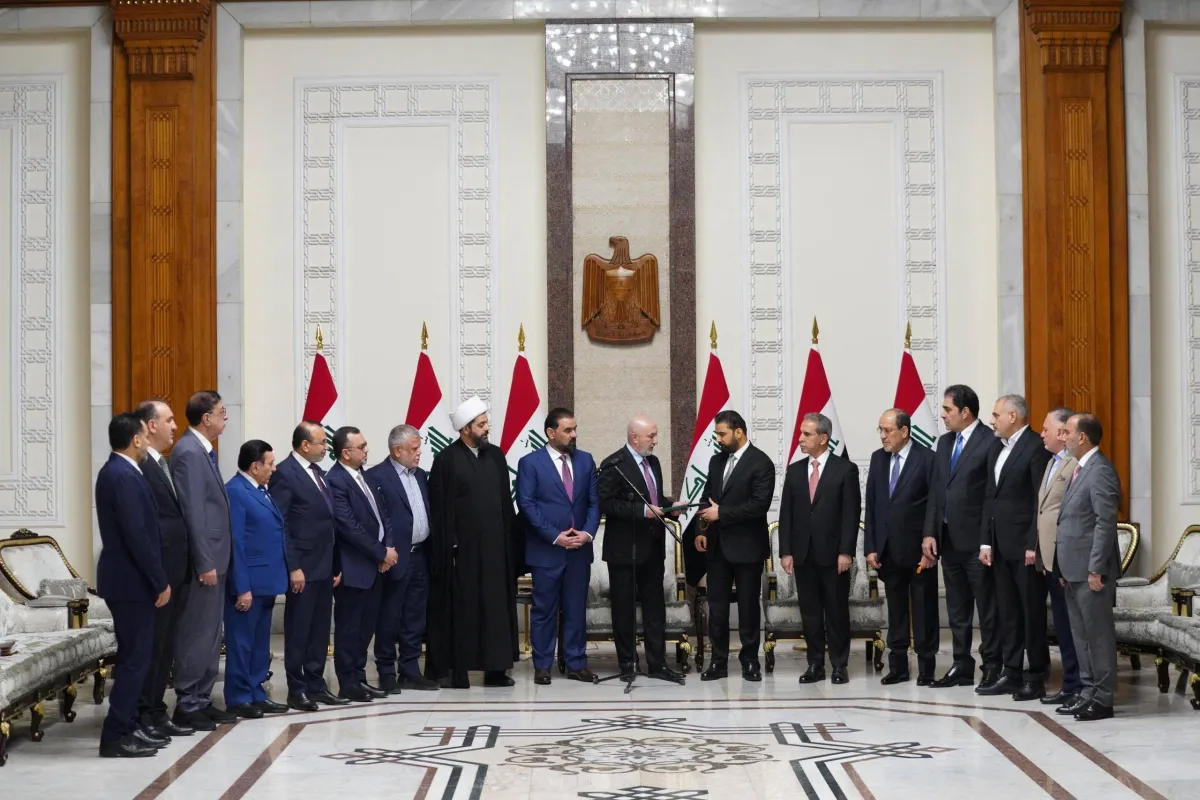
Washington considers the appointment of Ali Al-Zaydi to form the new Iraqi government as the beginning of a test phase for bilateral relations between Iraq and the United States. American sources reported that the White House sees this appointment as an opportunity to evaluate the actual performance of the new government, rather than focusing on its political backgrounds.
Sources clarified that the U.S. administration will closely monitor the sensitive timing in Baghdad, noting that Al-Zaydi is viewed as a "consensus candidate" who may open a new window for recalibrating relations, especially after the exclusion of names that raised clear American reservations, such as Nouri Al-Maliki.
Details of the Event
According to reports from the New York Times, this new approach from Washington marks a shift from reliance on individuals to focusing on the political and security behavior of the Iraqi government. Michael Knights, a researcher at the Washington Institute for Near East Policy, emphasized that the U.S. administration is looking for a partner capable of balancing security dynamics, particularly concerning armed factions linked to Iran.
The New York Times described Al-Zaydi's selection as a product of a settlement within the "coordinating framework," suggesting he may lack a solid political base, which could grant him flexibility in dealing with external pressures. However, Iranian influence remains the primary factor affecting the U.S. administration's stance.
Background & Context
The U.S.-Iraqi relations are complex, with Iraq viewing Washington as a security partner, while the United States sees it as a central arena in the regional conflict with Iran. Al-Zaydi's appointment, a businessman with investments in banking and media, came after months of conflicting pressures from Iran and the United States.
The new government faces significant challenges, including addressing corruption, uncontrolled weapons outside state authority, the future of the Popular Mobilization Forces backed by Iran, and improving Iraq's regional and international relations.
Impact & Consequences
Suzanne Maloney, a researcher at the Brookings Institution, notes that any U.S. administration will assess its relationship with Baghdad based on the Iraqi government's ability to limit Iranian influence within state institutions. Washington will monitor three key issues: controlling the activities of armed factions, preventing Iraq from being used as a channel to circumvent sanctions, and maintaining the independence of Iraqi security decision-making.
Analysts believe that consensus leaders in Iraq are often more open to cooperation with Washington, but they face internal constraints that limit their ability to make strategic decisions. This situation places Al-Zaydi in a delicate position, as he must balance external and internal pressures.
Regional Significance
The implications of forming the new Iraqi government extend beyond Iraq, affecting regional and international relations in the Middle East. Amid tensions with Iran and U.S.-China competition, Iraq remains a significant factor in the stability of the region.
In conclusion, analysts expect the upcoming phase to be crucial in determining the future of U.S.-Iraqi relations, as it will depend on how the new government addresses internal and external challenges.