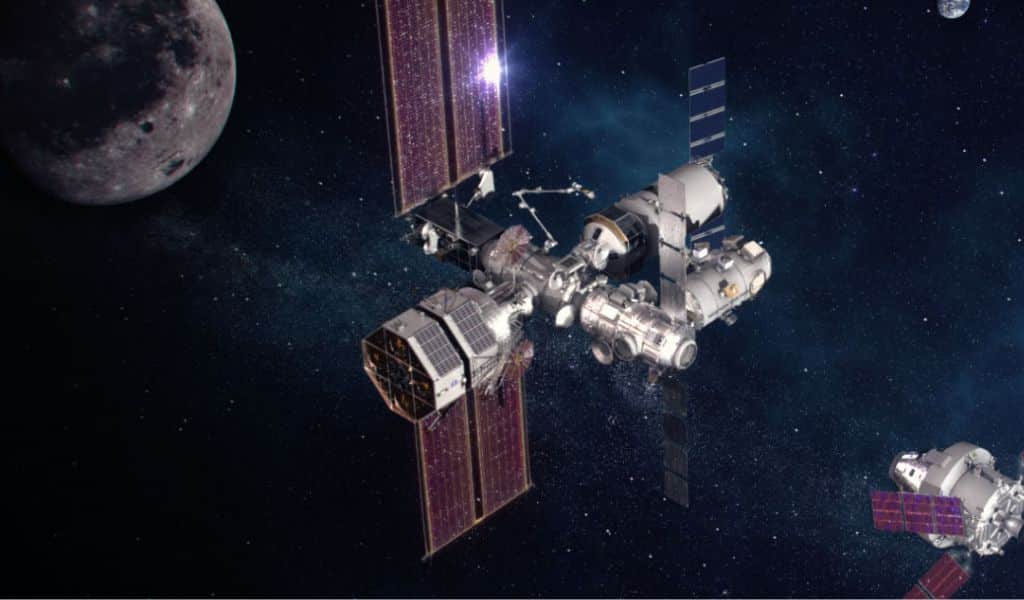
NASA has unveiled its plans to launch the Artemis II mission, which aims to return to the Moon, as part of its efforts to utilize the lessons learned from this mission to develop new strategies for future missions to Mars. This step comes at a crucial time for the agency, which is facing financial challenges and mounting pressure from a rapidly competitive private sector.
The Artemis II mission is part of the broader Artemis program, which aims to return humans to the Moon by 2024. This mission is designed to test new technologies and evaluate environmental conditions on the Moon's surface, enabling scientists and engineers to understand the challenges they may face when transitioning to Mars.
Details of the Mission
The Artemis II mission will be the first crewed mission to the Moon since the Apollo 17 mission in 1972. The Orion spacecraft will carry astronauts on a journey around the Moon, where the vehicle's systems will be tested in a real space environment. NASA is relying on this mission to gather essential information on how to live and work in distant space environments.
The mission will also include a series of scientific experiments that will help understand the effects of space on the human body, which is critical for long-duration missions to Mars. The mission is expected to last approximately 10 days, during which the spacecraft will orbit the Moon before returning to Earth.
Background & Context
The history of American space exploration is filled with achievements, from launching the first human into space to landing on the Moon. However, the current challenges facing NASA require a reevaluation of its strategies. In recent years, the agency has experienced budget cuts, impacting its ability to execute ambitious projects.
Through the Artemis program, NASA aims to reclaim its leading position in space exploration, especially with the emergence of private companies like SpaceX and Boeing, which are seeking to provide competitive space services. The success of the Artemis II mission could have significant implications for the agency's future and its ability to secure necessary funding for upcoming projects.
Impact & Consequences
The Artemis II mission is a critical test for NASA's future plans, as it will determine the agency's readiness to face the challenges that may arise in further missions. If successful, this mission will help bolster public and investor confidence in NASA's ability to achieve its ambitious goals.
Moreover, the success of the mission could encourage other countries to enhance their space programs, leading to increased international collaboration in space exploration. Conversely, failure could undermine NASA's efforts and expose it to criticism from lawmakers and investors.
Regional Significance
As attention turns towards space, Arab countries have also begun exploring their opportunities in this field. The United Arab Emirates launched the Hope Probe to Mars, while Saudi Arabia is working on developing its own space program. The success of the Artemis II mission could inspire Arab nations to expand their investments in space, potentially leading to new partnerships with global space agencies.
In conclusion, the Artemis II mission represents an important step towards achieving NASA's goals in space exploration, as the agency seeks to use the lessons learned from the Moon to develop new strategies for future missions to Mars. The success of this mission could have far-reaching implications for the future of space exploration, not only for the United States but also for other countries looking to enhance their space programs.