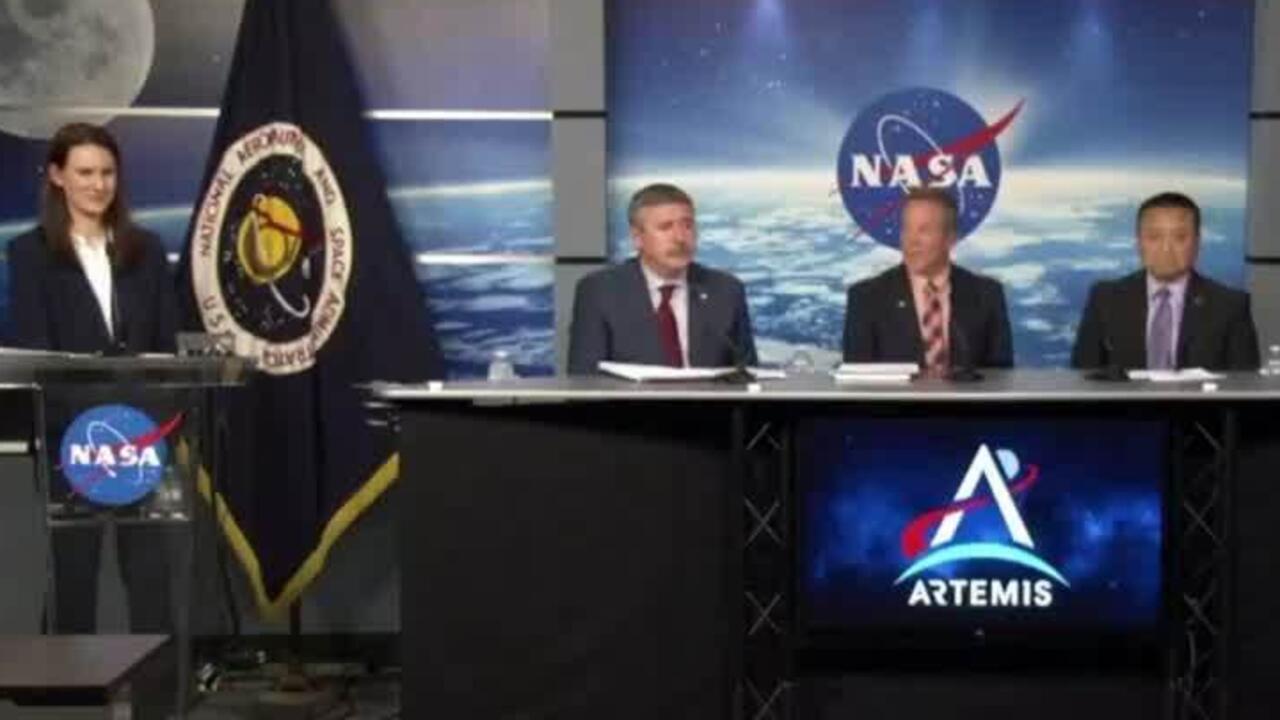
NASA's Artemis astronauts have entered the final phase of their approach to the Moon, where the influence of lunar gravity has become stronger than that of Earth. In a historic event, the crew will conduct the first lunar flyby since 1972, allowing them to travel further than any human has before.
At 4:42 AM GMT, the "Orion" capsule entered what NASA calls the "lunar sphere of influence," being approximately 39,000 miles (63,000 kilometers) from the Moon and 232,000 miles from Earth. This event marks a turning point in the mission, as the astronauts will document lunar features that have never been seen by human eyes.
Details of the Event
The mission crew consists of three Americans and one Canadian, with Victor Glover set to be the first person of color to orbit the Moon, while Christina Koch will be the first woman to do so. Additionally, Canadian Jeremy Hansen will become the first non-American to achieve this milestone. During their flyby, the astronauts will document the lunar surface, and they have already begun to see features that have never been observed before.
In the early hours of Sunday, NASA released an image taken by the crew showing the distant Moon with the "Oriental" basin visible. The agency confirmed that this is the first time this basin has been seen in its entirety by human eyes, resembling a massive crater.
Background & Context
The history of lunar exploration dates back decades, with the Apollo 17 mission in 1972 being the last crewed mission to the Moon. Since then, there have been numerous uncrewed attempts to explore the Moon, but the Artemis mission represents a new return to the Moon with greater ambitions that include landing on its surface and deeper exploration.
Through this mission, NASA aims to develop new technologies that will aid in future missions, including a planned lunar landing in Artemis 4 scheduled for 2028. The data collected during this journey will be crucial for planning future missions.
Impact & Consequences
The Artemis mission is a significant step toward space exploration, enhancing human understanding of the Moon and its history. This mission reflects the technological advancements humanity has achieved in the field of space, opening new avenues for international collaboration in space exploration.
Moreover, this mission will contribute to fostering national pride among the participating countries, especially the United States and Canada, showcasing their ability to collaborate on large scientific projects.
Regional Significance
The Artemis mission presents an opportunity for Arab countries to enhance their interest in space and technology fields. With increasing investments in space sciences in Arab nations, this mission could inspire new generations of scientists and engineers in the region.
Additionally, international cooperation in space could open new doors for Arab countries to participate in space exploration projects, thereby enhancing their status on the global stage.