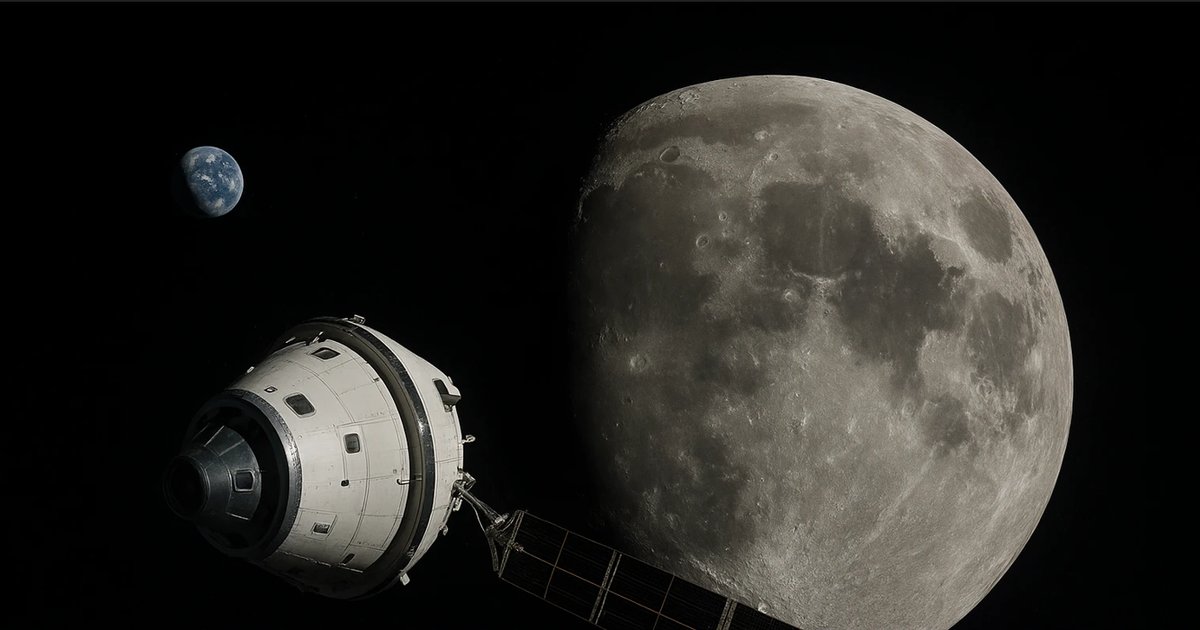
NASA is preparing to launch the Artemis II mission on April 1, 2024, aiming to return humans to the Moon after more than half a century since the last human landing. The mission will involve a journey around the Moon, representing an important step towards deep space exploration.
This mission follows the success of the Artemis I mission, which was launched in November 2021 and was an uncrewed test flight around the Moon. This mission demonstrated the spacecraft's ability to operate in space, paving the way for Artemis II, which will see astronauts return to the Moon.
Event Details
Artemis II will be the first crewed mission under the Artemis program, with the Orion spacecraft launching with a crew of four astronauts for a journey lasting approximately 10 days. The spacecraft will perform a loop around the Moon before returning to Earth, allowing the astronauts to experience living and working in space.
The list of astronauts participating in this mission includes Jessica Watkins, John Shoffner, Christina Koch, and Greg Schmitt. These astronauts will face challenges associated with living in space, including weightlessness and the harsh environment.
Background & Context
The history of lunar exploration dates back to 1969 when the Apollo 11 spacecraft landed on the Moon, making Neil Armstrong the first human to set foot on its surface. Since then, several other missions have been conducted, but no astronauts have been sent to the Moon since 1972. The Artemis program is part of NASA's efforts to return humans to the Moon, focusing on establishing a permanent base on its surface.
This mission is part of a larger vision for space exploration, as NASA aims to send astronauts to Mars in the future. Additionally, Artemis II will help test the technologies needed for deep space missions.
Impact & Consequences
The Artemis II mission is a significant step in the field of space exploration, enhancing humanity's ability to live and work in distant space environments. It will also open new avenues for scientific research, including studying the Moon as a source of natural resources.
Furthermore, this mission will enhance international cooperation in space, as NASA collaborates with other space agencies such as the European Space Agency and the Japan Aerospace Exploration Agency in developing the necessary technologies for this mission.
Regional Significance
Although the Artemis II mission focuses on the Moon, it has implications for the Arab region. Recently, Arab countries have shown increased interest in space, with some nations like the United Arab Emirates launching their own space programs, including the Hope Probe to Mars.
The successes of NASA in lunar exploration could inspire Arab nations to develop their own space programs, enhancing their standing in technology and scientific research.
In conclusion, the Artemis II mission represents a milestone in the history of space exploration, bringing humanity back to the Moon and opening new horizons for the future of space. The success of this mission could have far-reaching effects on scientific research and international cooperation, as well as inspire future generations of scientists and engineers.