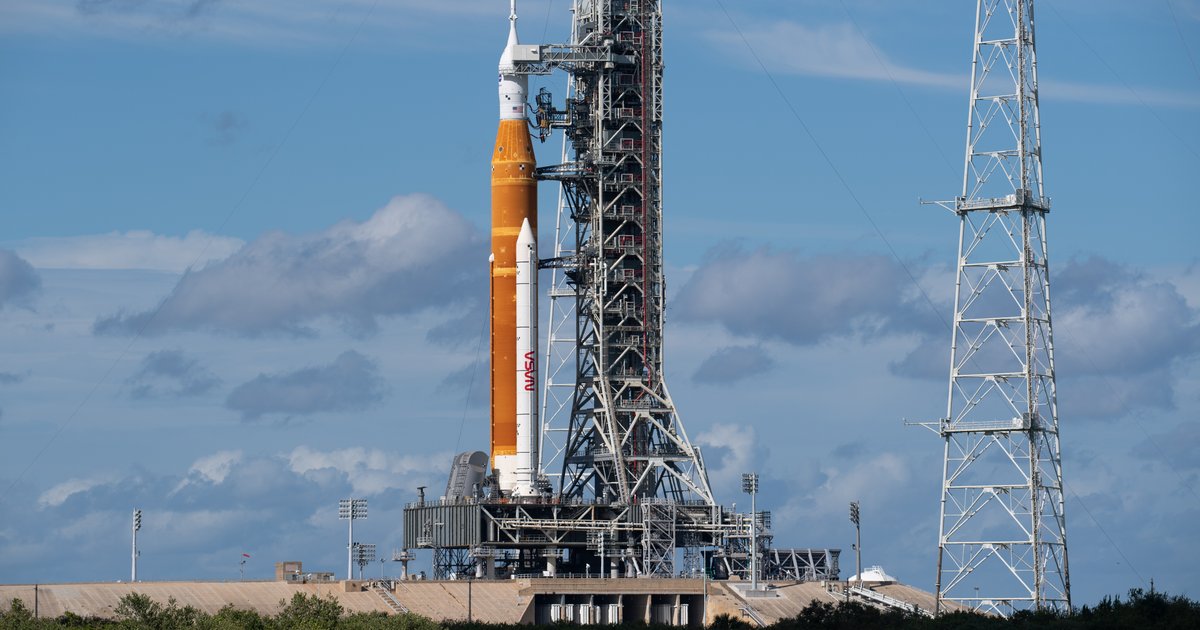
In a historic event, NASA successfully launched its Space Launch System (SLS) rocket at 12:35 AM EST, carrying four astronauts aboard. This nine-day mission represents the first crewed flight around the Moon in over 53 years, aiming to return humans to the lunar surface by 2028.
This mission is part of the Artemis program, initiated by the previous U.S. administration under Donald Trump, which seeks to enhance human presence on the Moon as a first step towards exploring Mars. Astronauts from various nationalities are participating in this mission, reflecting international cooperation in space exploration.
Details of the Launch Event
The current mission involves the launch of the 'Orion' spacecraft, which will orbit the Moon and gather crucial data about the lunar environment. The mission is expected to last nine days, during which the spacecraft will fly around the Moon before returning to Earth. This mission serves as a real test of the new technologies that will be utilized in future missions to both the Moon and Mars.
It is noteworthy that this mission comes after decades of hiatus from crewed lunar flights, with the last crewed mission to the Moon occurring in 1972. This return to the Moon could signify the beginning of a new era in space exploration.
Historical Context
Historically, the United States sent the first human to the Moon in 1969 during the Apollo 11 mission. Since then, there have been numerous attempts to explore space, but none have achieved the same success as the Apollo programs. With advancements in technology, it is now possible to consider returning to the Moon and even planning for a permanent base there.
The Artemis program comes at a time when competition in space exploration is intensifying, with countries like China and Russia vying for new achievements in space exploration. Through this program, the United States aims to regain its leadership in this field.
Strategic Implications and Effects
This mission is considered a strategic step for the United States, aiming to bolster its presence in space and develop new technologies that may be critical in the future. Additionally, success in this mission could enhance public support for space programs, potentially leading to increased funding and investment in this sector.
Furthermore, this mission may open doors for new partnerships with other countries, enhancing international cooperation in space. Collaboration among nations in space exploration can lead to the exchange of knowledge and technologies, benefiting all parties involved.
Impact on the Arab Region
As attention turns to space, Arab countries have also begun exploring space through their own programs. For instance, the United Arab Emirates launched the Hope Probe to Mars, reflecting Arab nations' interest in investing in space sciences. Successes like the Artemis mission may encourage Arab countries to enhance their space programs and develop their capabilities in this field.
In conclusion, the Artemis-2 mission marks a milestone in the history of space exploration, bringing humans back to the Moon after decades of absence. Success in this mission could have far-reaching implications worldwide, including in the Arab region.