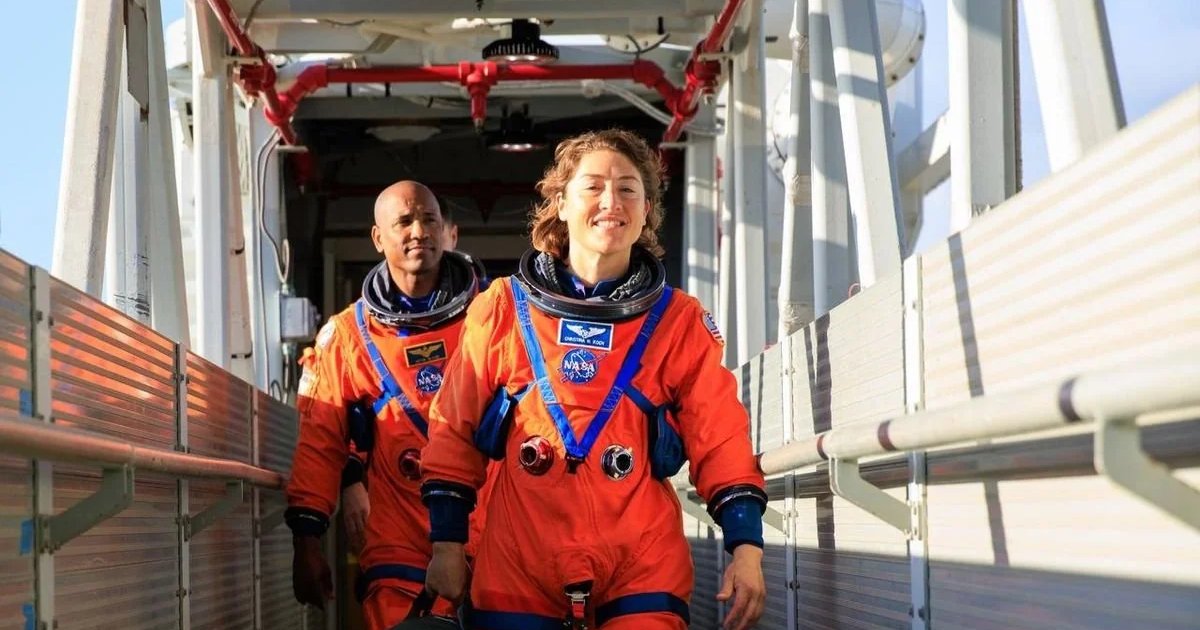
NASA has announced the launch of its first crewed mission to the moon in over 50 years, with the spacecraft departing from Kennedy Space Center in Florida. This historic mission is part of the Artemis program, which aims to return humans to the moon and explore it more deeply, reflecting significant advancements in space exploration.
The mission, named Artemis 2, includes a crew of four astronauts who will orbit the moon before returning to Earth. The mission is expected to last approximately 10 days, marking the first step towards establishing a permanent base on the lunar surface, which is part of NASA's vision for future Mars exploration.
Event Details
The spacecraft launched at 7:00 PM Eastern Time, with a large turnout from the media and the public. NASA's director noted that this mission represents a strong return for the United States to space, with the last crewed mission to the moon having been launched in 1972.
This mission is part of NASA's efforts to expand the boundaries of human knowledge in space, as the spacecraft will collect valuable data about the moon, including information on gravity and the surrounding environment. This data will also aid in the development of new technologies to support future missions.
Background & Context
Historically, the United States achieved significant milestones in space during the 1960s and 1970s, launching several missions to the moon under the Apollo program. However, interest in lunar missions has waned in recent decades, leading to a focus on Mars and other planetary explorations.
In recent years, several countries, including China and Russia, have resumed their lunar exploration programs, prompting the United States to reevaluate its space strategy. The Artemis program is a response to this challenge, aiming to enhance international partnerships in space exploration.
Impact & Consequences
This mission is a significant step towards enhancing international cooperation in space, as NASA seeks to engage other countries in the Artemis program. Such collaboration could lead to the development of new technologies and greater scientific advancements in space exploration.
Moreover, the success of this mission could bolster the United States' position as a leading power in space, potentially impacting investments and innovations in this sector. Success in lunar exploration may also open new avenues for scientific research and technology.
Regional Significance
For the Arab region, these developments in space are generating considerable interest, as many Arab countries strive to develop their own space programs. For instance, the United Arab Emirates launched the Hope Probe to Mars, reflecting its interest in space exploration.
These achievements could foster cooperation between Arab nations and leading space countries, potentially leading to knowledge and technology exchange. Additionally, lunar exploration may provide new opportunities for Arab countries to participate in global space projects.
In conclusion, the Artemis 2 mission represents a new beginning for lunar exploration, showcasing the United States' commitment to enhancing scientific research and expanding the boundaries of human knowledge in space. This step is not just a technical achievement but a call for international cooperation in space, potentially opening new horizons for Arab countries in this field.