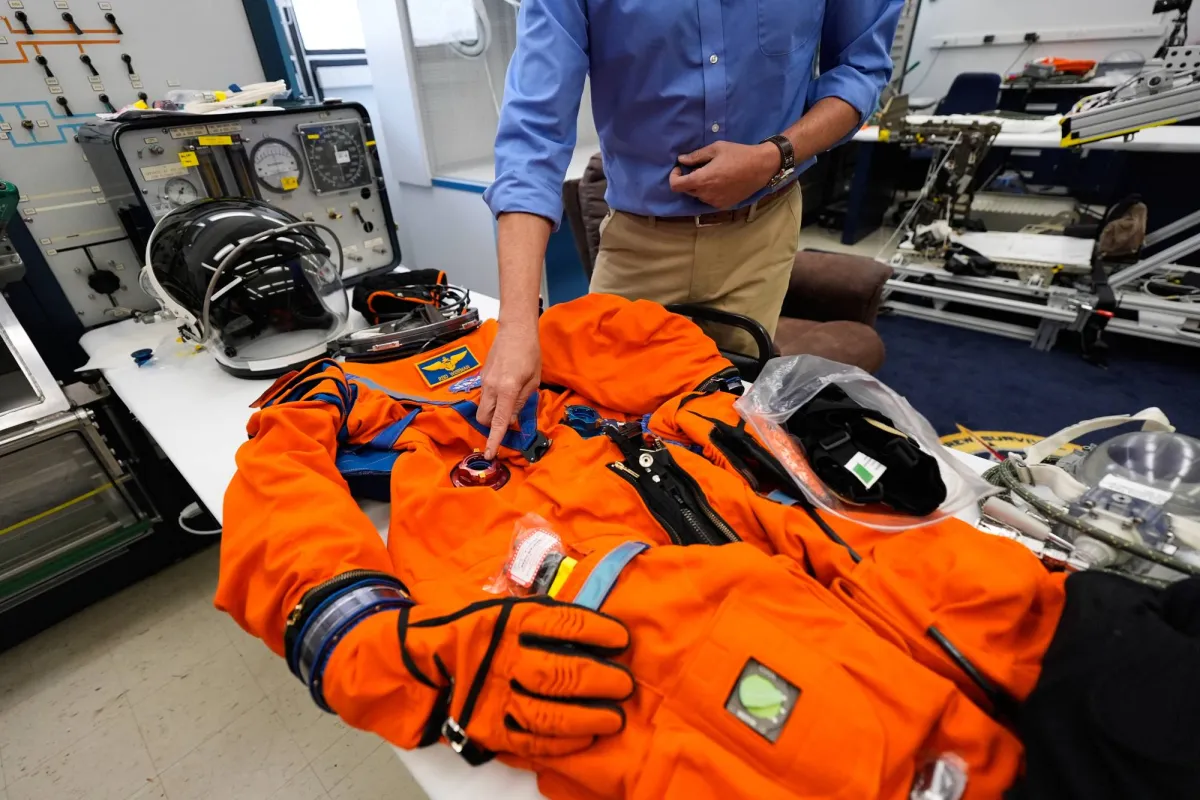
NASA, the American space agency, is preparing for the launch of the Artemis 2 mission, which marks the first crewed flight to the Moon in over 50 years. While attention is focused on the scientific and technical goals of this mission, other seemingly simple details emerge that carry profound implications, such as the color of the astronauts' suits. The bright orange color that the crew members will wear is not just an aesthetic choice; it is a carefully considered element that combines safety, functionality, and symbolism.
The four astronauts - Reid Wiseman, Victor Glover, Christina Koch, and Jeremy Hansen - will don these orange suits as they launch from the Kennedy Space Center in Florida, and they will wear them again upon their return after a ten-day journey around the Moon, during which they will reach the farthest point humans have ever traveled in space, according to the New York Times.
Event Details
The orange astronaut suits are transforming into a visual symbol accompanying pivotal moments in the history of space exploration. In recent years, attention has shifted to the white spacewalk suits developed by companies like Prada and Axiom Space, but the orange suits of Artemis 2 may be the most eye-catching, which is intentional. SpaceX suits appear to be inspired by science fiction films, while the Prada/Axiom suits blend practicality with touches from the fashion world. In contrast, the suits designed by Blue Origin, created by Jeff Bezos, reflect a spirit of adventure with a futuristic style. However, the orange suits give astronauts a presence closer to that of comic book heroes, thanks to their bold design and striking color.
These suits are not just about appearance; they are designed to function as a mini life support system, allowing astronauts to remain inside them for up to 144 hours if necessary. They have been tailored specifically to fit each astronaut's measurements, under the supervision of NASA engineers. The suits feature reflective sky-blue lines that form a clear V shape across the torso, highlighting shoulder flexibility in a way reminiscent of armor joints.
Background & Context
The color orange has a long history in safety and rescue fields, officially known as International Orange according to U.S. government standards. This color is widely used in safety equipment, as it is easily spotted from long distances, whether at sea, on land, or in challenging environments, making it an ideal choice for astronaut suits, where the speed of locating them is crucial in emergencies.
The effectiveness of the color orange in search and rescue operations is evident. NASA's spacewalk suits, worn by astronauts during their activities outside the International Space Station, remain white due to their superior heat-reflecting properties. By 1988, international orange suits, also known as pumpkin suits, emerged.
Impact & Consequences
The Artemis 2 mission is a significant step in space exploration, as NASA aims to return to the Moon and then to Mars. The choice of orange suits reflects a new trend towards enhancing safety and functionality in space equipment design, which may influence future designs. Additionally, these suits could raise public awareness about the importance of safety in space and encourage further investments in this field.
Through this mission, NASA aims to inspire future generations and enhance international cooperation in space exploration. Seeing astronauts in bright orange suits may encourage more young people to engage in science, technology, engineering, and mathematics (STEM) fields.
Regional Significance
The Artemis 2 mission presents an opportunity for Arab countries to boost their investments in space and technology. With growing interest in space in the region, this mission could inspire Arab nations to develop their own space programs and enhance cooperation with global space agencies. The vision of Arab astronauts in the future could foster national pride and encourage more innovation in this field.
In conclusion, the orange astronaut suits represent a part of a larger vision for space exploration, combining safety, functionality, and symbolism, making them a landmark in the history of space.