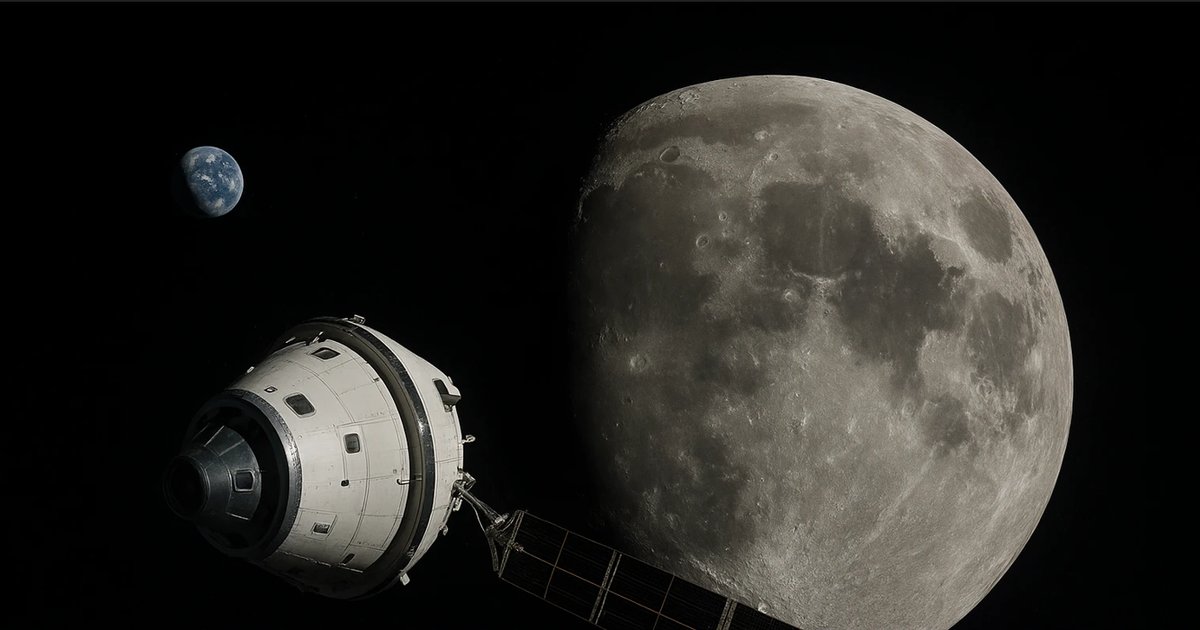
NASA is preparing to launch the Artemis 2 mission, which will see astronauts return to the Moon after a hiatus of more than 50 years. The launch is scheduled for Wednesday evening, marking a new turning point in the history of space exploration. This mission is part of NASA's efforts to return humans to the Moon and develop new technologies for deep space exploration.
The Artemis 2 mission is part of the Artemis program, which aims to return to the Moon and explore it more deeply, as NASA seeks to establish a permanent base on the lunar surface. This base will aid in preparations for future missions to Mars, reflecting humanity's ambitions in space exploration.
Event Details
The Artemis 2 mission will be the first crewed mission since Apollo 17 in 1972, with the Orion spacecraft carrying four astronauts around the Moon. The journey will take approximately 10 days, during which the spacecraft will perform maneuvers around the Moon before returning to Earth. This mission represents a crucial step towards achieving NASA's goals in space exploration.
During this mission, the astronauts will conduct scientific experiments and tests on various systems of the spacecraft, which will help improve space exploration technologies. The mission will also provide valuable data on how to live and work in distant space environments.
Background & Context
Historically, the United States has been a leader in space exploration, sending the first human to the Moon in 1969 during the Apollo 11 mission. Since then, interest in crewed lunar missions has waned, but in recent years, investments in space programs have increased, reviving ambitions to return to the Moon.
The Artemis program is part of a broader vision for NASA, which includes international collaboration with other space agencies, such as the European Space Agency and the Japan Aerospace Exploration Agency. This collaboration reflects the importance of space exploration as a global effort that requires sharing knowledge and resources.
Impact & Consequences
The Artemis 2 mission is a strategic step in enhancing the United States' position in space, as the country seeks to maintain its leadership in this field. The success of this mission could open doors for further investments in technology and scientific research, fostering innovation across multiple sectors.
Moreover, returning to the Moon could enhance international cooperation in space exploration, as other countries may join NASA's efforts to develop new technologies and explore potential resources on the lunar surface.
Regional Significance
Although the Artemis 2 mission focuses on the Moon, its impact may extend to the Arab region. With the increasing interest in space, Arab countries could benefit from collaboration with global space agencies, enhancing their capabilities in science and technology.
Additionally, space exploration could open new avenues for scientific research in the region, allowing Arab nations to invest in their own space programs, contributing to human resource development and fostering innovation.
The Artemis 2 mission represents a new beginning in the journey of space exploration, as humanity returns to the Moon after decades. This mission is not just a step towards the Moon, but also a step towards the future, where humanity can explore more planets and open new horizons in the realm of space.