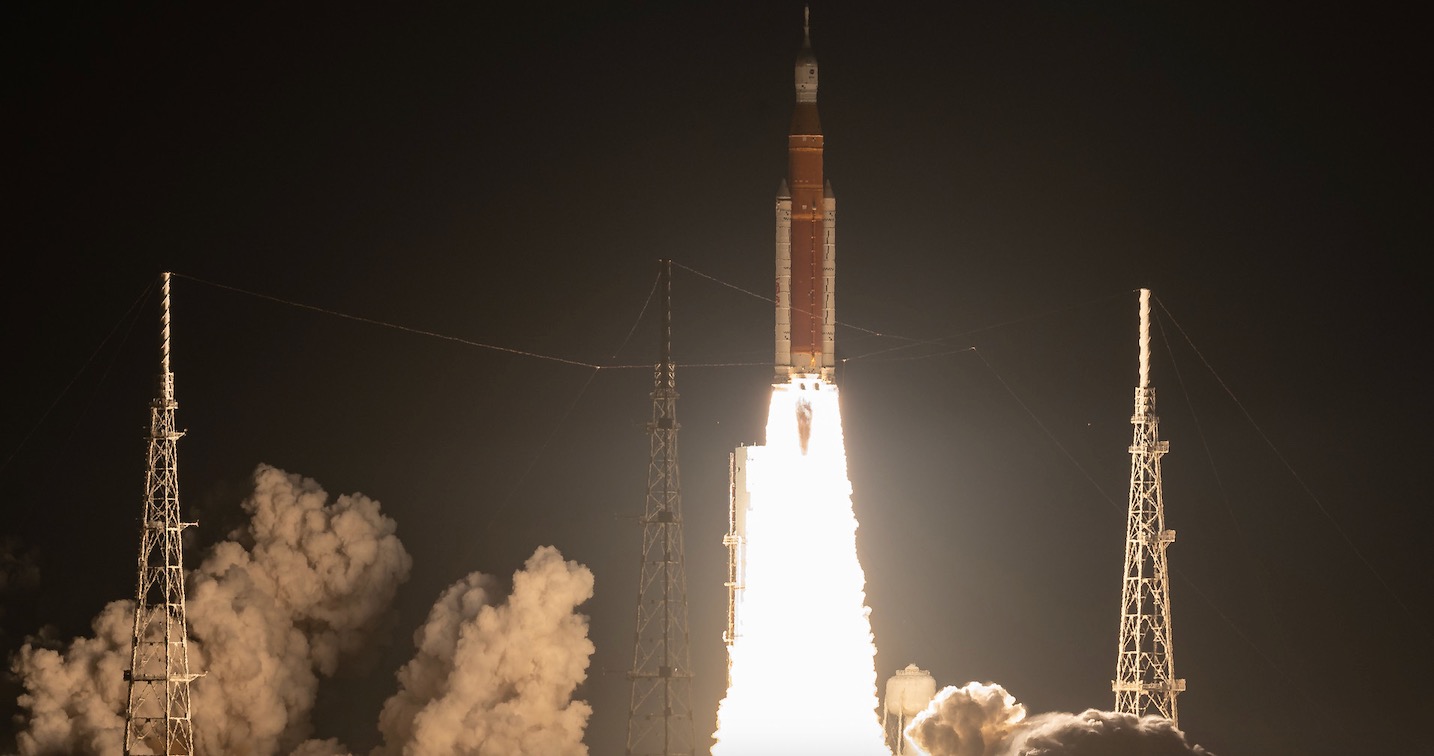
NASA is set to launch its largest spacecraft ever, marking a significant return to lunar orbit after a 50-year hiatus. The spacecraft, known as Artemis 1, aims to bring humans back to the Moon by 2024 and is part of a larger program aimed at exploring Mars in the future. This program comes after decades of halting crewed missions to the Moon, with the last crewed mission occurring in 1972.
The Artemis 1 spacecraft includes a giant rocket known as SLS (Space Launch System), which is considered the most powerful ever built. This rocket is expected to launch from the Kennedy Space Center in Florida, carrying the spacecraft to lunar orbit before returning to Earth. This mission will be uncrewed but will serve as a critical test before sending astronauts on future missions.
Details of the Mission
NASA aims to achieve multiple objectives through this program, including enhancing scientific research, developing new technologies, and fostering international cooperation in space. The program also aims to establish a permanent base on the Moon, which will enable further exploration of outer space.
Following the success of the Apollo program initiated by President John F. Kennedy in the 1960s, which resulted in humans landing on the Moon, the United States ceased sending crewed missions to the lunar surface. However, research and studies on space continued, leading to the development of new technologies across various fields.
Background & Context
In recent years, competition in space exploration has increased, with countries and private companies striving to achieve new milestones. This has prompted NASA to rethink its strategies, leading to the launch of the Artemis program.
The return of NASA to the Moon is a significant step in reinforcing its position as a leading force in space exploration. This mission could open doors for more international collaboration, allowing other countries to participate in future lunar missions.
Impact & Consequences
Moreover, the success of this mission could boost investments in the space sector, potentially leading to the development of new technologies that benefit humanity in various fields, such as communications, medicine, and energy.
These developments in space exploration present an opportunity for Arab countries to enhance their investments in this domain. Many Arab nations have already begun to develop their own space programs, such as the United Arab Emirates, which launched the Hope Probe to Mars.
Regional Significance
The successes of NASA may encourage Arab nations to strengthen cooperation in space, potentially leading to the development of joint projects that contribute to enhancing technological capabilities in the region.
In conclusion, NASA's return to the Moon represents a historic step that could reshape the future of space exploration and open new avenues for international collaboration in this field.