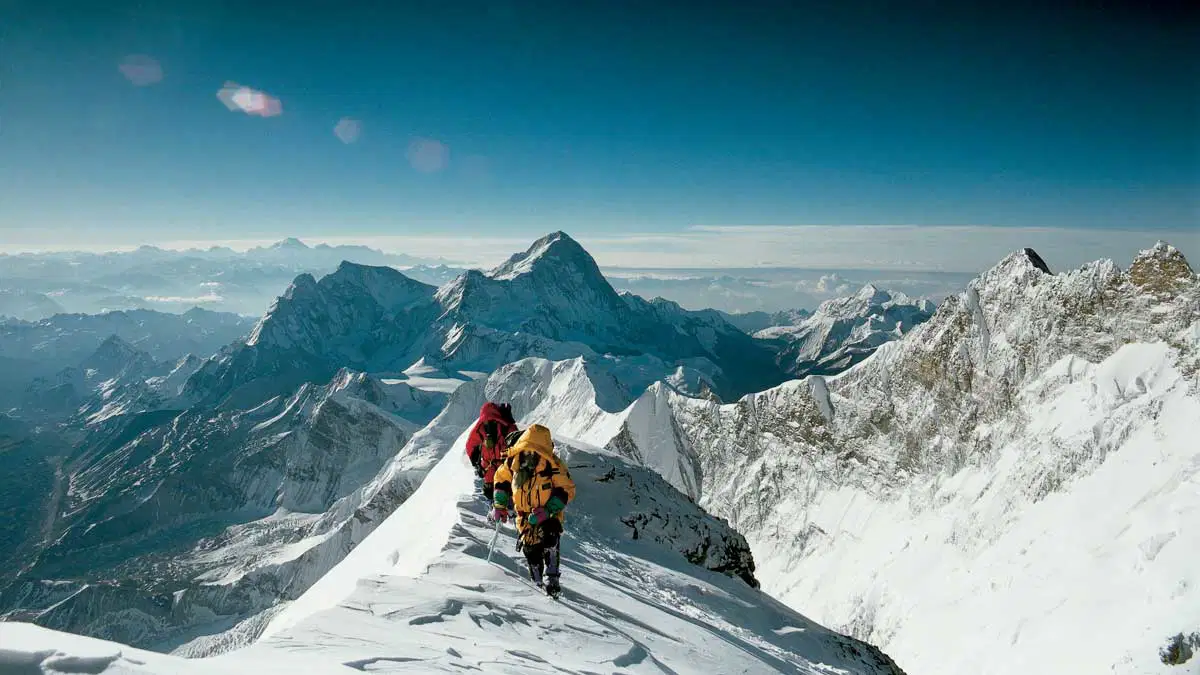
Nepalese climbers have successfully opened a new route on Mount Everest after a massive ice block had closed the path for two weeks. Ram Krishna Lamichhane, the Director General of Tourism in Nepal, confirmed that avalanche specialists have installed ropes up to Camp 2, located at an altitude of between 6,400 and 6,500 meters.
Despite the opening of the route, there are still risks from other avalanches. Lamichhane noted that the specialists chose the safest available paths. Teams began installing ropes last month in preparation for the spring season, but they had to wait until the 30-meter-high ice block started to melt.
Event Details
The delay has pushed back preparations for weeks in the spring season, which is typically considered the best time for climbing Everest. However, Lamichhane reported that climbers will be able to move towards Camp 1 and Camp 2 to acclimatize to the weather conditions.
This year, approximately 425 climbers have received permits to climb the world's highest peak, which is expected to generate revenues estimated at around 924,222,675 Nepalese Rupees, equivalent to £4,535,143 or $6,114,955.
Background & Context
Mount Everest is a popular destination for climbers from around the world, attracting thousands annually. However, natural challenges such as avalanches and harsh weather conditions make climbing this mountain a perilous adventure. Historically, Everest has witnessed numerous tragic incidents due to these factors.
In recent years, the number of climbers has significantly increased, leading to congestion on the routes to the summit. This has raised concerns about the safety of climbers, especially given the changing conditions that could lead to avalanches.
Impact & Consequences
The opening of the new route is considered a positive step for climbers, but it comes with warnings about ongoing risks. Experts indicate that the large ice block remains unstable and could collapse at any moment, necessitating extreme caution from climbers.
This situation reflects the ongoing challenges faced by Nepal's tourism sector, where many rely on revenues from mountain climbing. However, the risks associated with climbing Everest could affect Nepal's reputation as a safe tourist destination.
Regional Significance
Although Mount Everest is far from the Arab world, there is a growing interest among Arab adventurers in mountain climbing. This news underscores the importance of safety in mountain adventures and reflects the need for careful planning and adaptation to changing conditions.
Ultimately, climbing Everest is a unique experience, but climbers must be aware of the risks and take necessary precautions to ensure their safety.