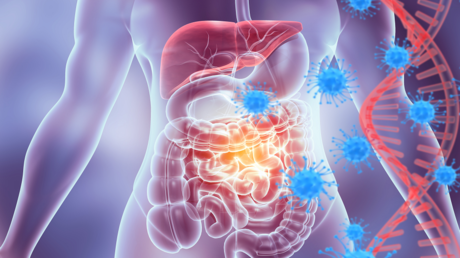
A team of researchers has unveiled an innovative drug compound that helps slow the spread of colon, rectal, and liver cancer. The new compound works by disrupting the interaction of two key proteins that accelerate the growth of cancer cells. These discoveries represent a significant step in cancer treatment, opening new avenues for scientists to develop more effective therapies.
Colon and liver cancers are among the most common types of cancer worldwide, making the search for new treatments vital. According to statistics, colon cancer ranks as the third most prevalent cancer among both men and women, while liver cancer is one of the leading causes of cancer-related deaths in many countries.
Details of the Research
The study was based on intensive laboratory experiments, where the new compound demonstrated remarkable efficacy in slowing the growth of cancerous tumors. The compound was tested on animal models, showing a significant reduction in tumor size compared to traditional treatments. This achievement reflects the ongoing efforts of researchers in the field of oncology.
The compound works by targeting specific proteins that play a crucial role in the process of cancer cell division. By disrupting these proteins, the new compound can reduce the speed at which cancer cells spread throughout the body, providing patients with a greater opportunity for treatment and recovery.
Background & Context
Over the years, cancer research has made notable progress, yet challenges remain. Colon and liver cancers are diseases that require innovative therapeutic strategies, as current treatments may not be effective for all patients. Therefore, this discovery represents a new ray of hope in the medical field.
Historically, colon and liver cancers have posed significant challenges to health systems worldwide. With rising incidence rates, it has become essential to develop new treatments that contribute to improving patient outcomes. This new compound could be part of the solution.
Impact & Consequences
If future research proves the efficacy of this compound in clinical trials, it could lead to a significant shift in how colon and liver cancers are treated. This may reduce the need for traditional chemotherapy treatments, which are often accompanied by severe side effects.
The success of this compound could also encourage further research in this area, leading to new discoveries that may change how doctors approach cancer treatment. Investing time and resources in scientific research is crucial for achieving tangible progress in the fight against cancer.
Regional Significance
In the Arab region, cancer incidence rates are continuously rising, necessitating the development of effective therapeutic strategies. This new discovery could enhance healthcare for Arab patients, especially in countries facing medical resource shortages.
As awareness of the importance of scientific research grows, this compound could positively impact health policies in Arab countries, potentially boosting investments in medical research.
In conclusion, this discovery represents an important step towards improving available treatments for colon and liver cancers. As research continues, we can hope for greater advancements in combating these serious diseases.